
Last updated November 4, 2026
 Wrought iron
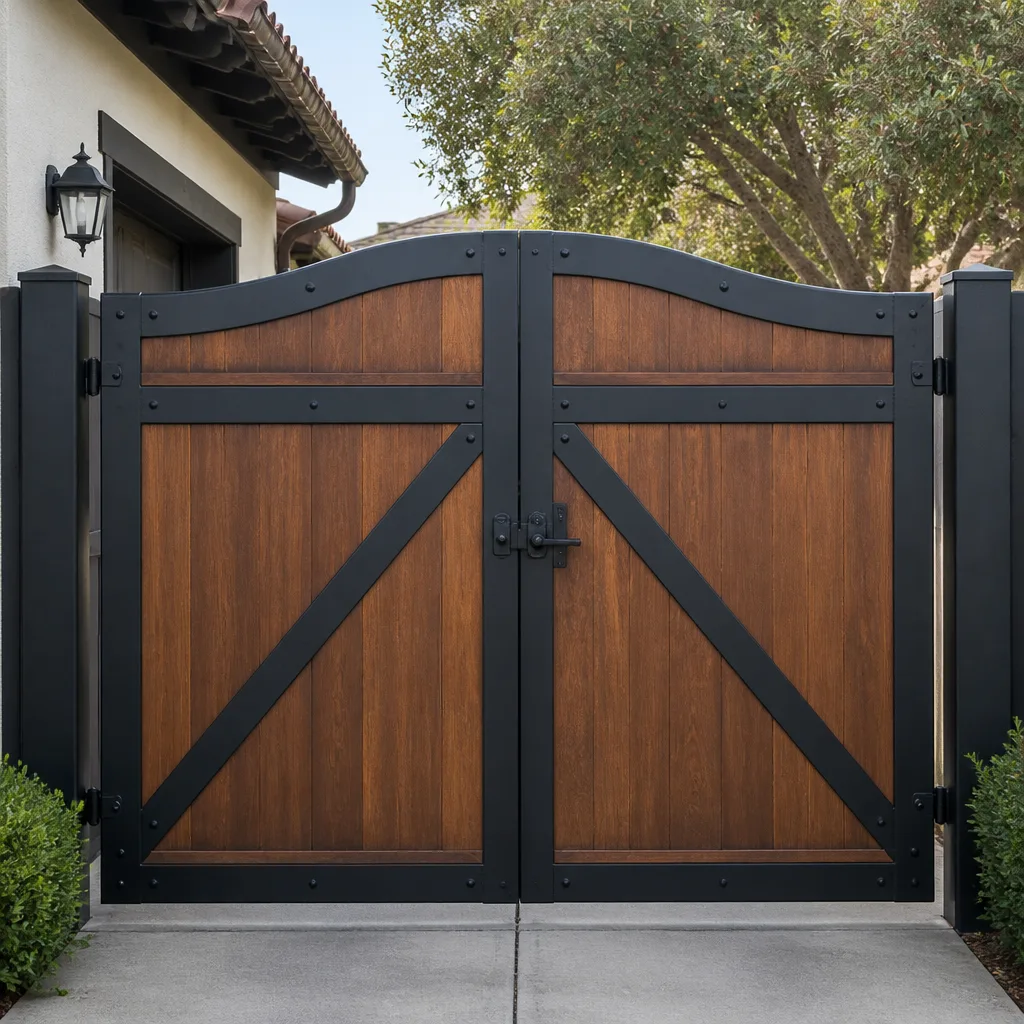 Wood & steel frame
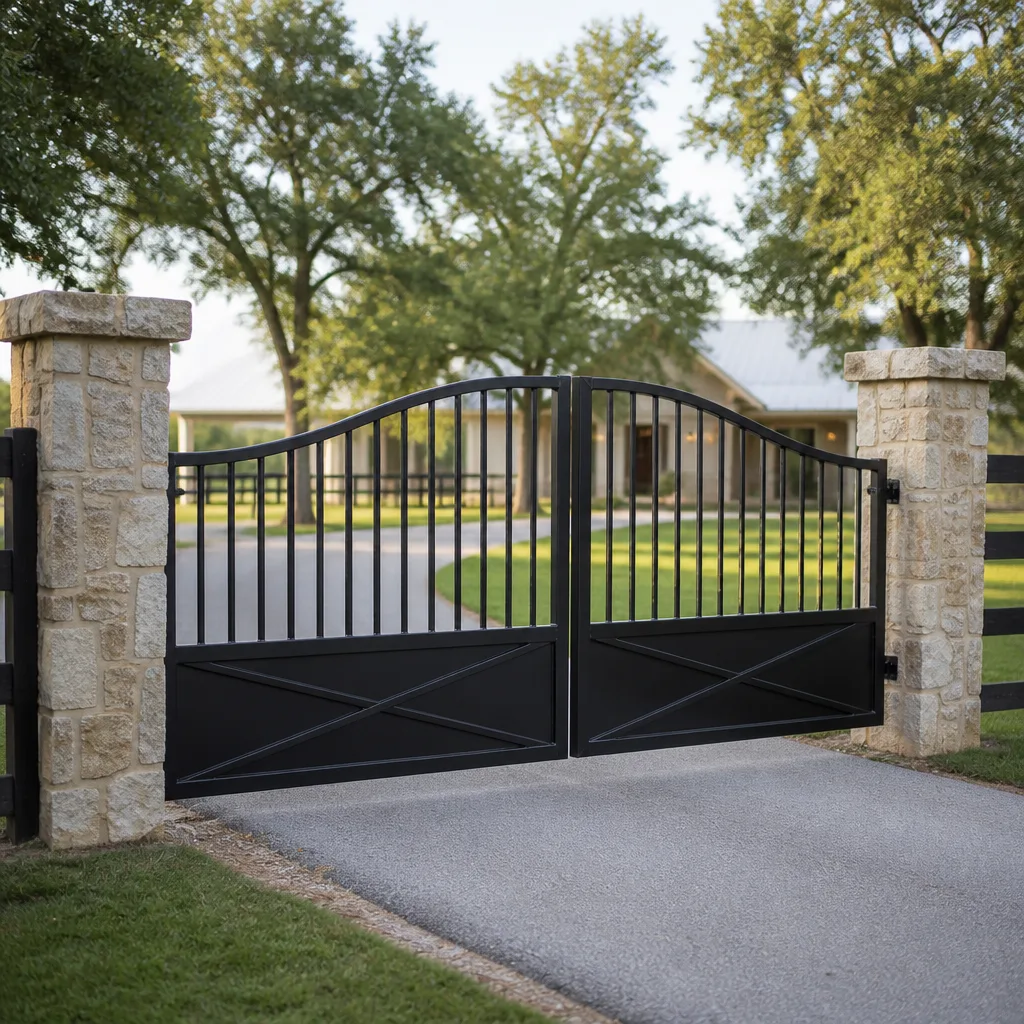 Farm & ranch
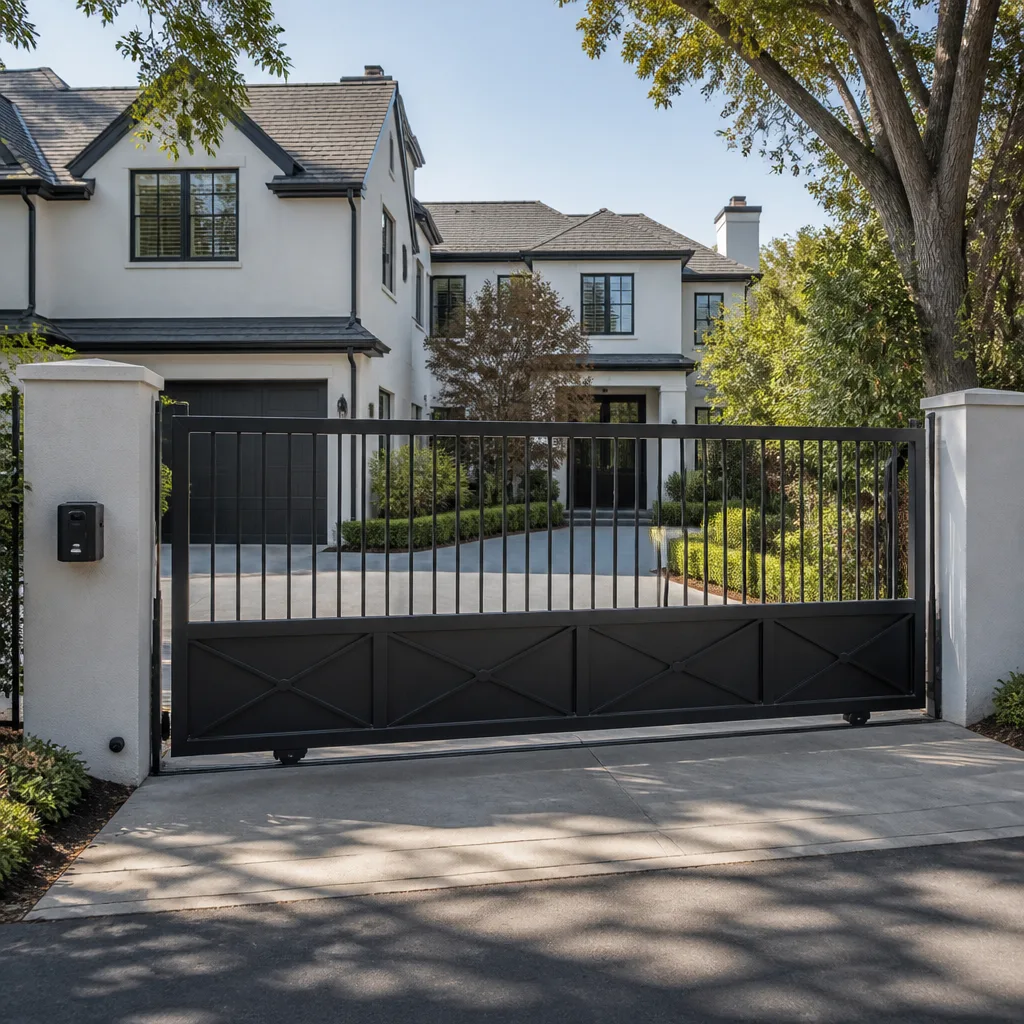 Sliding driveway gates
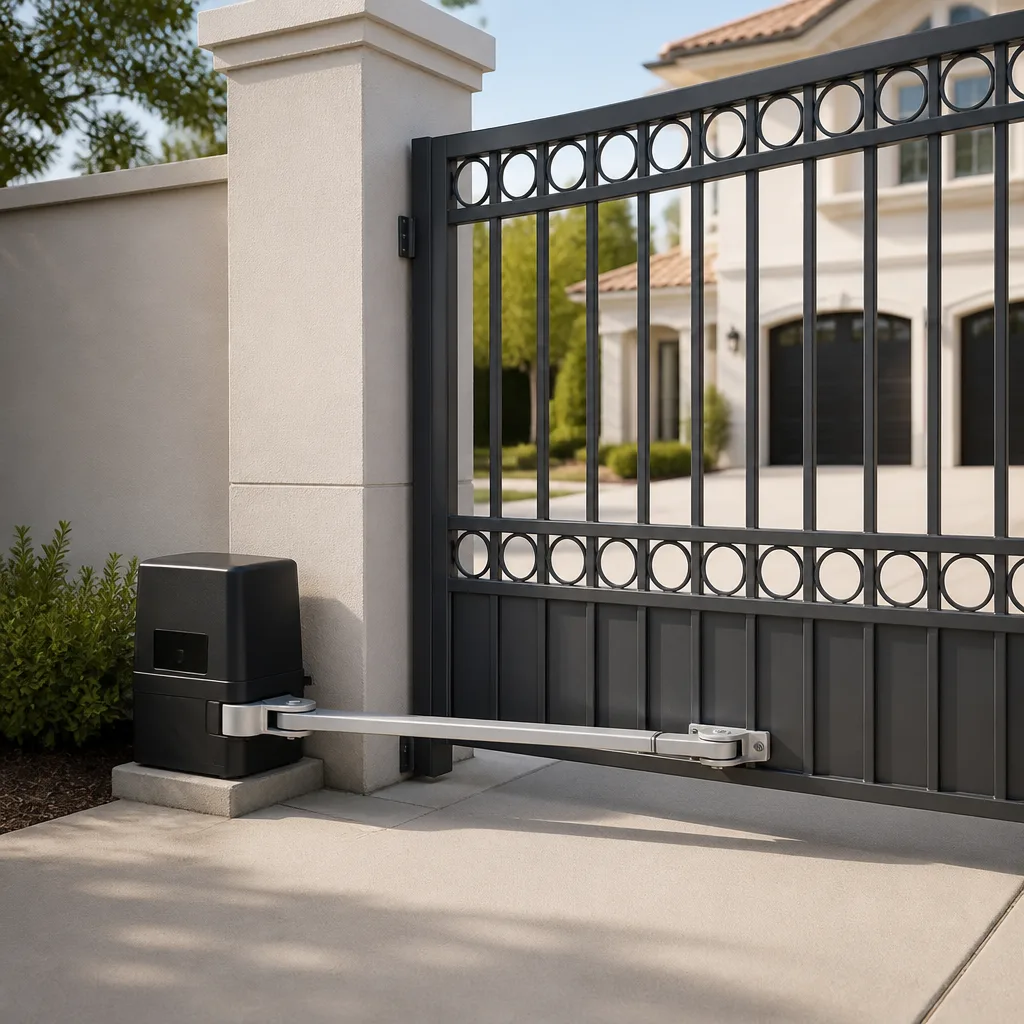 LiftMaster operators
Free on-site gate assessment - hinges, posts, and your LiftMaster or Nice gate operator checked before anything is quoted
The assessment is free and the quote is the invoice.
Get your free estimateGate Repair Emergency Preparedness Guide for Vista Homes
Most Vista homeowners don’t think about their gate until it stops moving. Then they discover something uncomfortable: a gate that fails open isn’t the same emergency as a gate that fails closed, and the fix for one can make the other worse if you grab the wrong tool. A power outage that cuts an automated gate’s power doesn’t just inconvenience you. If you don’t know where your manual release is, or whether it’s been frozen by a decade of California dust and heat, it can trap your car inside or leave your property unsecured for hours. This guide walks through both failure modes, how to prepare now, and what to do in the first five minutes after a gate stops working in Vista.
Quick Answer
Gate emergencies in Vista split into two problems: a gate stuck open, which is a security issue that needs a temporary barrier and fast service, and a gate stuck closed, which is an access issue that starts with finding and testing the manual release. Either way, the first step is identifying whether the failure is electrical, mechanical, or control-related, because that determines what a technician brings to the truck. Call (855) 773-5055 and a gate specialist can walk you through a phone diagnosis before dispatch.
Styles & brands we work with
- Wrought iron
- Wood & steel frame
- Farm & ranch
- Sliding driveway gates
- LiftMaster operators
Table of Contents
- Why a Gate Stuck Open Is a Different Emergency Than One Stuck Closed
- How to Manually Release Your Automated Gate Without Damaging It
- The Pre-Emergency Checklist Every Vista Homeowner Should Complete Now
- What to Do When Your Gate Fails in the Open Position
- What to Do When Your Gate Fails in the Closed Position
- How to Diagnose a Gate Failure Over the Phone Before a Technician Arrives
- What to Look for in an Emergency Gate Repair Provider in Vista
- Common Mistakes to Avoid
- When to Call a Professional
- Frequently Asked Questions
Why a Gate Stuck Open Is a Different Emergency Than One Stuck Closed
This distinction sounds obvious, but it changes every decision you make in the first half hour. A gate stuck open means anyone can walk or drive onto your property. In Vista, where many homes sit on larger lots with long driveways, an open gate is an invitation. The gate isn’t just a convenience. It’s the first physical layer of security. A gate stuck closed, on the other hand, is an access problem. Your car might be trapped in the driveway or garage, and you can’t leave for work, school, or a medical appointment.
We hear from Vista customers who treat both failures the same way: they call, describe “a gate that won’t work,” and wait. But the preparation for each is different, and so is the urgency. An open gate needs a temporary barrier, even if it’s just a vehicle parked across the driveway opening. A closed gate needs a manual release, and that release only works if you know where it is and whether the mechanism still moves. The worst time to learn your manual release is seized from lack of use is when you’re late and the gate is between you and the street.
What many homeowners don’t realize is that a gate can also fail somewhere in between, half-open or half-closed. That’s usually a track or hinge problem on a sliding gate, or a physical obstruction on a swing gate. Half-open is the most dangerous position because the gate still looks functional to a child or a pet, but the motor is trying to move a gate that can’t go anywhere. The operator heats up, the board takes the load, and a simple jam becomes a control board failure. If you see a gate stuck mid-travel, turn the operator off at the breaker before anything else.
How to Manually Release Your Automated Gate Without Damaging It
Every automated gate has a manual release. On most residential operators in Vista, it’s a keyed lock on the operator housing or a pull-chain behind an access cover. The release disengages the drive mechanism so you can push the gate by hand, which is exactly what you need when a Motor has failed or power is out. But pulling the release on a gate that’s under tension, or pushing a gate while the operator still thinks it’s connected, can strip the drive and turn a small repair into a full operator replacement.
Here’s the sequence to follow:
- Cut power first. Find the breaker labeled for the gate, or unplug the operator if it has a service outlet. A gate that suddenly gets power while the release is disengaged can jerk unexpectedly.
- Locate the manual release. On a LiftMaster swing or slide operator, it’s the keyed cylinder on the front of the unit. On a Viking operator, it’s often a pull-handle behind a small door. If you have an Elite or DoorKing commercial operator, the release may be a lever arm, not a key.
- Turn or pull the release fully, not partially. A half-engaged release can ratchet against the drive gear and damage the teeth. You should feel a distinct click or slack in the mechanism.
- Try the gate by hand. A properly released gate should move with moderate effort. If it doesn’t budge, something else is wrong: a wheel off the track, a hinge seized, or a physical obstruction.
- Do not re-engage the release under load. Once the gate is where you want it, whether open for access or closed for security, turn the operator off at the breaker and leave the release disengaged until a technician arrives.
We work on your brand, whichever brand that is. The release mechanism on a Mighty Mule, a Ghost Controls, or a DoorKing all operate on the same principle, but the location and feel differ. If you can’t find yours, take a photo of the operator housing and we can usually identify it over the phone.
The Pre-Emergency Checklist Every Vista Homeowner Should Complete Now
The time to prepare for a gate emergency is before you have one. Vista’s climate is dry and mild most of the year, which is good for metal and electronics, but it also means owners can go years without touching the gate. That’s when small problems become emergencies. Dust builds up in the track, the manual release seizes, and the battery backup quietly dies without anyone noticing.
Complete this checklist this weekend. It takes fifteen minutes and it’s the difference between a controlled situation and a 10 p.m. crisis in the driveway.
- Test the manual release. Disengage it and push the gate by hand. If it’s stiff or won’t move, spray the pivot points with a dry lubricant and work it back and forth. If it still won’t move, call us before you need to use it.
- Check your battery backup. Most automated operators have a small battery that keeps the gate working through a power outage. Cut power to the gate at the breaker and try the remote or keypad. If nothing happens, the battery is dead. A Vista power outage is exactly when you’ll need it.
- Document the brand and model. Write down the operator manufacturer, the model number if it’s visible, and take a photo of the control board. This lives in your phone and saves us a trip when a technician needs a specific board or limit switch. We’re factory-familiar with LiftMaster, FAAC, BFT, Linear, Viking, Ghost Controls, DoorKing, Elite, and Mighty Mule, so the brand tells us a lot.
- Find the breaker. Label it “GATE” in your panel. In an emergency, someone else in the house may be the one who needs to cut power, and they won’t know which breaker is which.
- Test the safety edges and photo eyes. While the gate is closing, put your hand in front of the photo eye. The gate should stop and reverse. If it doesn’t, the safety system failed, and a gate that doesn’t reverse is dangerous around kids and pets. Call for electric gate repair before it becomes an injury.
- Note where the gate sticks. Watch the gate travel open and closed. If it hesitates, grinds, or slows at a certain point, note that spot. A technician can diagnose a wheel, track, or hinge problem from that description before they arrive.
This checklist is gate-specific because that’s what we do. We’re gate specialists, not generalists. Every one of these steps is about the gate system, not the fence around it or the garage next to it.
What to Do When Your Gate Fails in the Open Position
A gate stuck open in Vista is a security problem first and a mechanical one second. The failure could be a broken chain, a stripped gear, a blown control board, or a tripped breaker, but the security exposure is the same: your property is open to the street. Address the security issue before anything else.
Here’s the sequence we recommend:
- Create a temporary barrier. Park a car across the driveway opening if that’s feasible. If the gate is a wide driveway gate, use whatever you have: trash bins, a temporary fence panel, or a vehicle. Vista has its share of opportunistic crime, and an open gate at night is a beacon.
- Kill power to the operator. A gate that’s running when the chain broke or the gear stripped may still be trying to operate. Cut the breaker to stop any additional damage.
- Check the physical connection. Look at the chain or belt, the wheels, and the track. A broken chain is visible. A wheel off the track is visible. If you can see the problem, tell us when you call. It changes the parts we load.
- Do not try to operate the gate from the keypad or remote repeatedly. Every attempt sends power through a system that’s already failed. Multiple attempts can turn a stripped gear into a control board failure.
- Call (855) 773-5055. We answer 24/7. Fast dispatch from 7am to 7pm, Sunday through Friday. On the phone, describe what you see and what the gate was doing before it failed.
The mistake we see most often from Vista homeowners is leaving the gate open and going to bed, planning to deal with it in the morning. We understand the impulse. But an open gate overnight exposes not just the driveway but everything past it. A $20 temporary barrier and a phone call are cheaper than what can walk up the driveway.
What to Do When Your Gate Fails in the Closed Position
A gate stuck closed traps your car, and in Vista, where many homes are on sloping lots with narrow driveways, there’s often no alternate exit. This is an access emergency. The good news is most closed gate failures are either a power issue or a simple manual-release problem, both of which you can handle with the right preparation.
- Check for power. Is the keypad lit? Does the remote get a response? Look at the operator: most have a small LED that indicates power. If nothing is lit, check the breaker first. Vista power outages can be local and quick, and the gate may be fine.
- Try the manual release. This is why the pre-emergency checklist matters. If you’ve tested it, you know where it is and how it feels. Disengage it and push the gate open by hand.
- If the gate won’t move by hand, stop. A gate that won’t budge after release has a different problem: a wheel seized in the track, a hinge that’s twisted, or a physical obstruction. Forcing it can bend the gate itself, and a bent gate is a replacement, not a repair.
- Check the track for debris. Vista’s dry summers and Santa Ana winds push a lot of leaves, twigs, and dirt into gate tracks. A sliding gate that won’t move is often just a rock caught in the wheel path. Clear the track and try again.
- Call (855) 773-5055 if you can’t get it moving. We answer 24/7. A call outside dispatch hours is booked into the next opening, Sunday through Friday, 7am to 7pm.
One thing to understand about sliding gates: they’re heavy. A typical residential sliding gate in Vista weighs hundreds of pounds. If it comes off the track, it can fall, and a falling gate crushes anything under it. Never stand in the path of a sliding gate that’s off its track or unstable. That’s a situation where you call gate repair and keep clear until someone who handles these systems daily arrives.
How to Diagnose a Gate Failure Over the Phone Before a Technician Arrives
The goal of a phone diagnosis is to separate a power issue from a hardware failure from a control board problem. These are distinct repairs with distinct part needs, and knowing the answer before dispatch means a technician arrives with the right parts instead of making a first trip just to look.
Here’s the three-way split we use, and it’s something any homeowner can do:
- Power issue: The gate did nothing, no lights, no response from the remote or keypad. The breaker may have tripped. If the operator has battery backup and the gate still works during a power failure, the problem is upstream in your electrical system. If the battery backup does nothing, the outlet or breaker needs a look.
- Hardware failure: The gate makes a noise or tries to move but doesn’t. A humming motor with no gate movement is often a broken chain, stripped gear, or an obstruction in the track. A grinding noise is usually a wheel or roller issue on a sliding gate, or a hinge problem on a swing gate.
- Control board failure: The gate behaves erratically: opens but won’t close, closes but won’t open, reverses for no reason, or the keypad doesn’t accept the code. The gate may have power and the motor may be fine, but the board that controls everything is misreading or dead.
This matters because the parts are different. A power issue may need an electrician or a new outlet, not a gate repair. A hardware failure needs a chain, gear, wheel, or hinge. A control board failure needs the correct board for your operator brand, and while we work on LiftMaster, FAAC, BFT, Linear, Viking, Ghost Controls, DoorKing, Elite, and Mighty Mule systems, each board is different. Having the brand and model ready, as the pre-emergency checklist says, turns a two-visit issue into a one-visit fix.
In our experience, Vista homeowners who call with a video of the gate behaving badly save themselves a diagnostic trip. A thirty-second phone video of the gate trying to open, the operator noise, and the keypad behavior answers most of the questions. We can watch it and tell you whether we’re bringing a chain or a board.
What to Look for in an Emergency Gate Repair Provider in Vista
When you’re standing in the driveway with a gate that won’t move, every provider looks the same. They’re all a phone number. But the difference between a gate specialist and a generalist matters more in an emergency, because the specialist already has the part you need on the truck.
Here’s what to ask:
- Do you work on my gate brand? If the answer is “we work on everything,” be cautious. A gate specialist can name the brands they know: LiftMaster, FAAC, BFT, Linear, Viking, Ghost Controls, DoorKing, Elite, Mighty Mule. A generalist is Googling your operator model in your driveway.
- What’s your actual dispatch time? “Fast” means nothing. We answer 24/7, and fast dispatch from 7am to 7pm, Sunday through Friday. Ask for a real window, not an adjective.
- Do you carry parts on the truck? For common failures on common brands, the answer should be yes. If a provider makes a trip to look and then a second trip to bring the part, you pay for two visits and live with a broken gate twice as long.
- Is the estimate free? It should be. The price is set per job by the written estimate, before any work starts. If a company wants a diagnostic fee before they’ll even look, find someone else.
- Do you install gates too? This sounds like an odd question in an emergency, but it matters. A company that installs gates understands how the whole system fits together. A company that only does emergency repairs sees a broken part; an installer sees why it broke. At Sterling Gate Repair, gate installation is part of our core service, which means we know the structure behind the part that failed.
We’re gate specialists, not generalists. We don’t do fences, we don’t do garage doors, we don’t do handyman work. Every tool in the truck and every part in the inventory is there to fix a gate. That focus is why we’re the call Vista homeowners make when their gate fails and they need it back in operation.
Common Mistakes to Avoid
- Repeatedly pressing the remote or keypad. Every attempt sends power through a failed system and can escalate a mechanical failure into a control board failure. If the gate doesn’t respond the first time, check power and call rather than pressing the button twenty more times.
- Forcing a gate that won’t move by hand. After the manual release, a gate that still won’t budge has a different problem. Forcing it can bend the gate or the track, and bent metal is a replacement job.
- Leaving a gate stuck open overnight. In Vista, an open gate is a real security risk. Set up a temporary barrier even if you’re waiting for morning service.
- Ignoring a gate that’s been getting slower or noisier. Gates rarely fail without warning. A grinding wheel, a squealing hinge, or a slow operator is the early warning of a bigger problem. Deal with it during the day when the stakes are lower.
- Hiring a provider who doesn’t know your brand. A technician who has never opened a BFT or a DoorKing operator is learning on your gate, and you’re paying for that education in time and parts.
- Not testing the manual release until you need it. A release that hasn’t been touched in years can seize. Test it now, in daylight, when the gate isn’t between you and the street.
When to Call a Professional
Some gate problems are visible and simple: a leaf pile in the track, a tripped breaker, a keypad with dead batteries. Those are reasonable to handle yourself. But there are clear thresholds where the right move is a phone call. Call when the gate is off its track or unstable, when the motor hums without moving the gate, when the gate reverses for no reason or ignores the photo eye, or when you smell burning from the operator housing. Those are system failures with causes you can’t see. Also call when the failure happens at a bad time and you can’t afford to be wrong. A gate stuck open on a Vista lot with a long driveway is not a DIY project at 10 p.m. Sterling Gate Repair offers free estimates in Vista. Call (855) 773-5055. We answer 24/7, and we’ll talk you through what we’re seeing before a truck rolls.
Frequently Asked Questions
Emergency gate repair in Vista is priced per job by the written estimate, with no service-call fee or diagnostic charge. The cost depends on what failed: a manual release fix or track clearing is at the low end, a new control board or operator is higher. The estimate comes before any work starts, so you know the number before we turn a wrench. Call (855) 773-5055 for a free estimate.
We answer 24/7 and fast dispatch runs from 7am to 7pm, Sunday through Friday. A call outside dispatch hours is booked into the next opening. Same-day service is available on most Vista gate repairs when you call before the late afternoon. Call (855) 773-5055 and we’ll tell you the soonest available window.
A gate that won’t move by hand after the manual release is disengaged has a mechanical problem, not an operator problem. The gate may be off its track, a wheel may be seized, or a hinge on a swing gate may be twisted. Forcing it can cause more damage, so the right move is to call Vista gate repair and let a specialist diagnose it.
Listen to the operator. If the motor hums but the gate doesn’t move, the problem is mechanical: a broken chain, stripped gear, or wheel off the track. If the keypad and remote do nothing and the operator has no lights, it’s electrical. If the gate moves erratically or ignores the keypad, it’s likely a control board issue. Describing these symptoms over the phone helps us bring the right parts.
We work on LiftMaster, FAAC, BFT, Linear, Viking, Ghost Controls, DoorKing, Elite, and Mighty Mule operators. We diagnose by system, not by guesswork, and we don’t tell a customer their brand is unsupported because we’re brand-agnostic across budget, mid-range, and commercial-grade equipment. If you tell us the brand, we’ll know what to bring.
First, try the manual release to get your car in or out, because the battery backup may be dead or may not exist on older operators. Once the gate is positioned where you want it, cut power at the breaker so the operator doesn’t surge when power returns. Then call (855) 773-5055. We answer 24/7 and can tell you whether this is a battery issue or something that needs a truck.
The Bottom Line
Vista gate emergencies are manageable when you’ve done fifteen minutes of preparation. Test the manual release, check the battery backup, document your operator’s brand and model, and know which breaker controls the gate. When a gate fails, the first question is whether it’s stuck open or stuck closed, because those are different problems with different responses. A phone diagnosis separates power issues from hardware failures from control board problems, and that gets the right parts on the first trip. We’re gate specialists, not generalists, and we work on your brand, from installation to long-term repair. When the gate fails, call (855) 773-5055. We answer 24/7. Fast dispatch from 7am to 7pm, Sunday through Friday.
Written by the team at Sterling Gate Repair, serving Vista since 2015.
See the difference
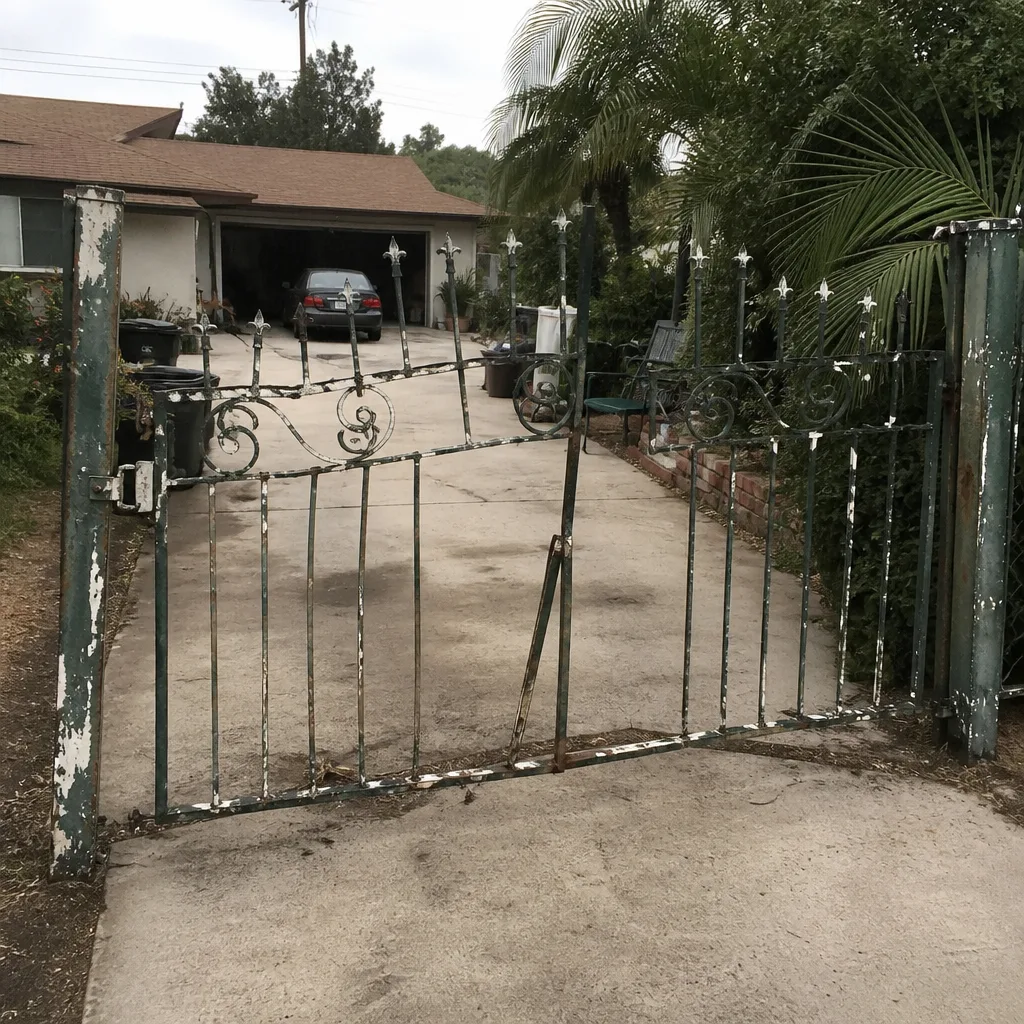 Before
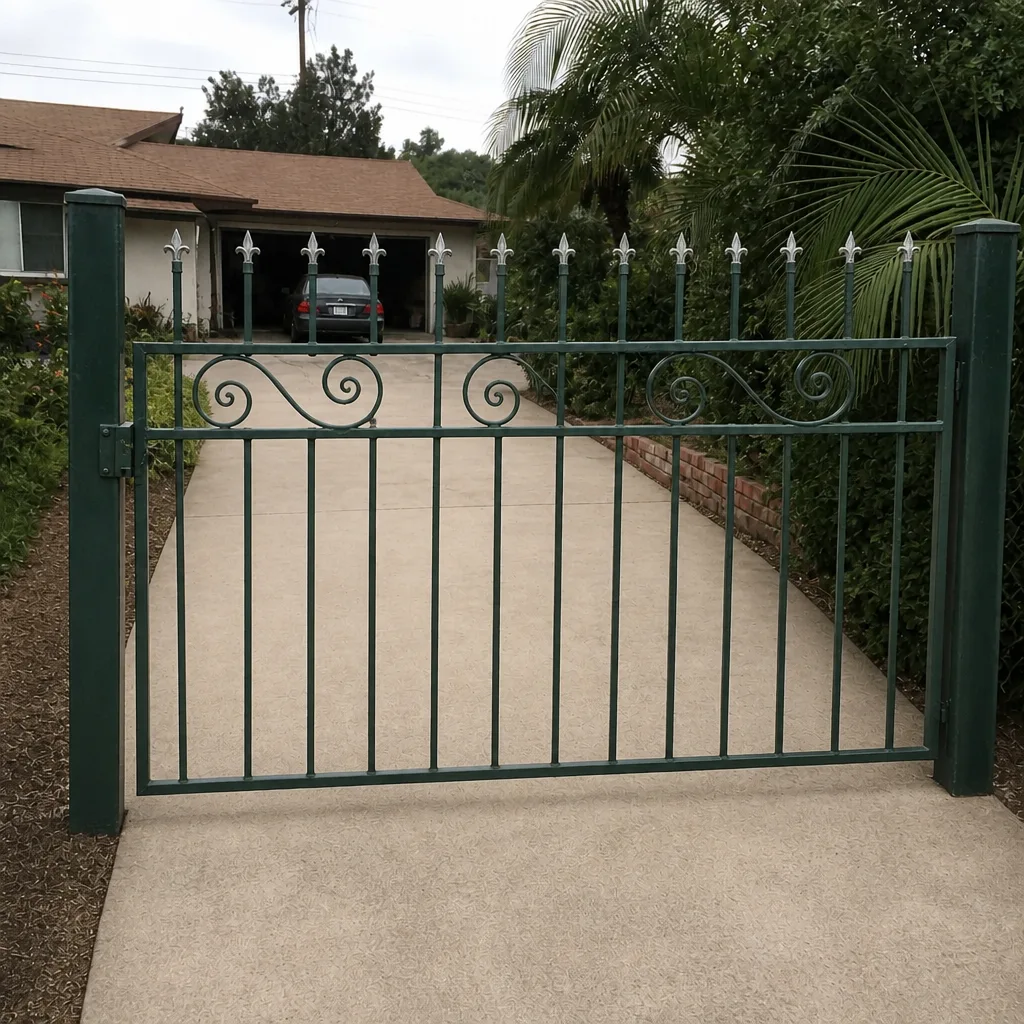 After
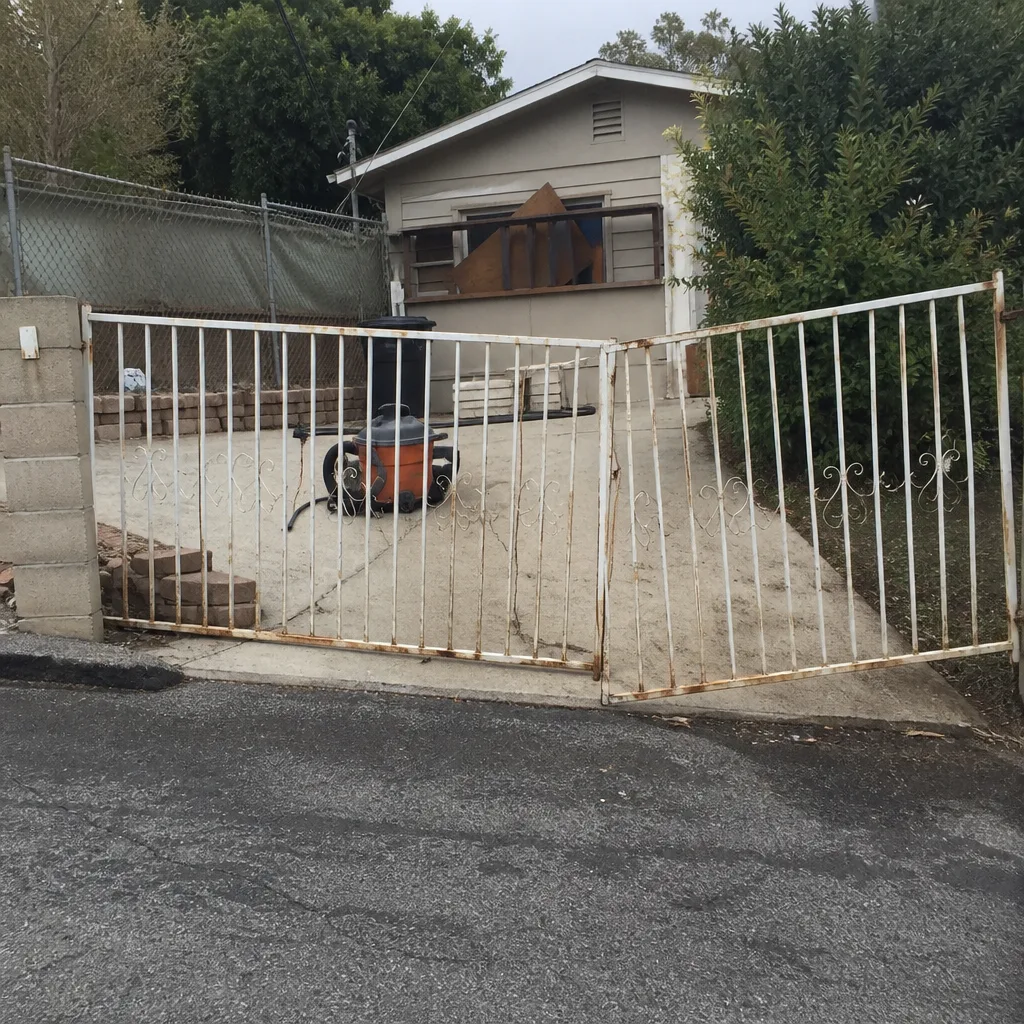 Before
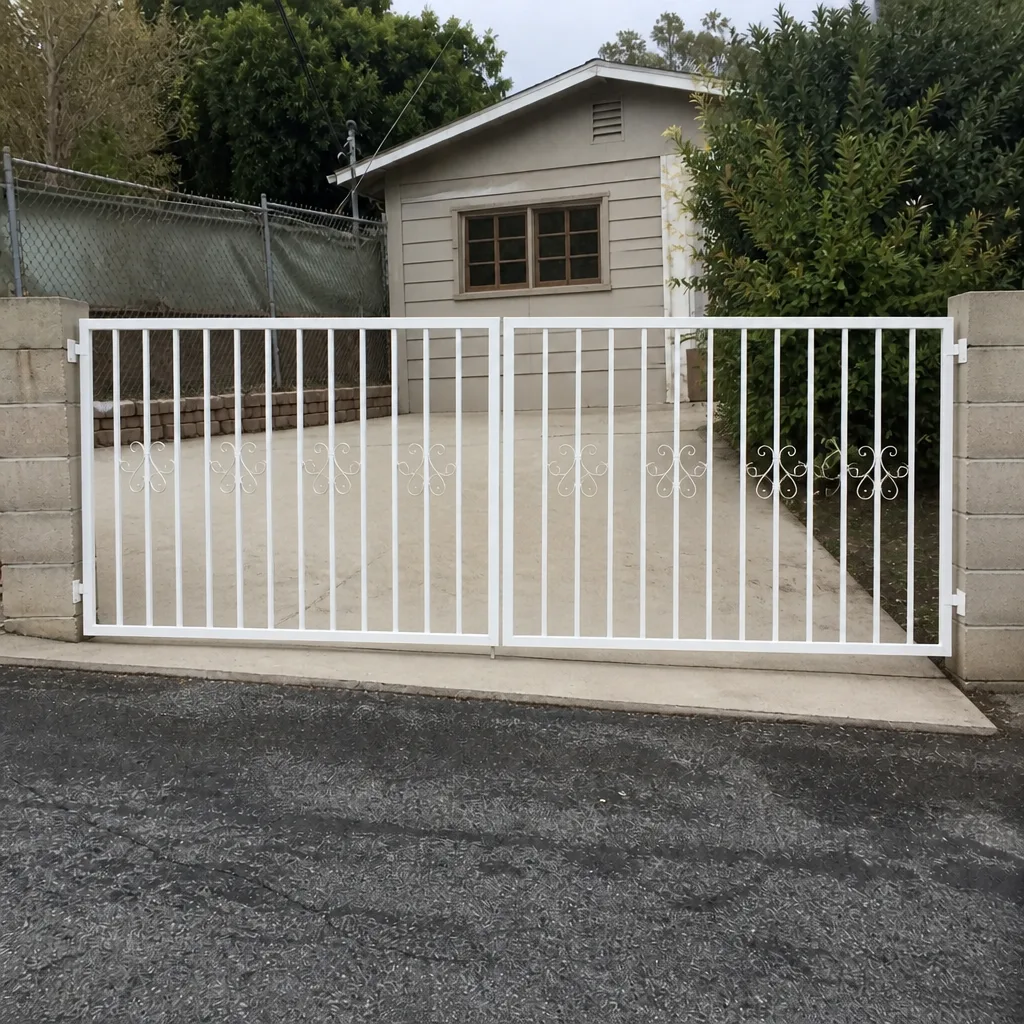 After
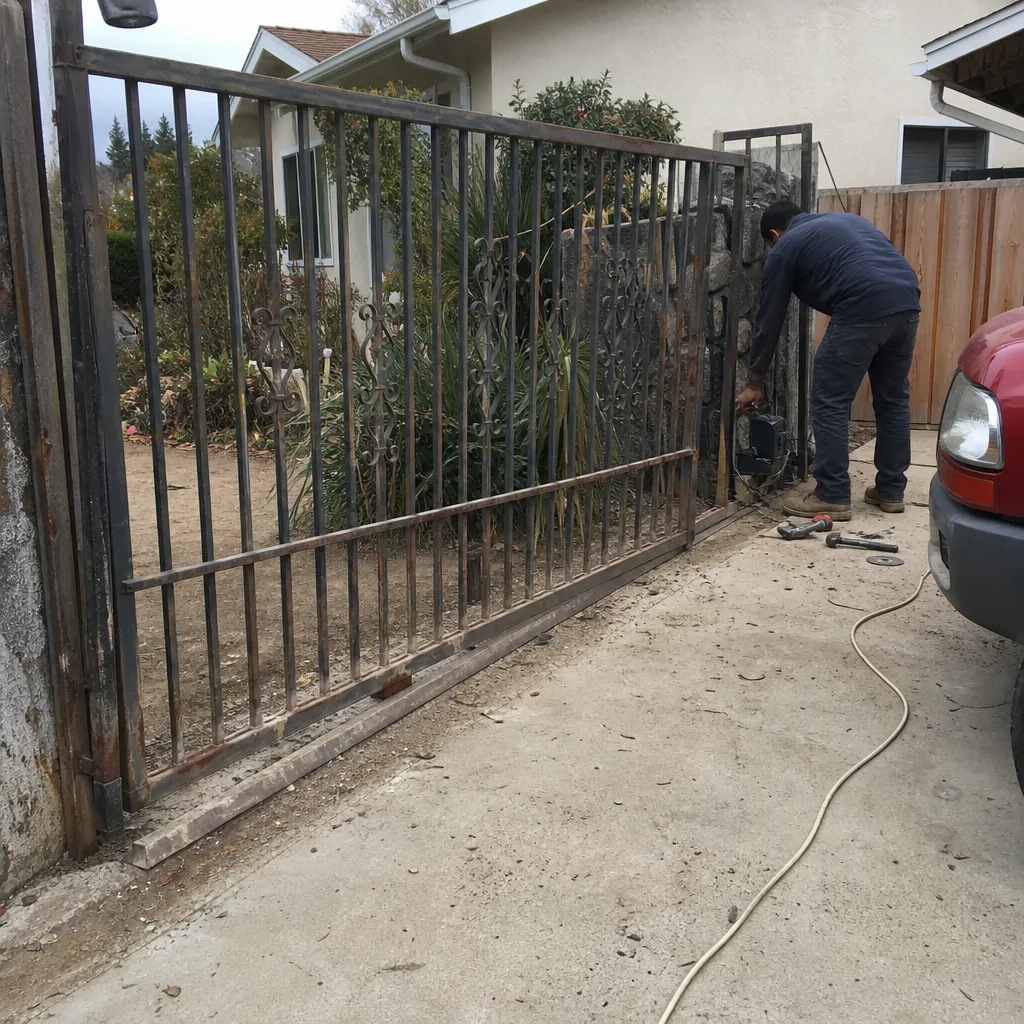 Before
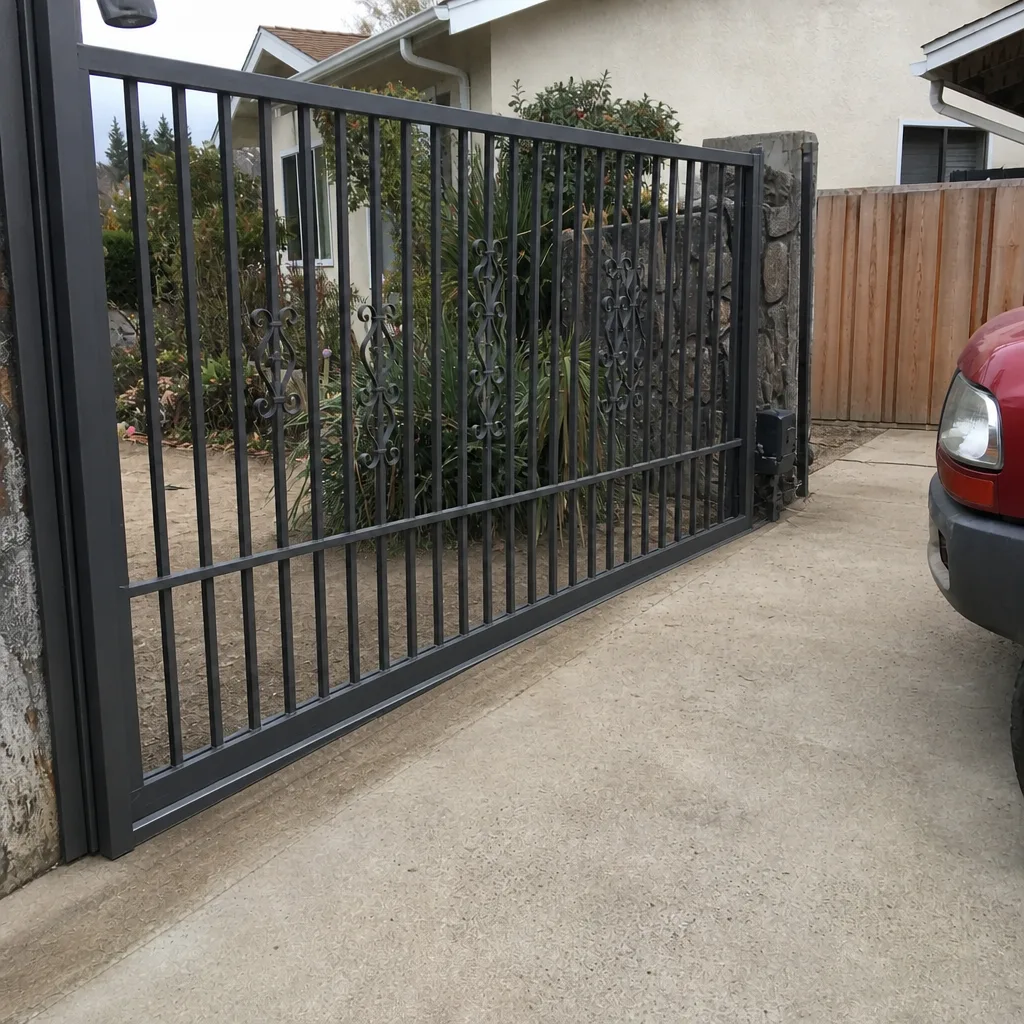 After