
Last updated November 4, 2026
 Wrought iron
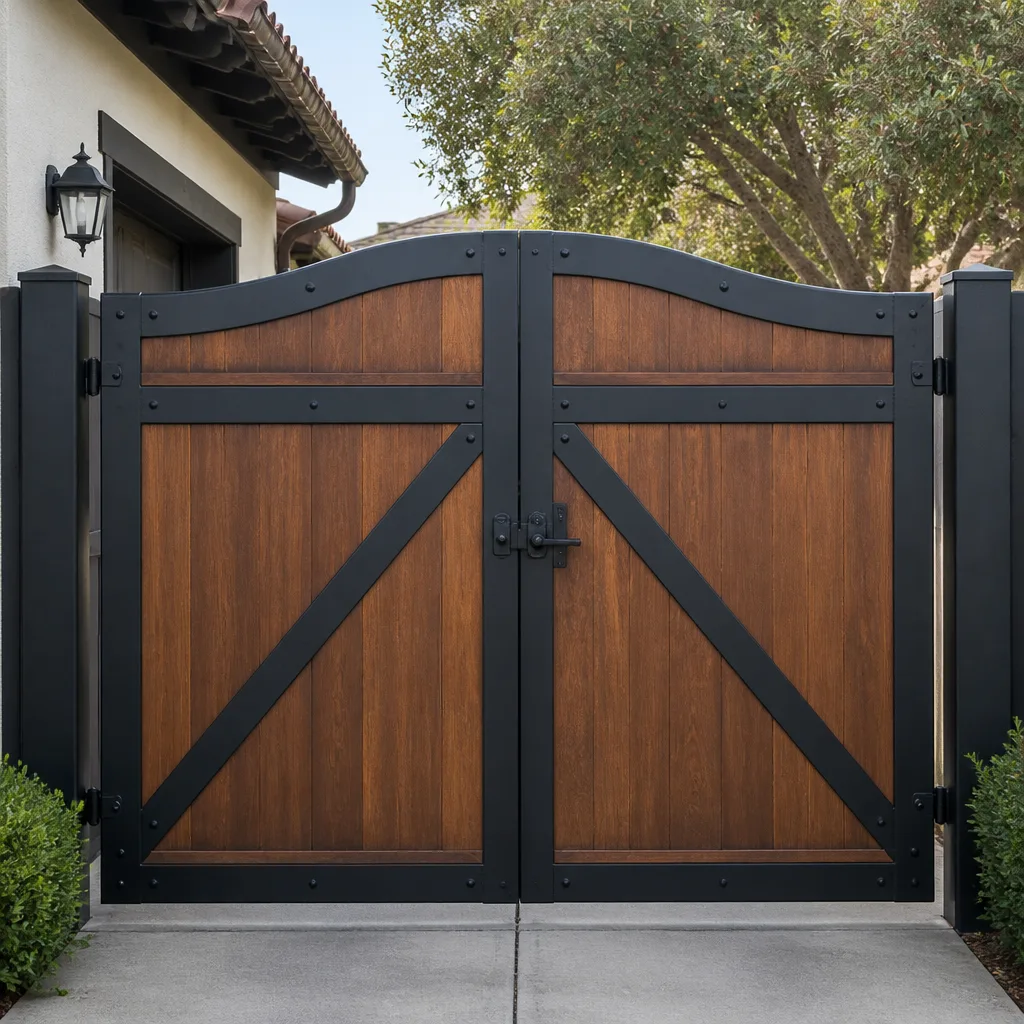 Wood & steel frame
 Farm & ranch
 Sliding driveway gates
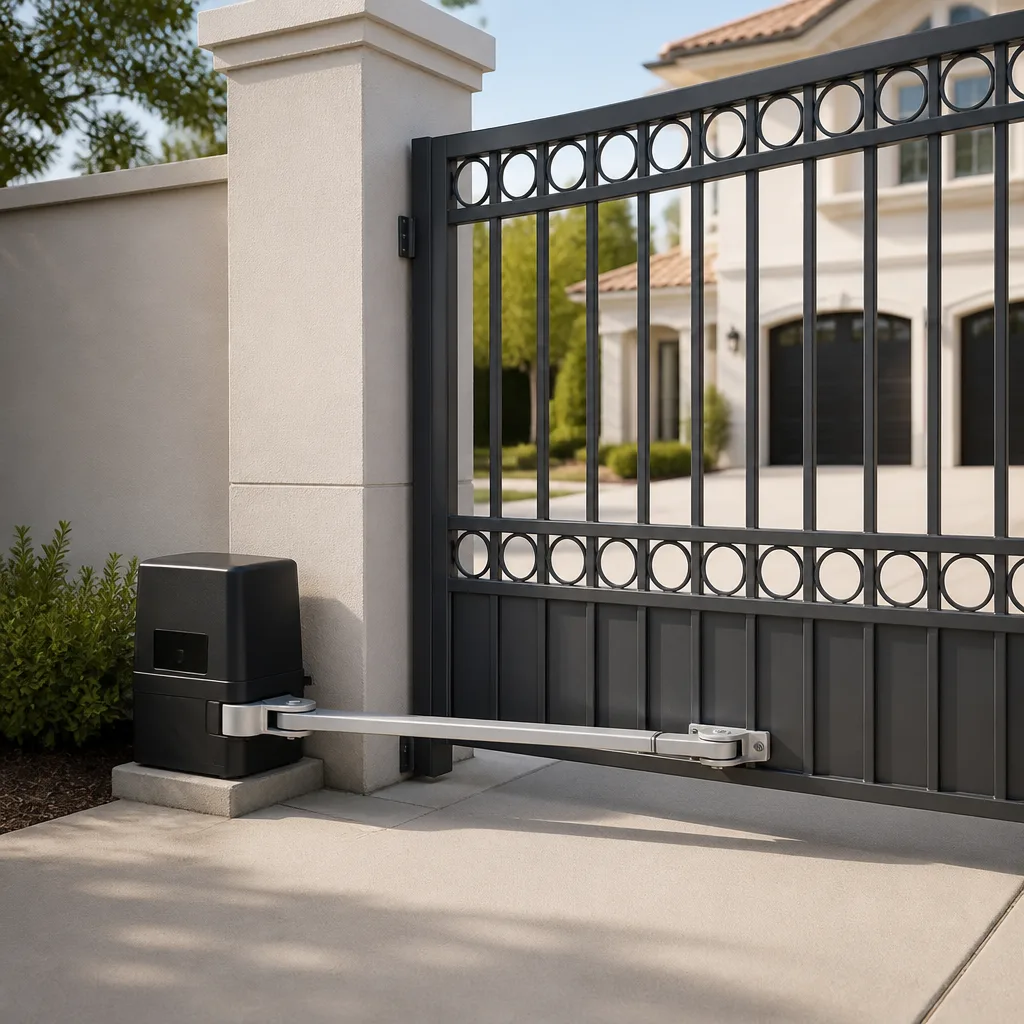 LiftMaster operators
Free on-site gate assessment - hinges, posts, and your LiftMaster or Nice gate operator checked before anything is quoted
The assessment is free and the quote is the invoice.
Get your free estimateGate Repair Maintenance Checklist for Vista Homeowners
Most Vista homeowners think their automatic gate fails because something breaks. In our experience, most failures happen because something wore out slowly, in plain sight, while nobody was looking. The single most skipped maintenance step on automatic gates, lubricating the hinge pins under load, accounts for the majority of premature motor strain repairs we see. It takes under four minutes and costs nothing. This guide gives you a checklist sequenced by failure likelihood for Vista’s specific climate, so you catch the wear before it becomes a repair call.
Styles & brands we work with
- Wrought iron
- Wood & steel frame
- Farm & ranch
- Sliding driveway gates
- LiftMaster operators
Quick Answer
A proper gate repair maintenance routine for Vista homeowners covers three frequencies: monthly visual and lubrication checks, biannual balance and hardware inspections timed around June Gloom and Santa Ana season, and an annual deep service that includes operator diagnostics. The most important tasks are checking gate balance by hand, lubricating hinge pins and rollers with the correct products, and photo-documenting any lean or sag. Most motor strain comes from neglected mechanical wear, not electrical failure.
Table of Contents
- The Monthly Checklist: Five Minutes That Prevent Most Failures
- The Biannual Checklist: Timing It to Vista’s Weather Cycles
- The Annual Deep Service: What Actually Needs Attention
- How to Test Gate Balance by Hand (And Why It Matters)
- Lubrication: The Right Products for Each Component
- The Photo-Log Method for Tracking Gradual Wear
- Common Mistakes to Avoid
- When to Call a Professional
- Frequently Asked Questions
- The Bottom Line
The Monthly Checklist: Five Minutes That Prevent Most Failures
Monthly maintenance is about catching the earliest signs of trouble. None of these tasks require tools or technical skill from Vista homeowners, and the whole routine fits inside five minutes. What matters is consistency. A gate that gets five minutes of attention every month rarely delivers a surprise repair bill.
- Walk the gate through one full open-and-close cycle. Stand where you can see the hinge side and the latch side. Listen for new sounds: grinding, squealing, hesitation, or a thunk that wasn’t there before. A gate that used to glide quietly and now protests is telling you something.
- Check hinge pins and bracket bolts by eye. Look for rust bloom, which in Vista appears as a fine orange dust before it becomes pitting. Check that bolts are snug but don’t crank on them without knowing what you’re doing. You’re looking for movement, not making adjustments.
- Inspect the track or ground path for debris. Slide gates pick up gravel, leaves, and the fine silt that Vista winds push around. A pebble in a track does more damage over a month of daily cycles than you’d think.
- Test the safety reversal on automatic gates. Most operators let you interrupt the closing cycle. Place your hand against the gate edge as it closes (gently, ready to pull back). It should stop and reverse. If it doesn’t, you have a safety issue that needs professional attention before your next use.
- Wipe down photo eyes and keypads. Vista’s dry dust settles on lenses and reduces their effective range. A dry cloth is usually enough. If you use a keypad, check that the membrane isn’t cracked from sun exposure.
This monthly pass catches about 80% of the problems that would otherwise become repair calls. The remaining 20% hide in places you can’t see without going deeper, which is where the biannual checks come in.
The Biannual Checklist: Timing It to Vista’s Weather Cycles
Vista has two predictable weather events that affect gate components differently. June Gloom brings weeks of morning overcast and elevated humidity in a region otherwise defined by dryness. Santa Ana conditions in fall bring hot, dry wind that accelerates drying in lubricants and stressed vegetation against gates and fence lines. Schedule your biannual inspections around these transitions: late spring before the June moisture arrives, and late fall after Santa Ana season peaks.
Each biannual inspection covers everything on the monthly list plus these deeper checks:
- Grab the gate at mid-height and shake it firmly. You’re feeling for looseness in the hinges, the operator bracket, or the post itself. Movement you couldn’t see at a glance shows up here. A gate that wiggles at the hinges strains its motor every single cycle.
- Check for rust on hardware and on the gate frame welds. June Gloom moisture, especially on coastal-facing properties in Vista, can settle into micro-cracks in paint and powder coating. Look at the bottom rail where dirt accumulates and holds moisture against the metal.
- Inspect weatherstripping or edge guards. If your gate has any rubber or fabric edge material, check for sun damage. Vista’s UV exposure is relentless, and degraded edge guard stops protecting both the gate and whatever touches it.
- Test the manual release mechanism. Every automatic gate should have a way to disconnect the operator and move the gate by hand. Test it during daylight when you can actually see what you’re doing. A manual release that seizes is a liability if you lose power.
- Check the operator enclosure for pests. In Vista, ants and mud daubers both like the warm interior of a gate operator. Mud dauber nests across a circuit board can cause shorts. Ants cause their own set of problems. Look but don’t open if you’re not comfortable with electrical components.
Biannual checks are also the right time to look at the surrounding landscape. In Vista, bougainvillea and other fast-growing plantings along fence lines push into gate paths and operator arms. Two inches of branch growth is nothing on a plant. Against a gate opener pushing through it every day, it’s resistance the motor feels and the homeowner doesn’t.
The Annual Deep Service: What Actually Needs Attention
Once a year, your gate needs things that go beyond inspection. Some of this a careful Vista homeowner can handle. The rest belongs to someone who works on gates every day and sees what ten thousand cycles of wear looks like across different brands.
Annual tasks for homeowners comfortable with basic mechanical work:
- Remove and clean the gate wheels or rollers. Vista’s dry soil works into bearing surfaces. Cleaning the rollers and rails once a year extends their life by a multiple you’d feel in your repair budget.
- Check every fastener for torque. Start at the hinges, move to the operator bracket, then the latch hardware. A gate slamming slightly harder than it should loosens bolts overtime, and a loose bolt gives the whole assembly permission to move in ways it shouldn’t.
- Clean and protect the gate surface. Wash off accumulated grime, check for chips in paint or powder coat, and touch them up. Bare steel in Vista’s dry season rusts anyway because June Gloom delivers the moisture on a schedule.
Annual tasks that usually warrant a professional:
- Operator diagnostics. A technician runs the gate through its cycle while measuring actual motor draw. A motor drawing more current than spec is working harder than it should, and finding out why is exactly what separates a gate specialist from a generalist who will figure it out on-site.
- Drive system inspection and adjustment. Rack-and-pinion drives, chain drives, belt drives, and direct-drive arms each have their own wear patterns and adjustment needs. The brands matter here: a Ghost Controls system adjusts differently than a Viking or BFT commercial unit.
- Safety sensor and edge calibration. The photoelectric eyes and safety edges that stop your gate from closing on a car or a child degrade over time. Annual calibration verifies they’ll actually do their job when it matters.
- Limit switch and travel adjustment. Over time, a gate’s travel limits can drift, making the operator push the gate slightly past where it should seat. That small overshoot is a big deal for motor and hinge life.
Structuring the year around these three service levels, monthly, biannual, and annual, is the difference between a gate that runs for fifteen years with predictable minor maintenance and one that kills its motor every four or five years. The checklist itself isn’t complicated. Following it is what matters.
How to Test Gate Balance by Hand (And Why It Matters)
Every automatic gate operator on the market, from value residential units like Ghost Controls and Mighty Mule to commercial-grade systems from BFT and Viking, is sized for a gate that moves freely. When a gate drifts out of balance, the operator still tries to move it anyway. It just draws more current doing so. That extra draw turns into heat at the control board, and heat is what eventually cooks capacitors and controllers.
Testing balance by hand is the highest-value diagnostic a Vista homeowner can perform on an automatic gate. Here’s the method:
- Disconnect the operator from the gate. On most systems, there’s a manual release. For slide gates, it’s usually a lever on the operator. For swing gates, you might be disconnecting the arm or the piston. If you’re unsure how to do this on your specific operator, check the manual or call someone who knows the brand.
- Open the gate halfway and let go. A balanced gate stays put. You want it to neither drift open on its own nor swing or slide closed. Any movement means the gate is no longer balanced.
- Move the gate through its full travel by hand. You’re feeling for resistance: a spot where it gets harder to push, a slight catch, a spot where it runs easier. A gate that moves differently at different points in its travel has a hardware problem, which often begins as a worn roller or hinge bearing.
- Listen while moving it. Without the operator running, you’ll hear mechanical sounds clearly. A dry hinge squeaks. A worn roller clicks. A rack-and-pinion drive with insufficient clearance scrapes.
- Reconnect the operator and run one full cycle. Compare the sound to what you heard by hand. The motor should sound like it’s working easily, not like it’s pushing against something.
In Vista, the most common cause of balance loss on swing gates is wear at the bottom hinge, which carries the most load and catches the most dust. On slide gates, it’s roller wear and track contamination. Both are correctable before they damage the operator if you catch them during a balance test.
If your gate drifts, don’t just live with it. A drifting gate means your operator is working against gravity or resistance every cycle, and that translates directly to a shorter service life for the most expensive component in the system. Balancing a gate often means adjusting or replacing hardware, which is exactly what our team at Sterling Gate Repair does daily, and we’d rather fix a hinge than replace a control board.
Lubrication: The Right Products for Each Component
Lubrication is where well-meaning homeowners do the most accidental damage. The right product on the right component extends life. The wrong product attracts dust, gums up, or actually accelerates wear. In Vista’s climate, dust attraction is the bigger enemy: any wet, sticky lubricant becomes a grinding paste the moment dry-season wind starts blowing.
| Component | Recommended Lubricant | Never Use |
|---|---|---|
| Hinge pins | White lithium grease, spray or tube | WD-40 (it’s a solvent, not a lubricant), motor oil |
| Rollers and roller bearings | Silicone spray or teflon-based dry lubricant | Grease (attracts dust to bearings) |
| Rack-and-pinion drive | Silicone spray, light application | Heavy grease (dust builds up in the teeth) |
| Chain drive | Chain-specific spray lubricant | WD-40, household oil |
| Latch and lock mechanism | Graphite powder or dry lube | Liquid lubricants (they run and stain) |
| Wheel axles | Silicone spray | Heavy grease |
The pattern here: hinges take load and benefit from something with staying power, which for most Vista homeowners is white lithium grease. Moving parts that need to stay clean get silicone or dry lubricants. Anything that touches the gate’s appearance, like latches, gets graphite or a dry product that won’t run down the face of the gate.
Where most people go wrong: spraying liquid lubricant on a hinge and calling it done. Liquid penetrant helps free a stuck hinge but doesn’t stay in place. For a hinge that moves, you need grease. For a roller that spins, you need something that doesn’t become a dust magnet.
How often to lubricate in Vista: hinge pins and rollers monthly during the dry season. The Santa Ana wind carries particulate that works its way into any wet film. In the June Gloom months, when humidity is higher, you can stretch intervals back toward every six weeks. The key is to wipe away old lubricant and accumulated dust before applying new product. Layering fresh on top of dirty just grinds the dirt in deeper.
The Photo-Log Method for Tracking Gradual Wear
Gradual changes are the hardest to notice. A gate that leans an extra three degrees over six months looks normal every time you drive past it. The solution is embarrassingly simple: take photos on a schedule and compare them.
Here’s the method we recommend to Vista homeowners:
- Stand in the same spot every time. Mark where you stand for each view of the gate. Same distance, same angle. A photo from a slightly different angle hides the change you’re trying to catch.
- Take three photos: full front, full side, and hinge close-up. The front view catches overall lean. The side view catches gate planing, where the gate no longer sits flat in its frame. The hinge close-up catches rust, cracking paint, and bolt movement.
- Add a reference line in your mind or to the photo. Compare the top rail of the gate to the top rail of the adjacent fence. They should stay parallel. When they start to diverge, you have hinge or post movement.
- Log the date and any observations. Keep the photos in a folder on your phone. Notes don’t need to be elaborate. “Latch side sits 1/4″ low” is plenty.
- Compare monthly. If you look at two photos taken thirty days apart and see no difference, you’re probably in good shape. If you compare six months apart and see the gate lower on the latch side, you’ve caught a problem before the latch stops lining up and before the operator starts fighting the misalignment.
This is not about vanity. A gate that sags enough to drag on its track or bind at its latch doesn’t just look bad. It’s throwing off the hinge geometry, which means the operator is pushing against a gate that no longer moves the way it was designed to. The photo log turns “I think the gate looks different” into a measurable, trackable record that tells a technician exactly what changed and when.
For electric gate repair work in Vista, having a photo history also means a faster diagnosis. If we can see what the gate looked like six months ago, we can tell where wear started and how fast it is progressing, which changes what we recommend for the repair.
Common Mistakes to Avoid
- Using WD-40 as a lubricant. It is a solvent and water displacer. It washes out existing lubricant and leaves a film too thin to protect anything. Use real grease on hinges and silicone on rollers.
- Ignoring a slow drift in gate travel. When the gate starts taking longer to open or close, or the operator sounds like it’s working harder, the instinct is to turn up the sensitivity or wait. Both make the underlying problem worse. The operator is trying to tell you something.
- Treating every lubricant as interchangeable. Grease attracts Vista dust. Silicone doesn’t. Use the wrong one and you’re creating an abrasive paste on moving parts, which accelerates exactly the wear you’re trying to prevent.
- Fixing cosmetic rust without addressing the source. Sanding and repainting a rusty hinge is fine. But if the rust came from a leak in the gate’s coating or from moisture trapped in a joint, it’ll come back. Fix the water path first.
- Not testing the manual release. Most homeowners discover their manual release doesn’t work when they’re locked out or during a power outage. Test it twice a year. If it doesn’t operate smoothly, fix it before you need it.
- Adjusting limit switches or force settings without knowing the brand. Every operator brand handles adjustments differently. A Linear system adjusts differently than a FAAC or Ghost Controls system. Guessing leads to gates that don’t close properly or operators that run past their limits and burn themselves out.
- Letting landscape growth touch the gate or operator. In Vista, fast-growing plants will reach a gate arm or an operator enclosure within a season. Branches touching a moving gate arm add resistance. Roots can shift posts. Trimming is maintenance.
When to Call a Professional
Some maintenance tasks require knowledge and judgment that only comes from working on gates every day. If your gate makes a sound you can’t identify, if it trips a breaker, if the operator works but the gate doesn’t move, or if you see physical damage to the gate frame or hinge welds, stop and get help. Electrical work on operators is especially risky: the capacitor inside an operator can hold a charge even when the unit is unplugged. Any time you’re opening an enclosure to access wiring, you’ve crossed from maintenance into repair territory.
Sterling Gate Repair offers free estimates in Vista. Call (855) 773-5055 and tell us what your gate is doing. We answer 24/7. Fast dispatch from 7am to 7pm, Sunday through Friday.
Frequently Asked Questions
Do the monthly five-minute checklist every month, the deeper biannual inspection in late spring and late fall, and an annual deep service. Vista’s climate makes the biannual timing important: late spring before June Gloom moisture arrives, and late fall after Santa Ana season ends.
Motor strain from neglected mechanical wear, specifically dry hinge pins and unbalanced gates. When hinges aren’t lubricated, the operator works harder every cycle, and the result is premature failure at the control board or motor. Most of that is preventable with the monthly checklist.
The monthly and biannual checklists are designed for homeowners. You can test balance by hand, lubricate components, and keep a photo log. Annual deep service that involves opening the operator or adjusting drive components is better handled by a specialist. Safety sensors and edges deserve professional calibration.
White lithium grease. It stays in place under load and doesn’t wash out with light moisture. Avoid WD-40, motor oil, and any thin liquid lubricant on hinges. For rollers and rack-and-pinion drives, use silicone spray or another dry lubricant that won’t attract Vista’s abundant dust.
Three signs: the gate moves slower than it used to, the operator makes a different sound than it did when new, and your monthly balance test shows the gate drifting off a half-open position. Any one of these means the motor is working against resistance. All three together mean a service call is overdue.
Check the obvious things first: power source, keypad battery, photo eyes. Use the manual release to get the gate open if you need access. Then call (855) 773-5055. We answer 24/7 and dispatch from 7am to 7pm, Sunday through Friday, to get your gate back in operation.
The Bottom Line
The gate maintenance checklist for Vista homeowners works because it is sequenced by what actually fails and when. Monthly, you look and listen. Biannually, timed around June Gloom and Santa Ana season, you go deeper on rust, balance, and hardware. Annually, you service bearings, fasteners, and operator diagnostics. The photo log ties it all together by catching gradual drift before it becomes a structural problem. A gate is a machine, and machines respond to consistent, informed attention. Give yours five minutes a month, and you’ll be amazed how rarely it asks for more.
Written by the team at Sterling Gate Repair, serving Vista since 2015.
See the difference
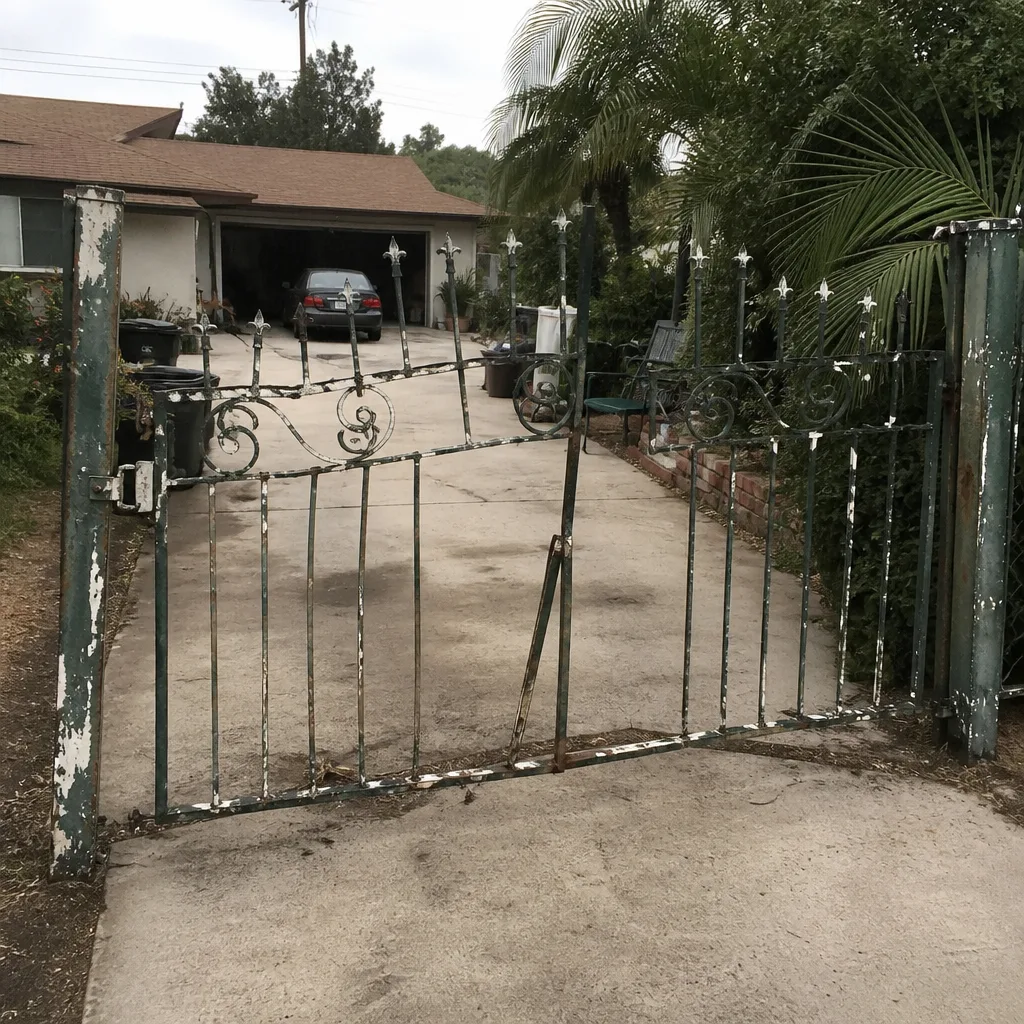 Before
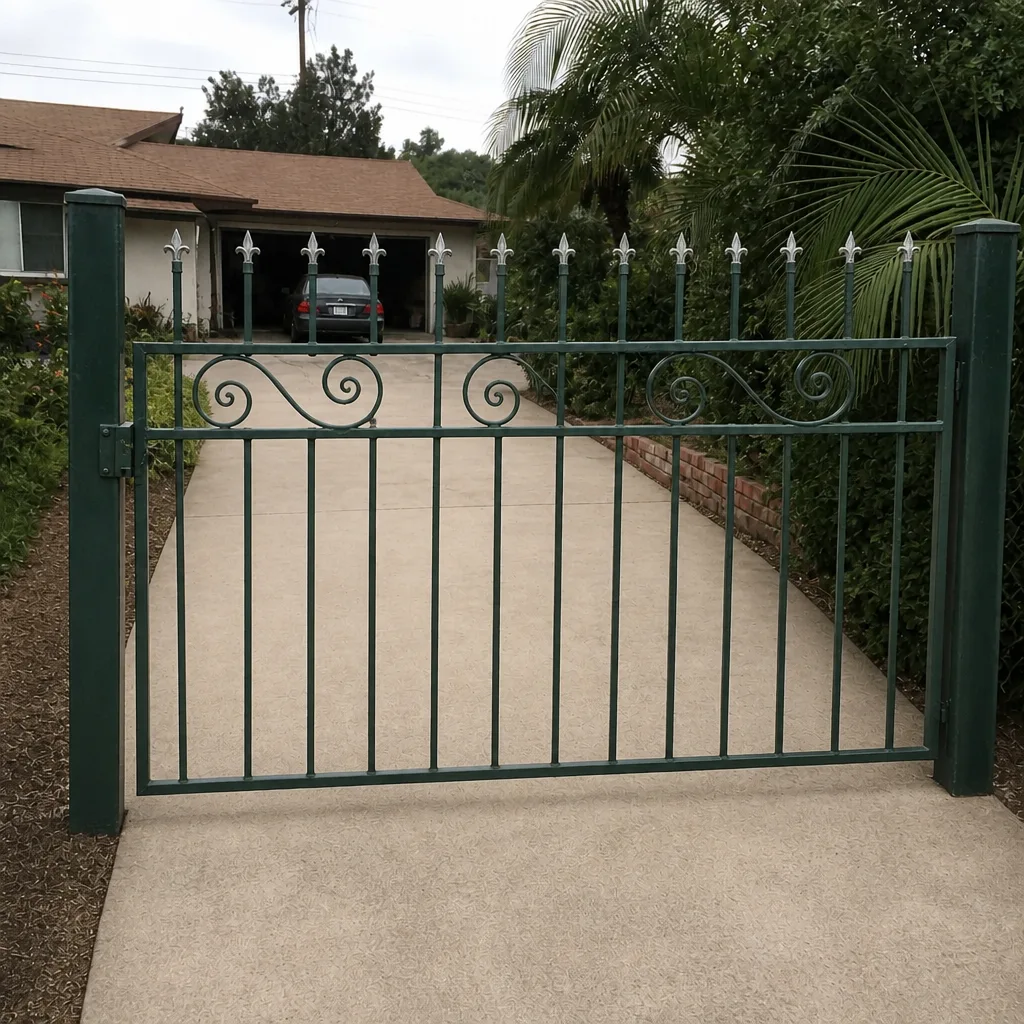 After
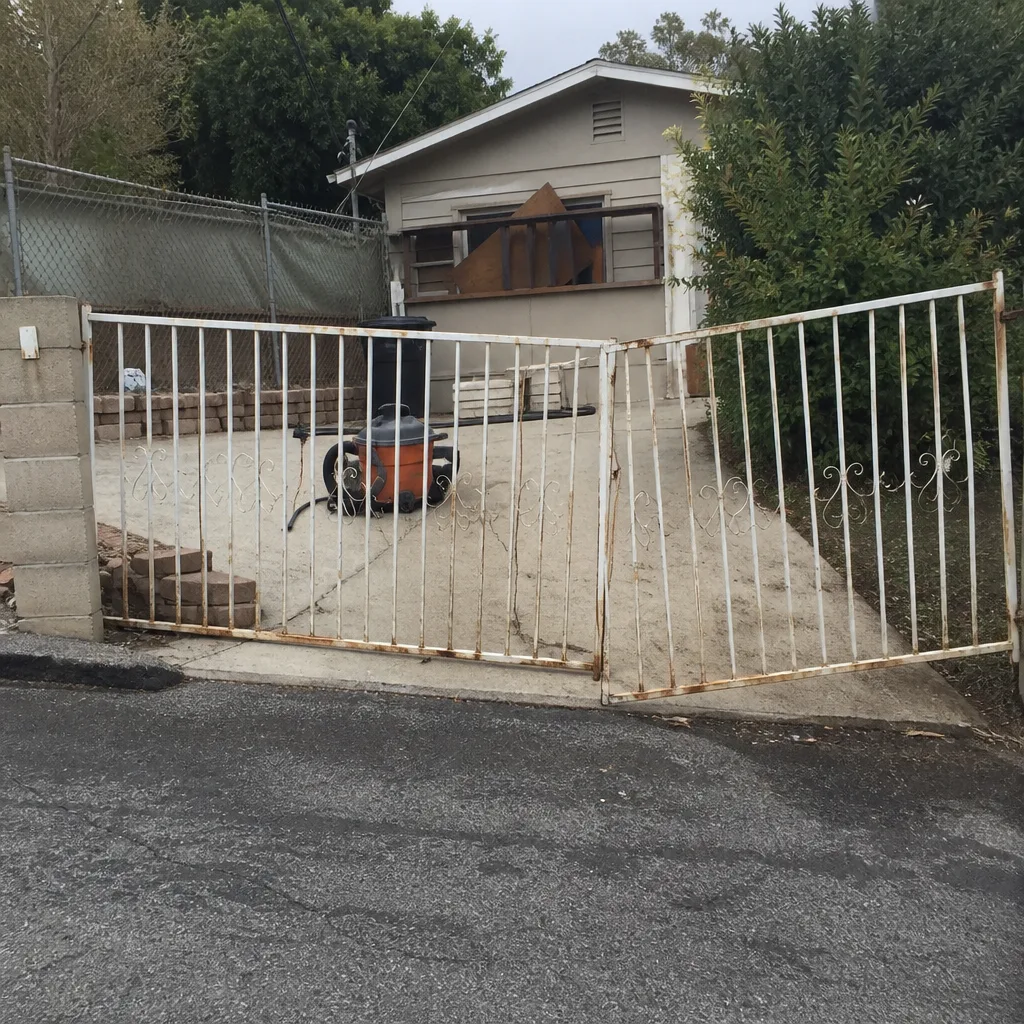 Before
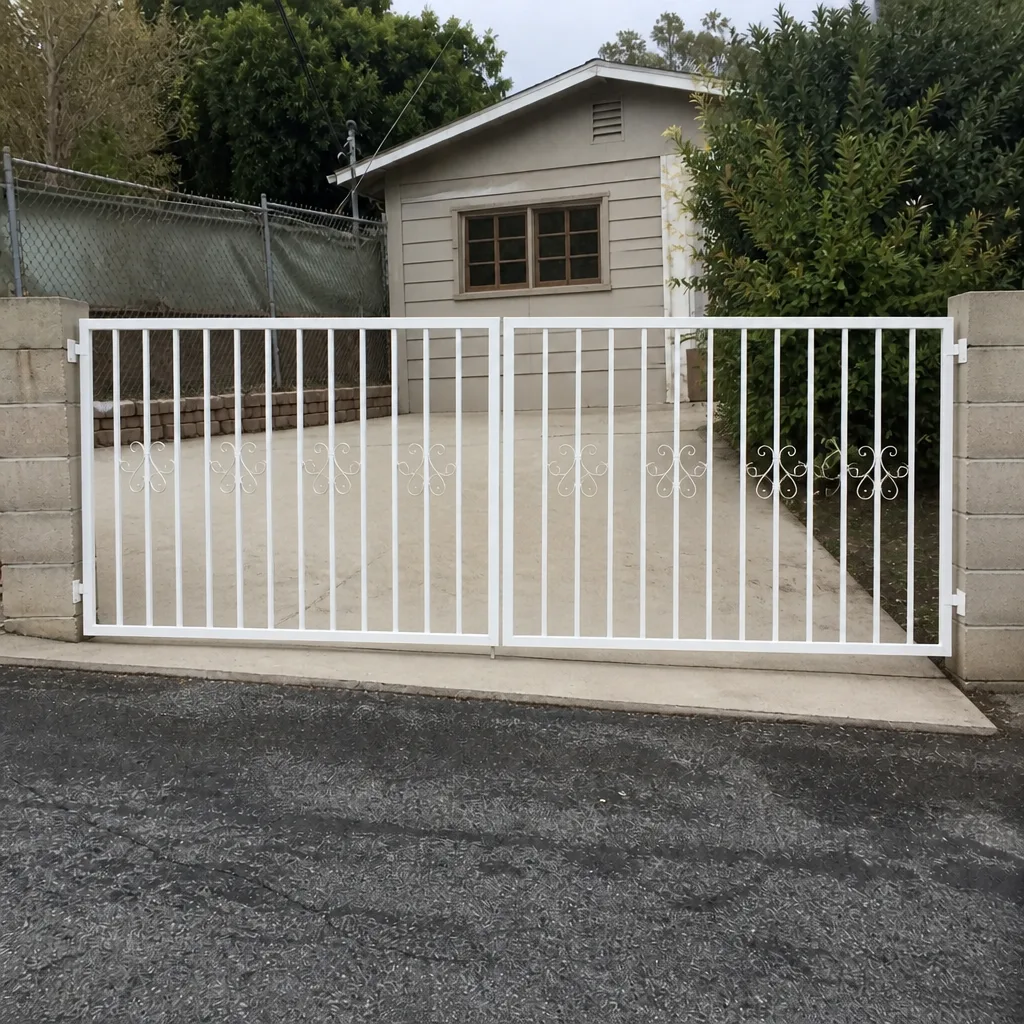 After
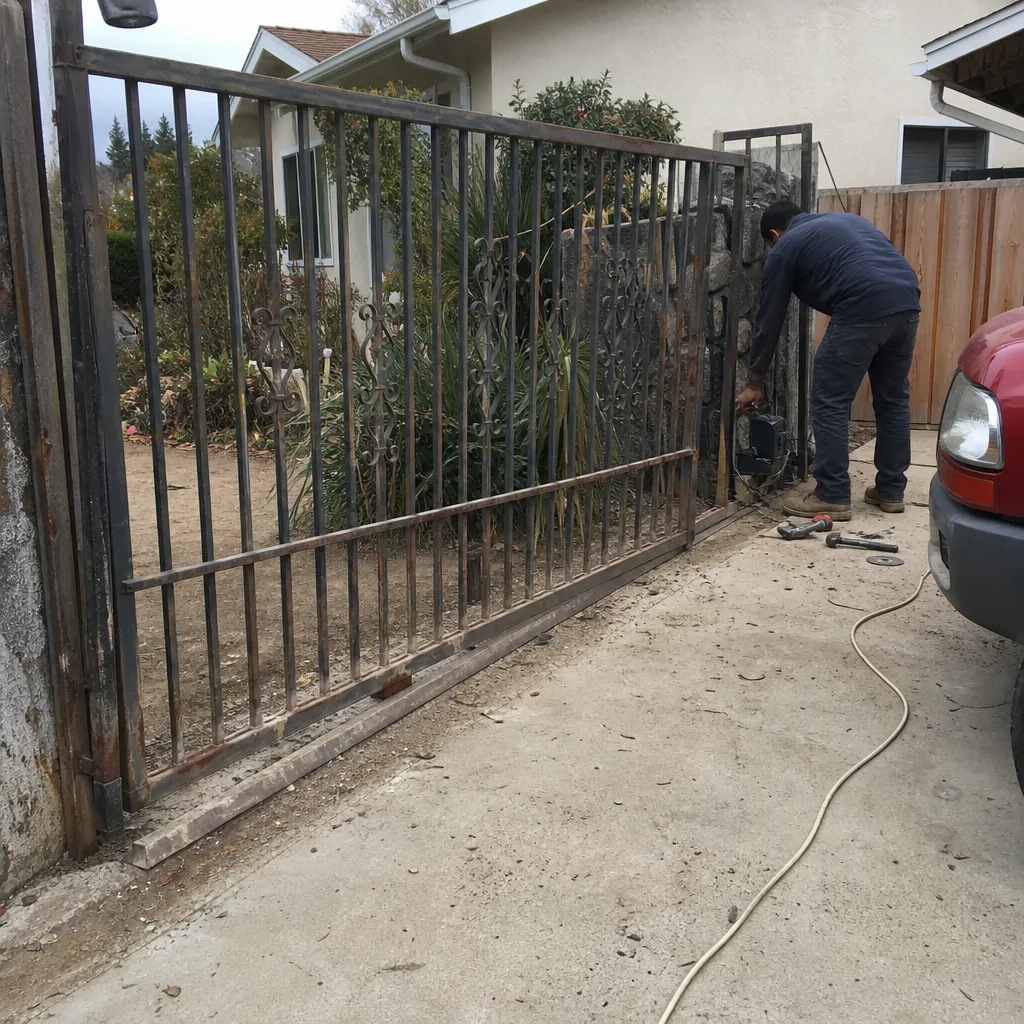 Before
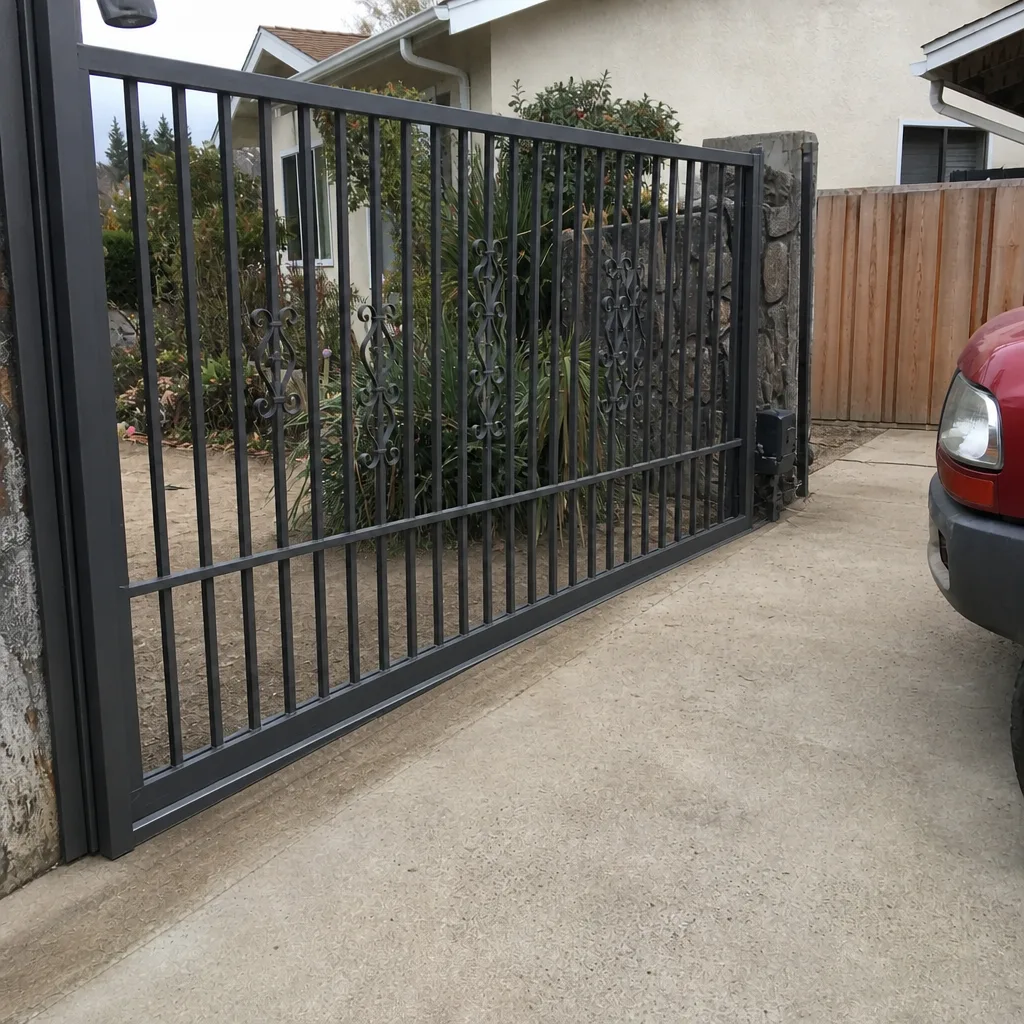 After