
Last updated November 4, 2026
 Wrought iron
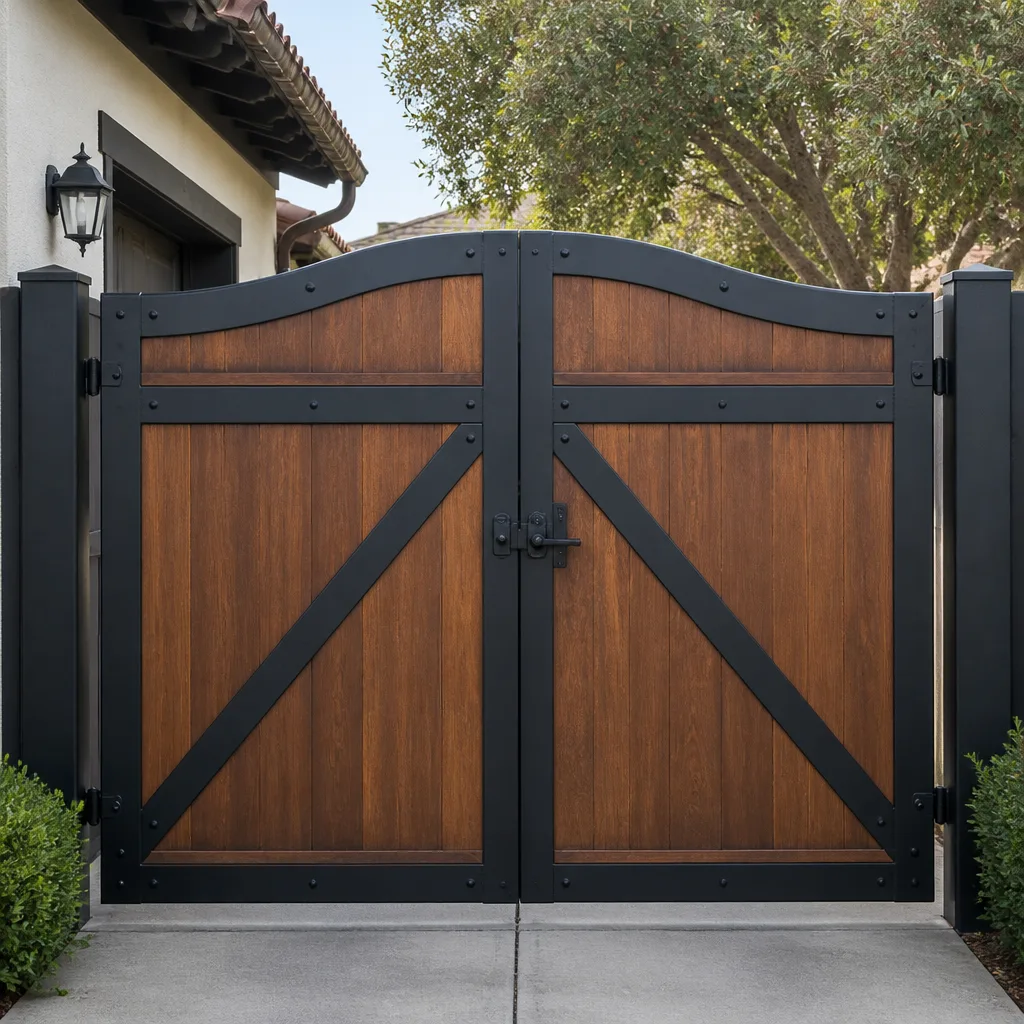 Wood & steel frame
 Farm & ranch
 Sliding driveway gates
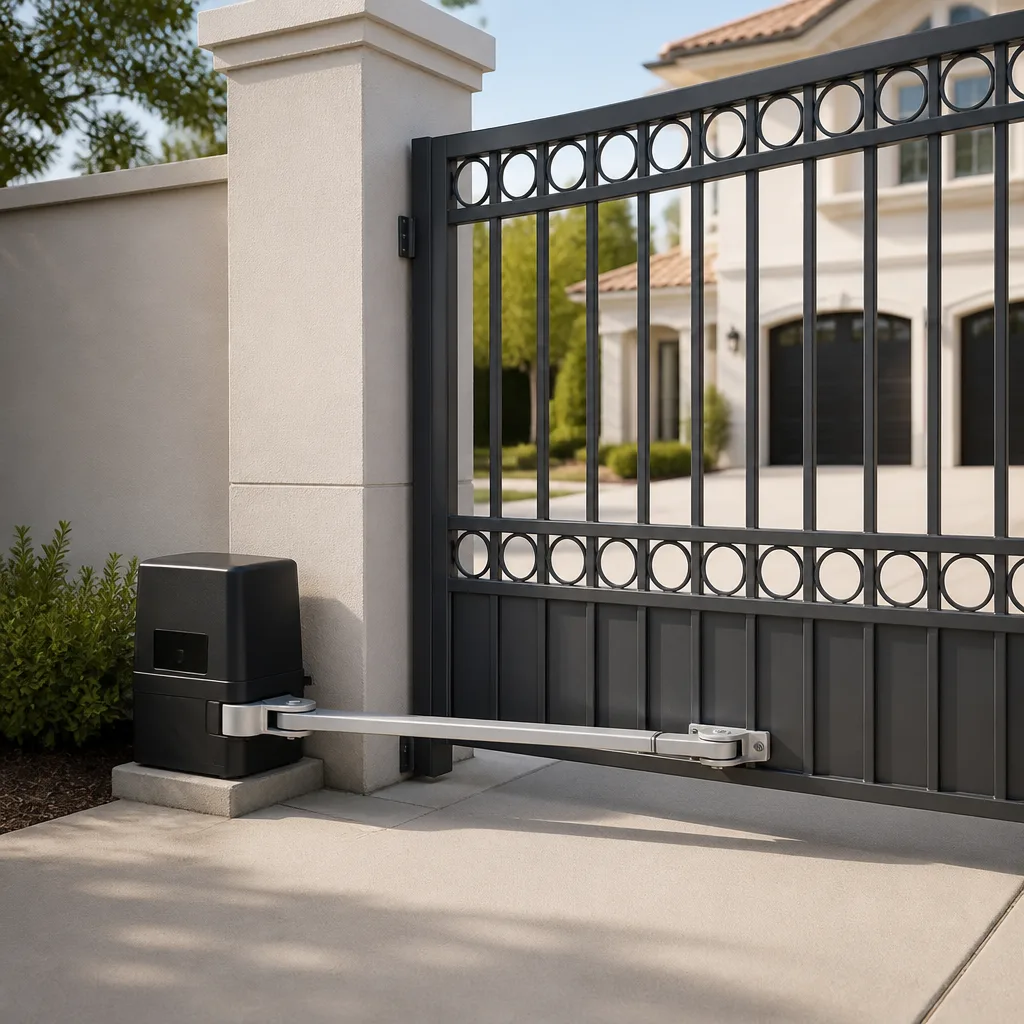 LiftMaster operators
Free on-site gate assessment - hinges, posts, and your LiftMaster or Nice gate operator checked before anything is quoted
The assessment is free and the quote is the invoice.
Get your free estimateGate Repair Maintenance Schedule: What to Do and When
Most people think the biggest threat to an automatic gate is a random mechanical failure. It rarely is. The most expensive gate repair calls in Vista happen in June and December, right after the marine layer’s spring humidity has soaked every exposed electrical connection and right as homeowners are about to leave for holiday travel with a gate that suddenly refuses to close. Both are predictable. Both are preventable with a schedule that matches how Vista’s climate actually stresses gate hardware. This guide lays out a calendar you can follow without being a technician.
Quick Answer
A gate maintenance schedule is a layered rhythm: a quick weekly glance, a 15-minute monthly check, seasonal adjustments timed to Vista’s marine layer and Santa Ana conditions, and one thorough annual inspection. Most homeowners can handle the monthly checks themselves. The annual inspection, lubrication, and any electrical or sensor work is where calling a gate specialist keeps the system safe and the warranty intact.
Styles & brands we work with
- Wrought iron
- Wood & steel frame
- Farm & ranch
- Sliding driveway gates
- LiftMaster operators
Table of Contents
- Why a Schedule Matters More Than a Checklist
- Time-Based vs. Use-Based Wear: The Two Different Clocks on Your Gate
- The Weekly Glance and the Monthly 15-Minute Check
- Seasonal Adjustments for Vista’s Actual Weather
- The Lubrication Points Most Homeowners Skip
- How to Test Gate Safety Reversal Sensors at Home
- The Annual Inspection: What to Look at and What to Leave Alone
- Why You Should Log Every Maintenance Task
Why a Schedule Matters More Than a Checklist
Checklists fail because they treat every component the same. A gate has parts that wear by calendar time and parts that wear by cycles. The limit switches inside a LiftMaster or FAAC operator age whether the gate opens twice a day or forty times a day. The hinge pivot pins on a swing gate wear with every cycle, no matter how mild the weather. If you inspect everything on the same annual schedule, you’ll catch the calendar items but miss the use-based items until they fail.
A schedule built around Vista’s actual conditions changes what you look for and when. Spring marine layer humidity is the annual stress test for circuit boards and wire connections. Late summer heat expansion shifts panel alignment and chain tension. Fall brings leaf litter and Santa Ana-driven debris into track channels and operator housings. Winter’s shorter days mean the safety sensors and lighting do more work. Each season has a failure mode, and each failure mode shows up on a predictable timeline.
What we see in our gate service work is the same pattern again and again. A homeowner notices a slight hesitation in the gate’s movement in April, ignores it because it still opens, and calls us in June when the circuit board has finally corroded past the point of repair. The hesitation was the warning. The schedule is what catches the warning before it becomes a full replacement.
Time-Based vs. Use-Based Wear: The Two Different Clocks on Your Gate
Every gate component falls into one of two categories, and knowing which is which tells you how often to inspect it. Time-based components degrade with exposure, regardless of use. Use-based components degrade with cycles, regardless of time. A gate that sits unused for six months can still have a dead capacitor in its control board. A gate that cycles constantly can wear out hinge pins within a year, even with perfect weather.
Time-Based Components: Inspect on the Calendar
- Control board capacitors and relays: These age from heat, humidity, and power fluctuations. Vista’s marine layer seasons expose them to condensation cycles that slowly degrade solder joints and capacitor seals. Inspect annually, replace typically every 7 to 10 years depending on the brand and placement. BFT and FAAC boards we service tend to show this aging earlier when the operator housing traps moisture.
- Weather seals and gaskets: Rubber and foam seals harden and crack on a calendar timeline. A cracked seal on an operator housing lets moisture reach the electronics. Check every spring, right after the marine layer season ends.
- Battery backup cells: If your gate has a backup battery for power outages, it degrades on a calendar schedule whether or not it’s ever used. Most batteries need replacement every 3 to 5 years. Vista’s Santa Ana season is a good annual reminder to test yours.
- Lubricant films: Grease and oil break down over time, not just with use. Even a lightly used swing gate needs fresh lubricant on its hinge pins annually because the old film dries and attracts grit.
Use-Based Components: Inspect by Cycle Count
- Hinge pivot pins and bushings: Every open-close cycle creates microscopic wear at the pivot point. A busy residential gate in Vista can cycle 15 to 20 times per day. Inspect monthly by looking for visible play when the gate is moved by hand, and grease annually or more often if you hear squeaking.
- Chain and belt tension: Chains stretch with use. Slide gates that run dozens of cycles daily need tension checks monthly. A loose chain slaps the guide and accelerates sprocket wear, which turns a simple adjustment into a sprocket replacement.
- Safety sensor alignment: The sensors themselves are static, but the brackets holding them get bumped by vehicles, kids, and landscaping equipment. A sensor that worked in January can be knocked out of alignment by March. Test monthly.
- Operator gear teeth: In worm-drive or gear-reduction operators like linear-drive models, the gear teeth wear at a predictable rate based on cycles. Annual inspection catches thinning teeth before they strip completely.
The practical takeaway: if you can measure it in days, put it on the calendar. If you can measure it in openings and closings, check it more often and let the gate’s own behavior tell you when it needs help.
The Weekly Glance and the Monthly 15-Minute Check
You don’t need to be a technician to catch most gate problems before they strand you. You need to spend 30 seconds a week and 15 minutes a month looking at the right things. Here’s what actually matters.
The Weekly Glance: 30 Seconds When You Drive In or Out
- Listen for new sounds. A gate that suddenly squeaks, grinds, or hesitates is telling you something changed. Compare it to last week. New sounds mean something is wearing, loose, or dry, and it never fixes itself.
- Watch the gate’s speed. Does it move as quickly as it usually does? A slow spot mid-travel often means a chain guide needs lubricant or a roller is binding. A uniformly slower gate can mean the operator is working harder than it should.
- Look at the closed position. When the gate is fully closed, does it sit square and flush? A gate that now sits slightly angled or leaves a larger gap at one end has a hinge, post, or wheel out of adjustment.
- Glance at the ground path. Is anything growing into the gate’s swing arc or slide path? Ice plant from a Vista slope, bougainvillea from a neighbor’s side, or even a shifting gravel pile can obstruct the gate and strain the operator.
The Monthly 15-Minute Check: The Routine That Prevents Most Breakdowns
- Push the gate by hand in manual mode. Operator still engaged? That’s fine for this test; you’re feeling for resistance. A gate that moves freely by hand but struggles under power has an operator problem. A gate that resists hand movement has a mechanical problem at the hinges, wheels, or track. This single test tells you which half of the system to focus on.
- Wipe down the safety sensor lenses. Dust, condensed marine layer moisture, and pollen collect on photocell lenses and reduce their range. A soft, dry cloth takes care of it. Do this every month, especially in spring and summer.
- Clear debris from the track or swing path. Slide gates collect leaves, gravel, and dust in the track channel. Swing gates collect debris under their arc. Five minutes with a broom prevents days of problems.
- Check the operator housing for moisture or pests. Open the housing (power off first) and look for condensation, spider webs, ant trails, or rodent sign. Vista’s spring marine layer makes this a monthly chore from March through June. Spiders and ants are drawn to the warmth of circuit boards and can cause shorts.
- Run one full open-and-close cycle while you watch. Stand where you can see the whole gate travel. Note any wobble, any hesitation, any spot where the gate seems to work harder. If the safety reversal works during this test, count it as a pass.
- Log it. Thirty seconds to note the date and anything you observed in a simple notebook or phone note. The record matters more than you think, and we explain why in a later section.
We know that fifteen minutes a month feels like one more thing on the list. The alternative is the gate that stops working on a Sunday morning when you have somewhere to be. Sterling Gate Repair sees that exact call every week, and most of them trace back to a skipped monthly check.
Seasonal Adjustments for Vista’s Actual Weather
Vista doesn’t have harsh winters, but it has distinct seasonal patterns that stress gates in specific ways. A maintenance schedule that ignores the local climate will inspect the wrong things at the wrong times. Here’s what each part of the year means for your gate.
Spring: The Marine Layer Season (March through June)
This is the most damaging season for electric gates in Vista. Night and morning marine layer condensation penetrates every unsealed gap, settles on circuit boards, and accelerates corrosion on exposed connectors. Moisture combined with coastal-adjacent humidity creates the perfect environment for slow electrical failures that show up weeks or months later.
What to do in spring:
- Check the operator housing gasket for cracks or gaps. If the seal is failed, moisture is getting in.
- Look for condensation inside the housing after a foggy morning. If you find it, dry the housing thoroughly and find the entry point.
- Inspect all visible wire connections for green or white corrosion. Corroded connections cause intermittent failures that are hard to diagnose later.
- Test the safety reversal more often during this season. Condensation on sensor lenses can cause false triggers or, worse, reduce detection range.
- If you see any hesitation in the gate’s operation during spring, call us. This is the season when a $200 board repair beats a $1,200 full replacement two months later.
Summer: Heat Expansion and Strained Alignment (July through September)
The late summer heat in Vista does two things to gates: metal expands, and the ground dries out. Expansion shifts panel alignment on swing gates and can bind slide gates in their tracks. Drying soil lets gate posts shift slightly, especially on hillside properties where retaining walls and grade changes are common. What fit perfectly in spring can bind by August.
What to do in summer:
- Watch for scrape marks or fresh metal wear where the gate meets its post or track. These are signs of heat-related movement.
- Check the chain tension on slide gates. Heat changes the effective length, and a chain that was adjusted in spring may now be too tight or too loose. LiftMaster and Linear slide operators are sensitive to tension changes.
- Listen for a gate that now buzzes or hums at the closed position. That’s the operator straining against a gate that no longer seats fully.
- Keep the track clear of dust and sand. Dry summer conditions put fine grit exactly where it causes the most wear.
Fall: Debris and Santa Ana Winds (September through November)
Santa Ana season brings dry winds that strip leaves, push dust through every gap, and send loose landscaping material into gate tracks and operator housings. Slide gates, in particular, collect leaf litter in the track channel, which then compacts into a dense mat that the gate has to push through. This is also the season when loose post caps, trim pieces, and sensor brackets get knocked around.
What to do in fall:
- Clear the track weekly during heavy leaf drop. Don’t just brush the surface; lift out the compacted material at the track ends.
- Check that all sensor brackets are still tight and aligned. Wind and yard work knock them out of position easily.
- Inspect the operator housing for blown-in dust and grit. A thin dust layer on a circuit board acts as an insulator and causes overheating.
- Verify that any decorative trim, post caps, or signage are still secure. Loose metal in a wind gust can damage the gate or the operator arm.
Winter: Shorter Days, More Sensor Work, Pre-Holiday Stress (December through February)
Vista’s winters are mild, but the shorter days mean the gate’s safety lighting, sensor receivers, and battery backups do proportionally more work. This is also the season when gates get the most cycles, with holiday visitors, school schedules, and shorter daylight hours concentrating traffic into fewer hours.
What to do in winter:
- Test the battery backup (if equipped) before holiday travel. A dead backup battery means a power outage also means a gate that won’t open.
- Clean the sensor lenses more often. Winter light angles combined with dust can cause false triggers or missed detections.
- Check the manual release mechanism and make sure you know how to operate it. If the power goes out while you’re home, you’ll want that knowledge fresh.
- Run a full safety reversal test in December before you leave for any trip. The last thing anyone wants is a gate failure discovered from 500 miles away.
Our electric gate repair work in Vista follows these seasonal patterns closely. The calls we get in June are the moisture problems. The calls in August are the heat expansion problems. The calls in late December are the pre-holiday failures that were building for months.
The Lubrication Points Most Homeowners Skip
Lubrication is the cheapest maintenance you’ll ever do, and it’s also the one most people do wrong. They either use the wrong product, skip the critical points, or apply it over dirt and old grease, which creates an abrasive paste that accelerates wear. Here’s what to use and where.
Use the Right Product
- White lithium grease: Use on metal-to-metal pivot points like hinge pivot pins, chain tension guides, and slide gate rollers. It stays in place and doesn’t sling off.
- Silicone spray: Use on nylon or plastic bushings, wheel surfaces, and track channels where you want a light dry film rather than a heavy grease.
- Never use WD-40 as a lubricant: It’s a water displacer and solvent, not a long-term lubricant. It strips existing grease and leaves metal surfaces dry within days. Use it for cleaning, not lubricating.
The Specific Points Most People Miss
- Hinge pivot pins (swing gates): The top and bottom pivot pins carry the entire weight of the gate. Apply lithium grease directly to the pin and bushing joint. A gate that squeaks at the hinge is already wearing the pin, and a worn pin lets the gate sag, which throws off the latch alignment and strains the operator. Grease these at least annually, more often if the gate is used heavily.
- Chain tension guides (slide gates): The chain runs through guides that keep it aligned with the sprockets. Dry guides create drag that the operator has to overcome. A thin layer of lithium grease on the guide surfaces, not the chain itself, keeps the run smooth without attracting excessive grit.
- Slide gate rollers and track surface: Rollers need lubrication where the axle meets the bearing, not on the rolling surface itself. A light silicone film on the track channel keeps the rollers moving without building a dirt magnet.
- Lock and latch mechanisms: The mechanical lock or latch that secures the gate when closed gets forgotten because it’s small. A dry lubricant like powdered graphite or a light silicone spray keeps it turning smoothly.
- Operator release mechanism: The manual release lever or key on your operator gets its own share of corrosion and dust. Operate it during each monthly check and apply a light lubricant to the pivot points so it works when you actually need it.
Skip the chain itself when lubricating. An oiled chain attracts dust and grit that turns into a grinding paste inside the links. Most residential chain drives from LiftMaster, BFT, and Linear are designed to run with minimal lubrication on the chain itself. Focus on the guides and sprockets instead.
How to Test Gate Safety Reversal Sensors at Home
The safety reversal system is the most important safety feature on your automatic gate, and it’s also the component most likely to be misaligned, dirty, or disabled without you knowing. Testing it takes two minutes and tells you immediately whether your gate will stop and reverse when something, or someone, is in its path. Skipping this test isn’t just a maintenance miss; it’s a liability issue.
The reversal test:
- Start with the gate fully open.
- Press the button or trigger the sensor to close the gate.
- As the gate begins to close, place a solid object in its path. A rolled-up doormat, a traffic cone, or a piece of firewood works. Do not use your hand or body.
- The gate should reverse direction or stop immediately on contact. On some systems, the gate reverses. On others, it stops and holds. Both responses can be correct; the key is that the gate does not continue closing against the obstruction.
- Run the test twice: once on the leading edge and once near the hinge end. Photo-eye systems are more sensitive in some positions than others.
If the test fails:
- Check the photo-eye lenses for dirt and alignment. Clean both lenses and make sure the brackets haven’t shifted. A misaligned sensor acts like a dead sensor.
- Look for anything obstructing the sensor beam path, including overgrown plants that sway into the path.
- Test the system again after correcting the obvious issues. If it still fails, stop using the automatic mode and call a professional. A gate that fails its reversal test can cause serious injury, and continuing to use it puts you in a difficult position.
We work on safety systems from LiftMaster, FAAC, BFT, and Linear regularly. A failed reversal test on any of these brands has a known set of causes, but the diagnosis requires testing the sensor output at the control board, not just guessing. If you can’t get a clean pass at home, our team can trace the issue from the sensor to the board.
The Annual Inspection: What to Look at and What to Leave Alone
The annual inspection is the one time each year when you should look at the entire gate as a system, not just the parts that are easy to see. It’s also the time to know your limits. Some components are safe to inspect and adjust yourself. Others carry electrical or crush hazards that belong with a trained technician.
What to Inspect Yourself
- Post and foundation integrity: Walk around each post and look for fresh cracks in the surrounding concrete, visible lean, or a gap that’s opened between the post and the footing. In Vista’s clay-heavy soil, seasonal moisture changes cause gradual post movement. Catch it early and it’s a post adjustment. Let it go and it’s a reset.
- Gate panel condition: Look for rust, especially at the bottom rail and around any bolt holes. Surface rust can be cleaned and treated. Rust that has scaled and flaked away needs panel repair before it tears through.
- Wheel and roller wear: On a slide gate, check the wheels for flat spots or wobble. On a swing gate, check the hinge brackets for cracks or movement. A wheel that wobbles is telling you its bearing is done.
- Operator mounting bolts: Check the bolts that hold the operator to its mounting plate and the plate to the pad. Vibration loosens them over time, and a loose operator fights itself on every cycle.
- Wire condition: Look at the exposed wiring runs for cracked insulation, rodent chew marks, or connections that have pulled loose. Vista’s warm weather draws rodents into enclosures, and they love the insulation on low-voltage wire.
What to Leave to a Professional
- Circuit board and capacitor testing: The components inside the control board carry stored electrical charge even with the power off. A capacitor holds enough energy to stop your heart under the wrong conditions. This is not a do-it-yourself inspection.
- Gear adjustment and limit switch calibration: The limit switches tell the gate where to stop. Getting that adjustment wrong sends the gate past its stop point and into the post, the wall, or the neighbor’s car.
- Any repair involving the operator’s internal mechanism: The operator contains rotating, geared components under load. Opening the housing to inspect is fine. Attempting to repair or adjust the internal drive without training is a different matter.
- Access control and keypad programming: If your gate system includes a keypad, intercom, or telephone entry, programming issues are best diagnosed with the right manuals and equipment. Ghost Controls and DoorKing systems have specific programming sequences that are easy to get wrong.
- Date: When you did the work.
- Action: What you did: lubricated hinge pins, cleared track, tested reversal, adjusted chain tension.
- Observation: What you noticed: a new squeak, a slight hesitation, a sensor that needed cleaning.
- Follow-up: What you did about it or what you plan to do.
If you’re in Vista and want a professional annual inspection, call us. We’ll walk the gate as a system, not as a collection of parts, and tell you what needs attention now, what can wait, and what’s in good shape.
Why You Should Log Every Maintenance Task
Maintenance records matter more than most people realize, and in two specific ways that hit home for Vista homeowners. The first is warranty. Most gate operators and access control systems from brands like LiftMaster, FAAC, BFT, and Linear carry warranties that assume regular maintenance. If a component fails and you file a warranty claim, the manufacturer will ask, in one form or another, whether the gate was maintained. A log that shows dated lubrication, adjustment, and inspection entries is your evidence.
The second is property disclosure. When you sell a home in Vista, the buyer will ask about the gate. A log showing regular maintenance answers the question before it’s asked. It signals that the automatic gate, which can appear intimidating to a buyer who has never owned one, has been looked after. It’s a documentation of care that transfers with the property.
Keep it simple:
A notebook in the garage or a note on your phone is all you need. The habit of logging also reinforces the habit of looking. When you know you’re going to write something down, you look more carefully.
Common Mistakes to Avoid
- Waiting for a symptom before doing any maintenance. By the time the gate is making a new noise, hesitating, or failing to close, the wear has already progressed past the easy, cheap fix. Maintenance is about seeing the conditions that cause failure before the failure happens.
- Lubricating everything with the same product. Grease on a track channel attracts dirt and creates a grinding paste. Silicone on a heavy pivot pin wears off in weeks. Match the lubricant to the surface, or you’ll accelerate the wear you’re trying to prevent.
- Skipping the safety reversal test because the gate “seems fine.” A gate can operate perfectly for months with a failed reversal system. The failure only shows itself when something is in the path, and by then the test is no longer hypothetical.
- Ignoring the marine layer season. Springtime condensation in Vista corrodes connectors and circuit boards quietly. The gate doesn’t stop working in May; it stops working in July when the corrosion finally reaches the point of failure. Checking in spring catches it.
- Adjusting the chain tension incorrectly. Too tight is as damaging as too loose. A chain under excessive tension puts load on the sprocket bearings and shortens their life. If you’re not sure what proper tension feels like, let a professional set it.
- Not clearing the track weekly during leaf drop. Fall leaves in Vista compact into a hard mat in the track channel. A few weeks of neglect turns a simple clearing into a digging-out job.
- Assuming the gate is fine because it opens and closes. A gate can operate while slowly wearing through hinge pins, stretching its chain, or straining its operator. The goal of maintenance isn’t just to keep it working this week; it’s to keep it working for years without a major repair.
See the difference
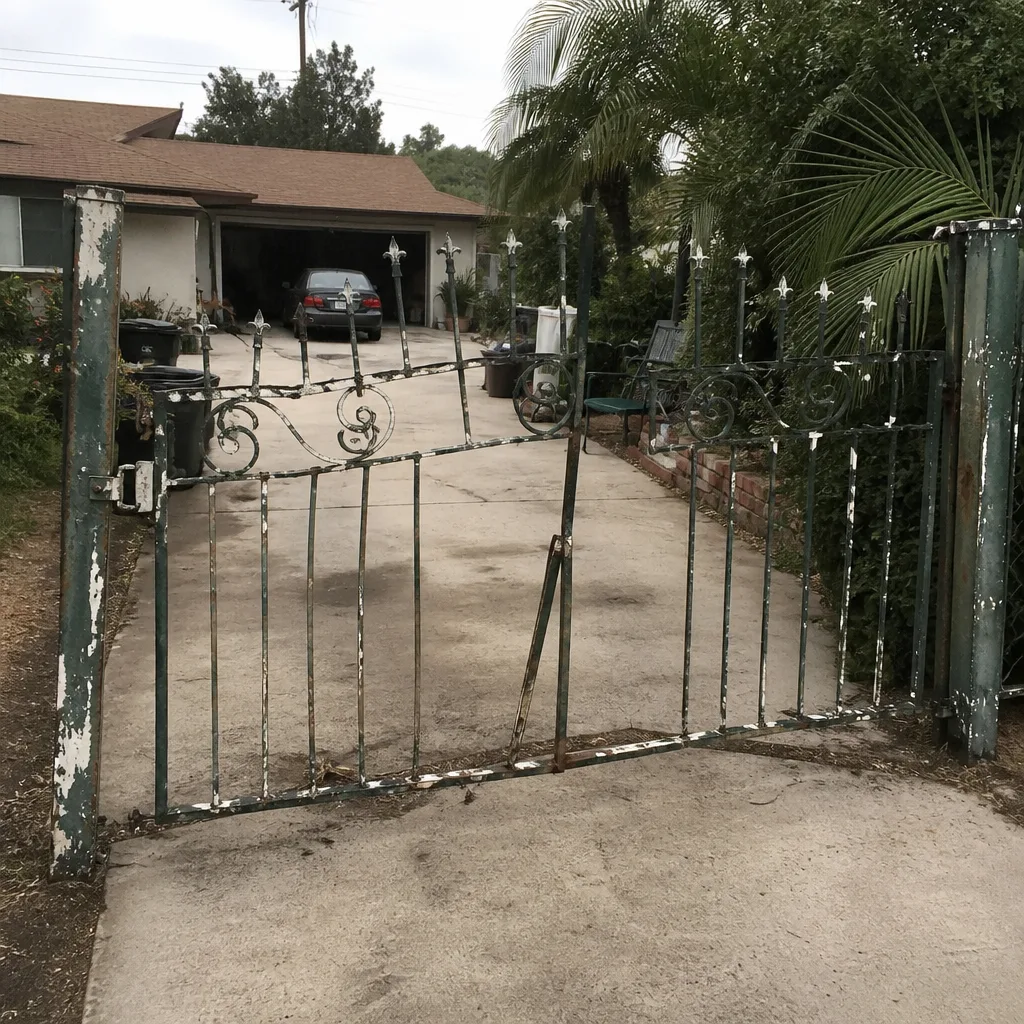 Before
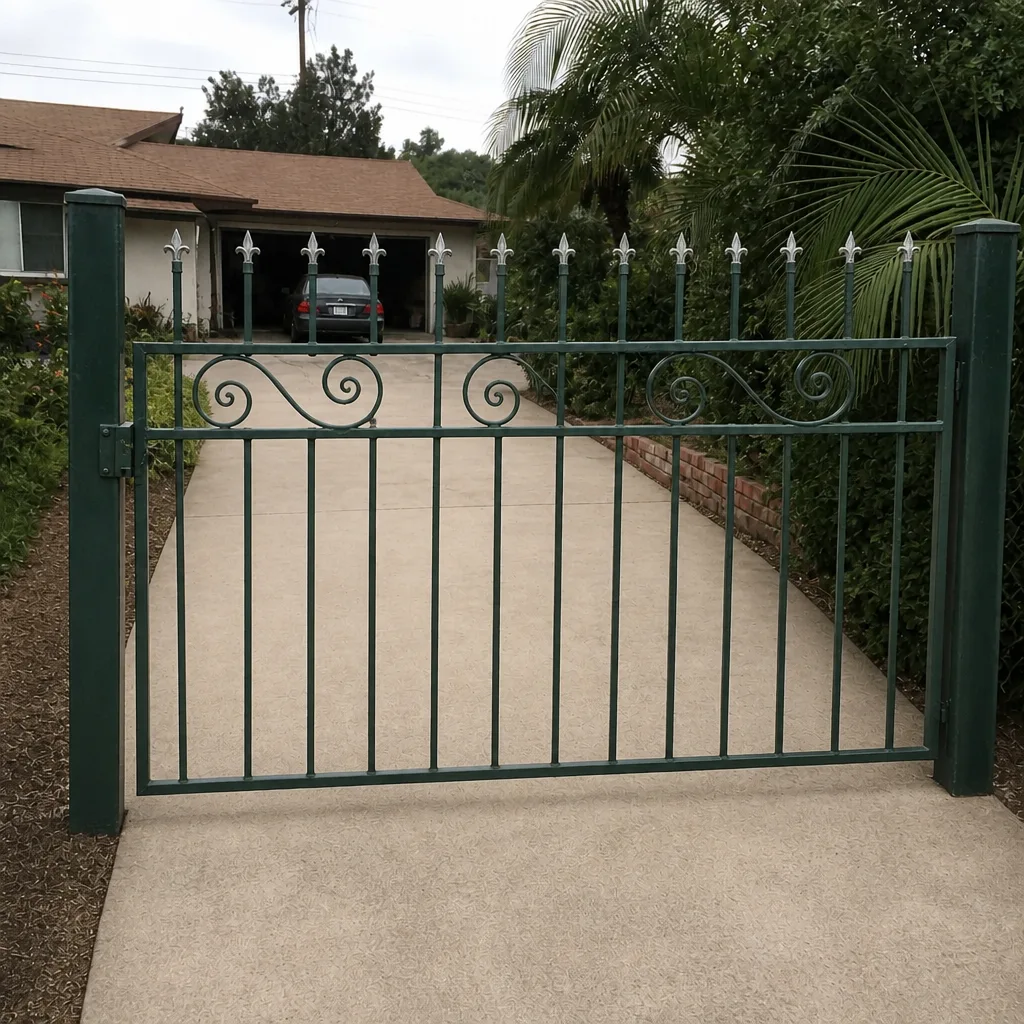 After
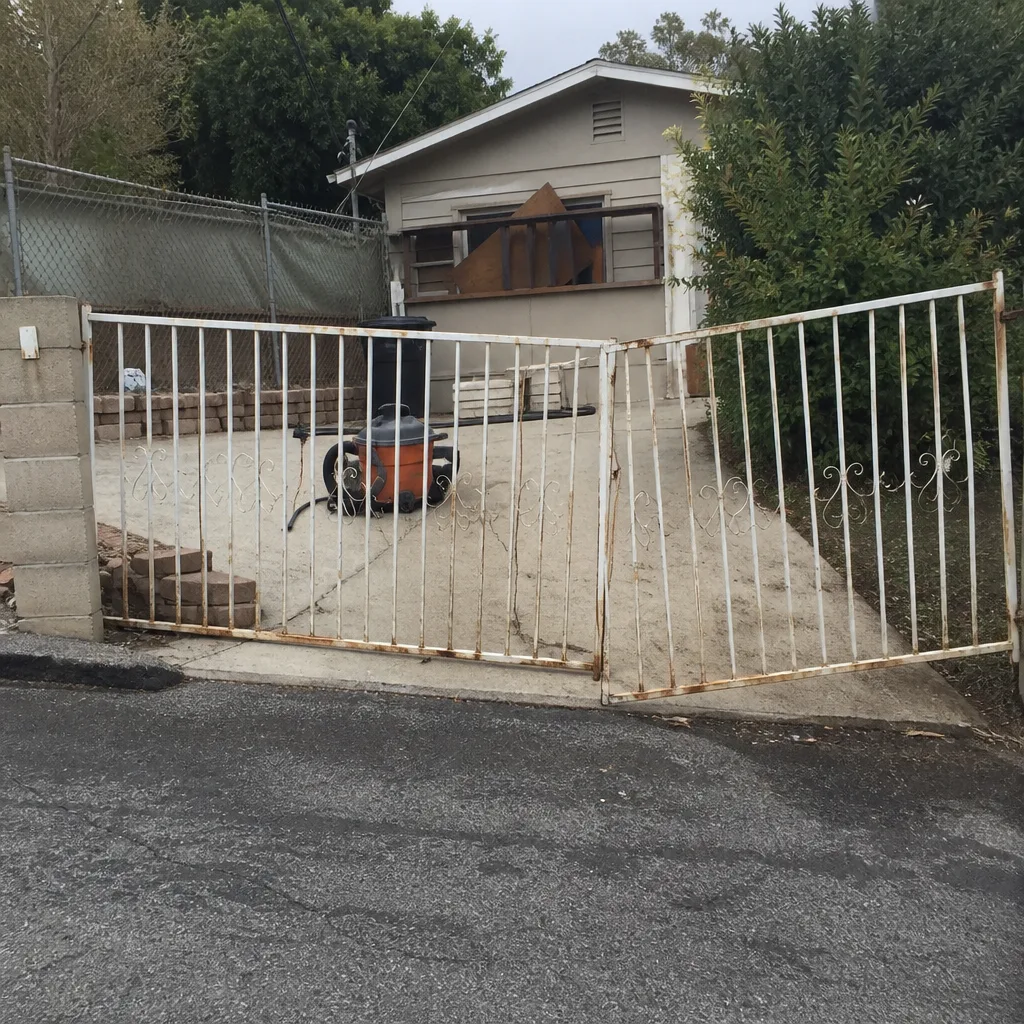 Before
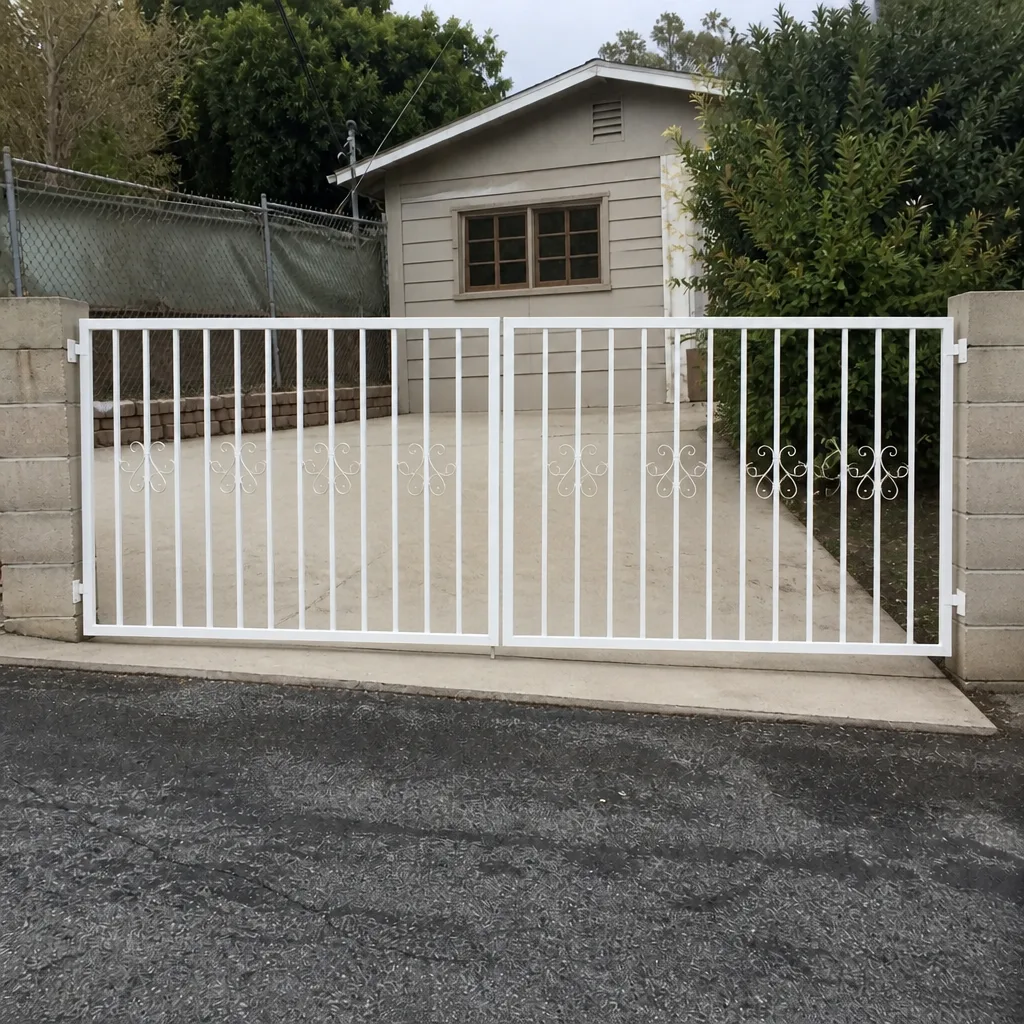 After
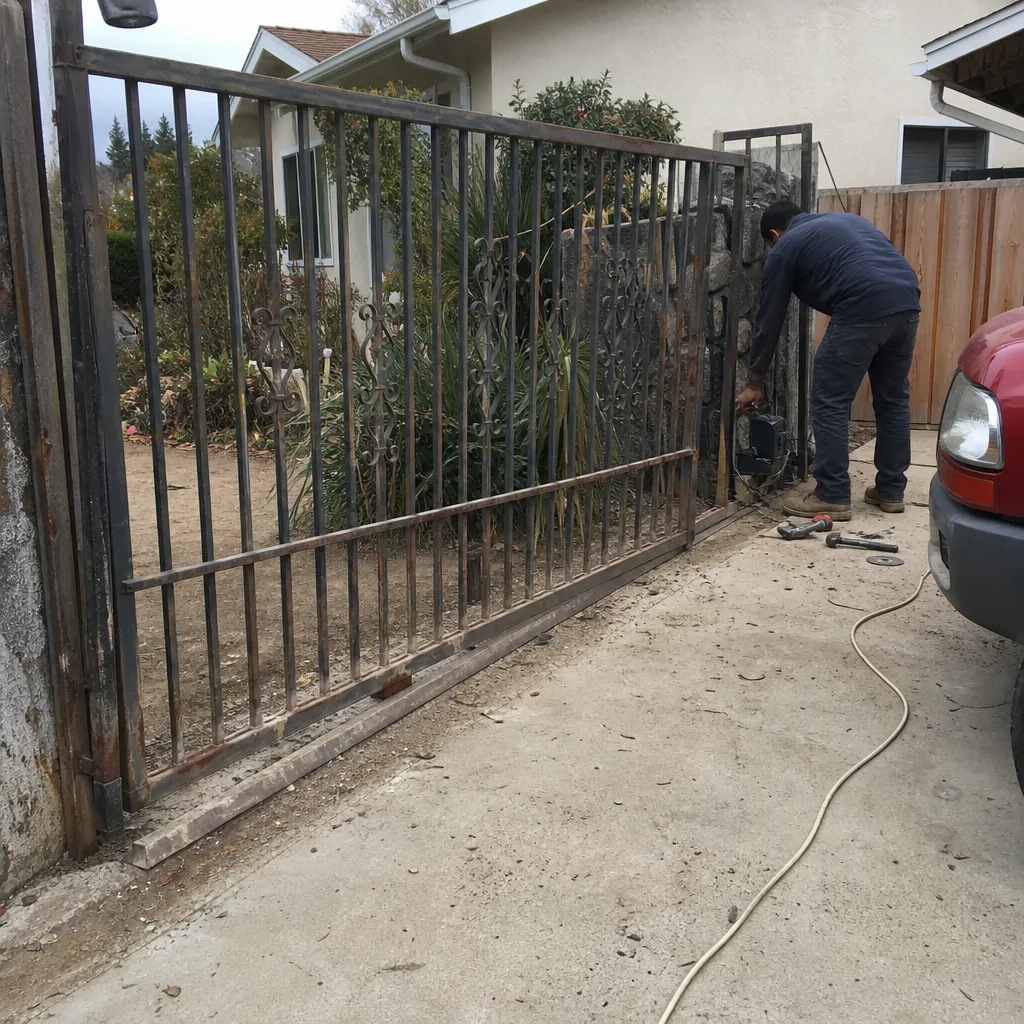 Before
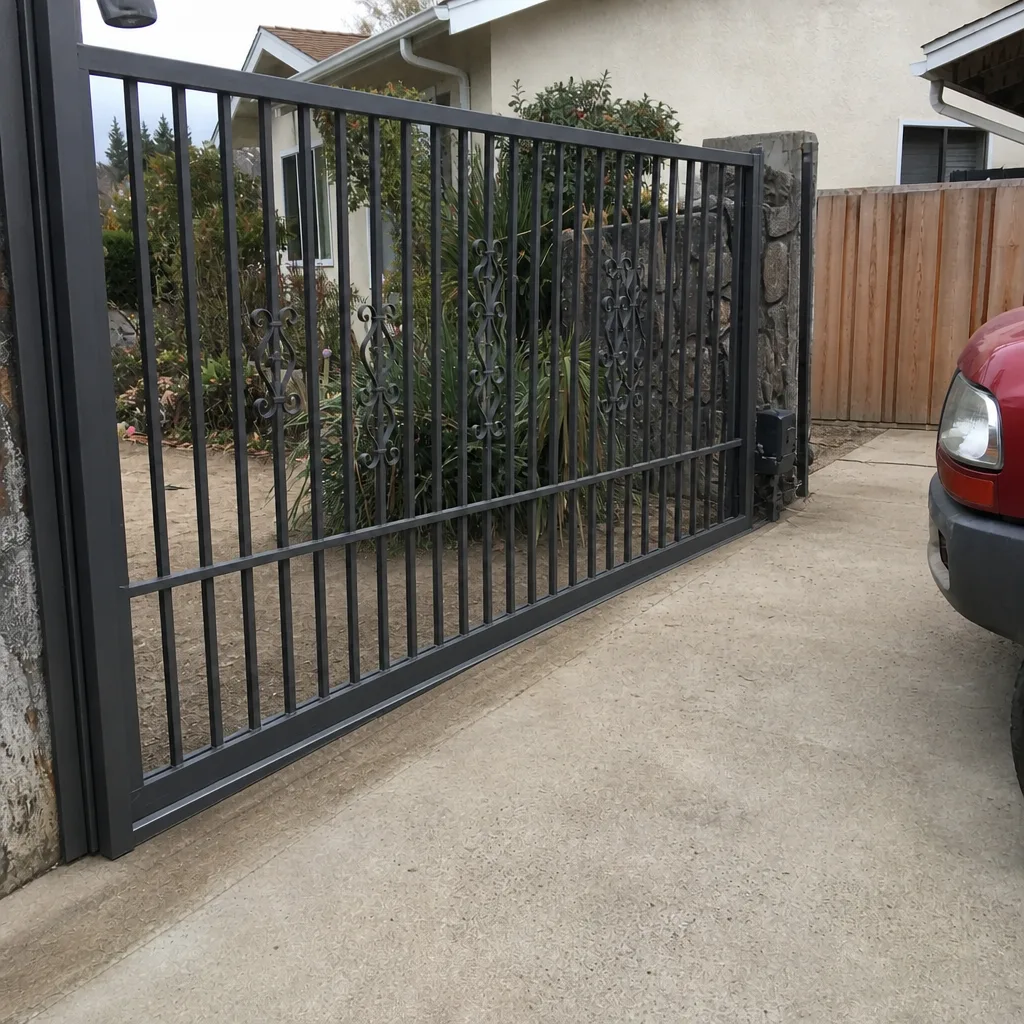 After
When to Call a Professional
Some problems announce themselves clearly and shouldn’t wait for the next scheduled check. If the gate fails its safety reversal test and cleaning the sensors doesn’t fix it, stop using it and call. If the operator hums but the gate doesn’t move, or the gate moves in jerks and stalls, the drive system is under stress that will cause further damage. If you smell burning plastic near the operator, cut power and call immediately. If the gate has come off its track or the hinges show visible cracks or sag, the weight of the gate is no longer properly supported and every cycle makes it worse.
Gate repair is what we do every day in Vista. When you call with one of these symptoms, we’ll ask about what you’ve observed: when the problem started, what the gate sounds like, and whether it’s a swing or slide gate. The more detail you have from your own maintenance observations, the faster we can diagnose it on the phone before we even arrive. Call (855) 773-5055. We answer 24/7. Fast dispatch from 7am to 7pm, Sunday through Friday. Estimates are free, and the price is set in writing before any work begins.
Frequently Asked Questions
Once a year is the minimum for a professionally inspected automatic gate in Vista, with additional call-outs recommended if you notice new sounds, hesitation, or a failed safety test between inspections. The annual visit should cover the operator internals, limit switches, chain tension, hinge wear, and electrical connections. Homes near the coast-adjacent marine layer influence may benefit from a spring check focused on moisture intrusion.
March through June matters most for Vista gates because that’s when marine layer condensation penetrates electrical housings and causes slow corrosion failures that show up months later. A thorough moisture check in May or June catches connection problems before the summer heat compounds them. Every season has its own issue, but the spring marine layer window is the one that prevents the most expensive board and wiring failures.
You can and should do the weekly glance, monthly check, safety reversal test, and seasonal clearing yourself. These tasks take minutes and catch the majority of developing problems. The annual internal inspection, circuit board testing, limit switch adjustment, and any repair involving the operator’s internal drive should be handled by a gate specialist. The electrical components carry hazardous voltage even with the power off.
The primary test is the reversal test: close the gate against a solid object like a rolled-up doormat or traffic cone and confirm the gate reverses or stops on contact. Run this test monthly and again after any landscaping work or wind event that could have bumped the sensors. A gate that doesn’t pass the reversal test should not be used in automatic mode until it’s repaired.
Battery backup cells for gate operators typically last 3 to 5 years regardless of how often they’re used, and they degrade on a calendar schedule rather than a cycle count. Vista’s occasional Santa Ana-driven power fluctuations make a functional backup a good idea. Test the battery annually in the fall before the holiday season when power demand and gate use both peak.
Log the date, the action taken, what you observed, and any follow-up needed. This record serves two purposes: it supports warranty claims if a component fails, and it documents the gate’s care history when you sell the property. A simple notebook entry or phone note is sufficient. The logging habit also reinforces the inspection habit. Call (855) 773-5055 if you see something in your log that concerns you and want a professional opinion.
The Bottom Line
A gate maintenance schedule in Vista works when it matches the local seasons and respects the difference between time-based and use-based wear. The weekly glance catches developing problems. The monthly check catches the sensor, track, and pivot issues that strand gates. The seasonal adjustments address Vista’s marine layer, summer heat, fall debris, and winter demand. The annual inspection catches what only a professional should touch. None of it is complicated, and all of it costs far less than the emergency repair it prevents. Start with the monthly check this week, and log what you see.
Written by the team at Sterling Gate Repair, serving Vista since 2015.