
Last updated November 4, 2026
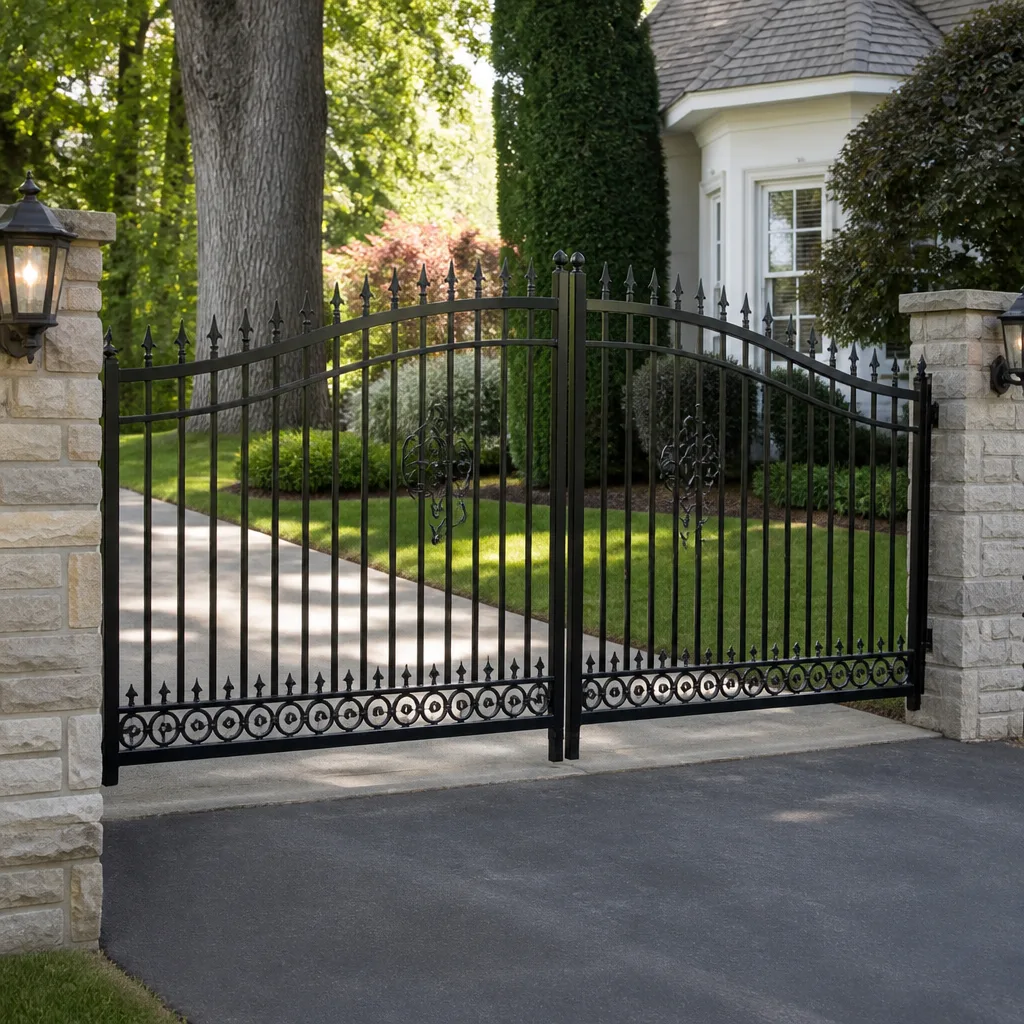 Wrought iron
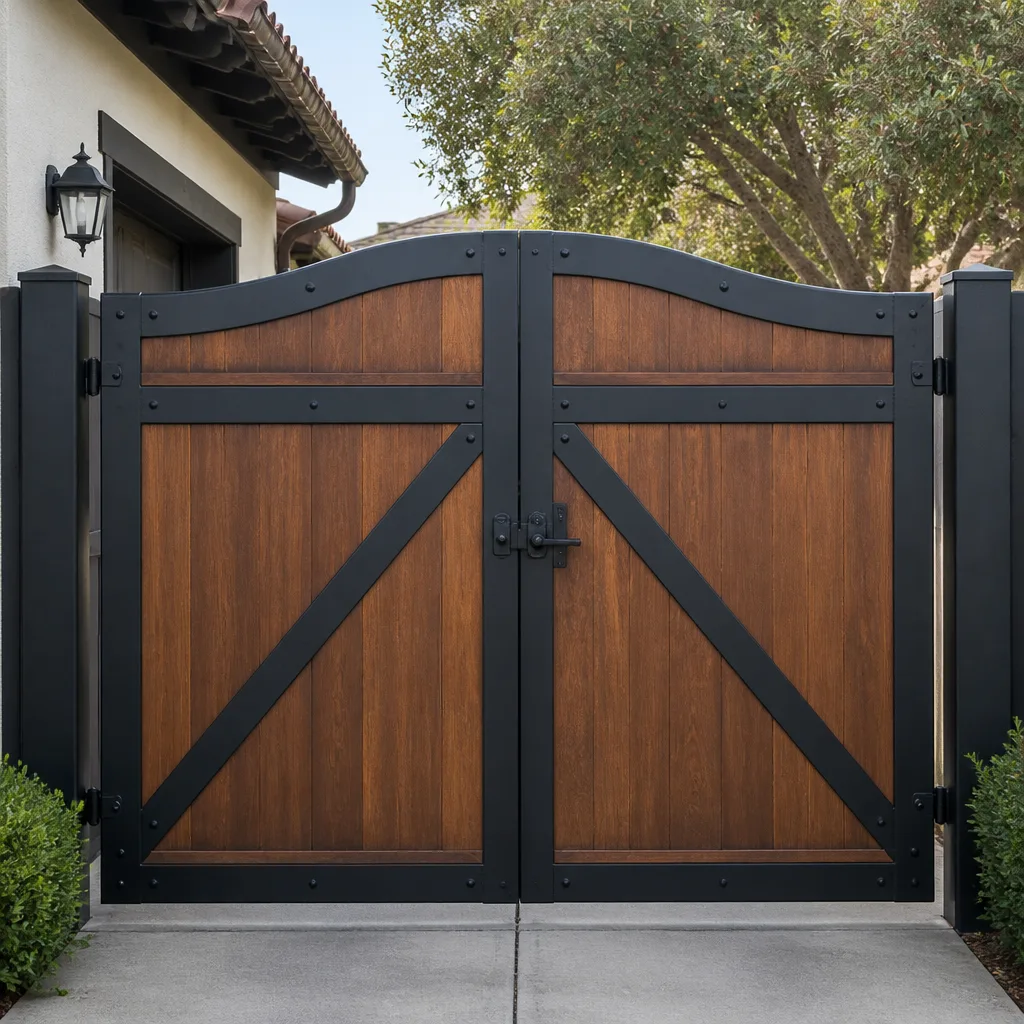 Wood & steel frame
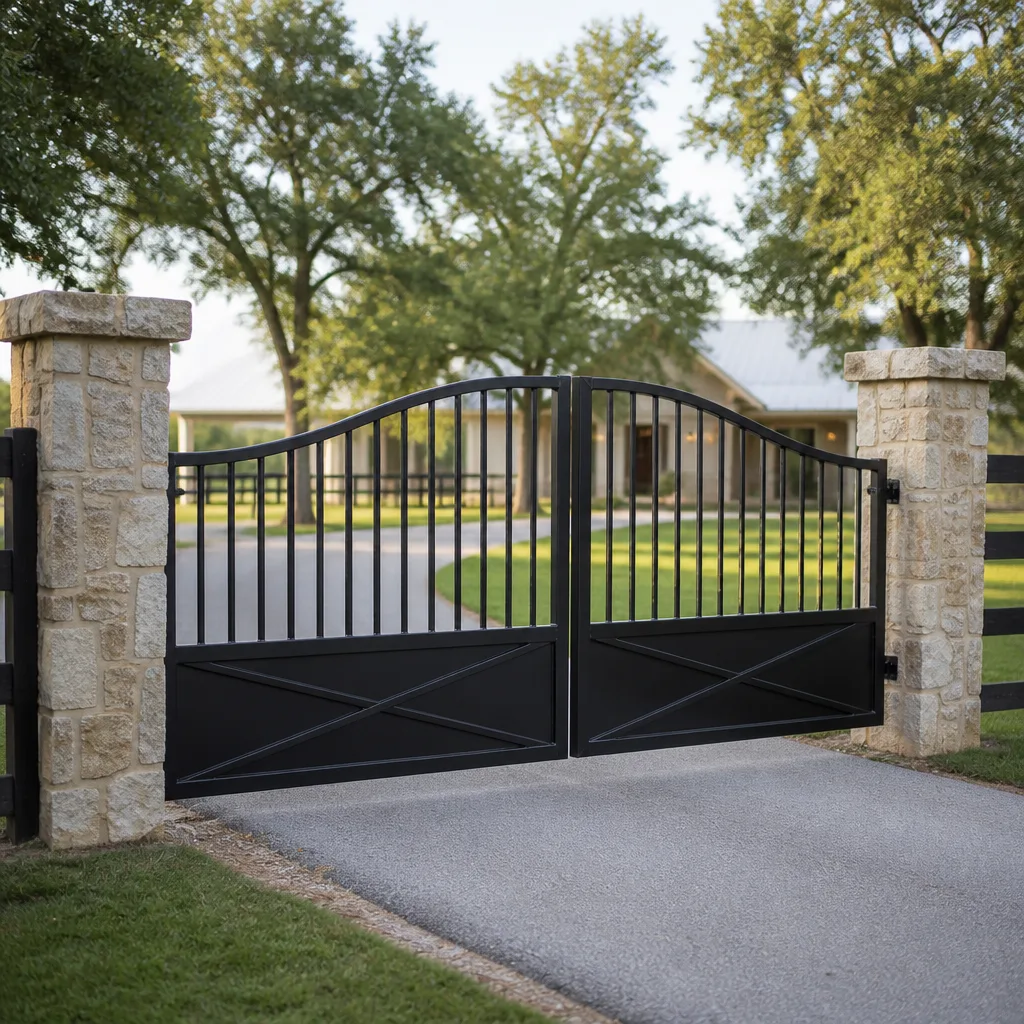 Farm & ranch
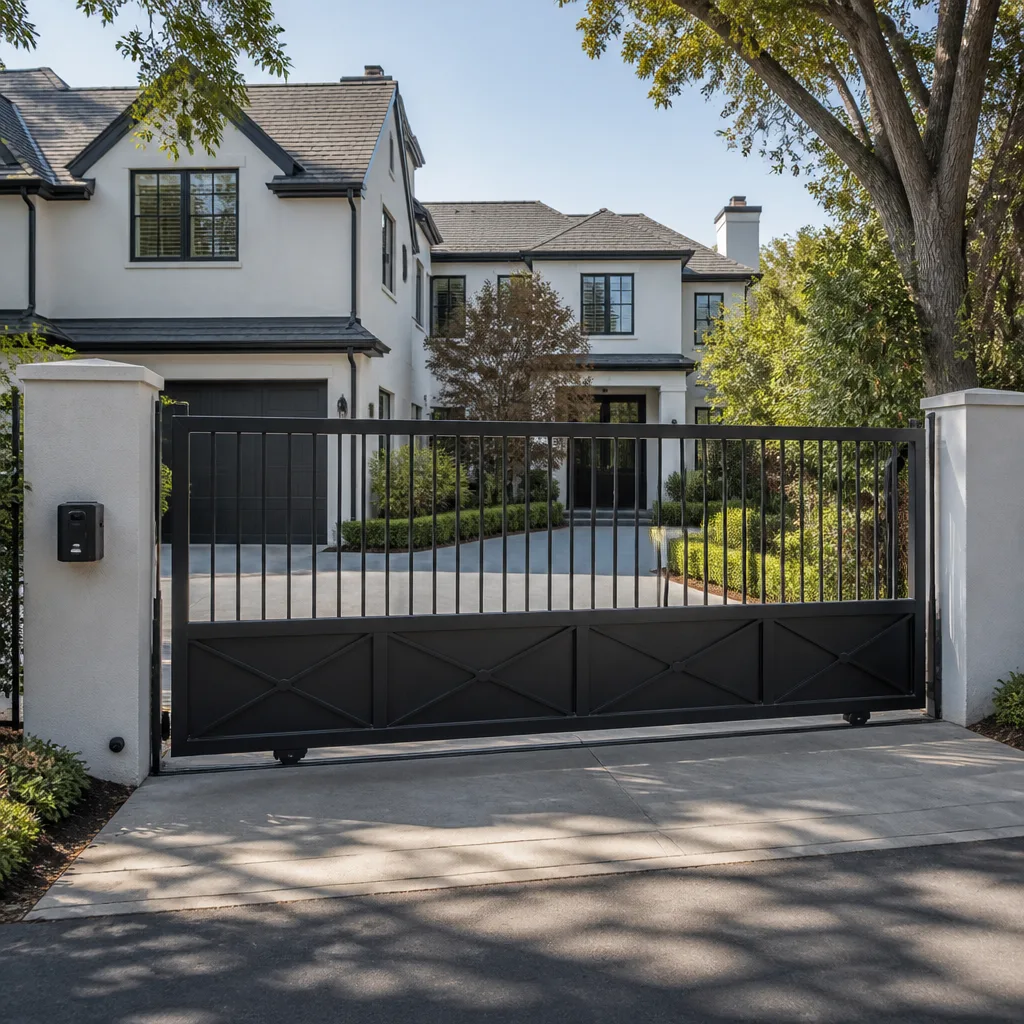 Sliding driveway gates
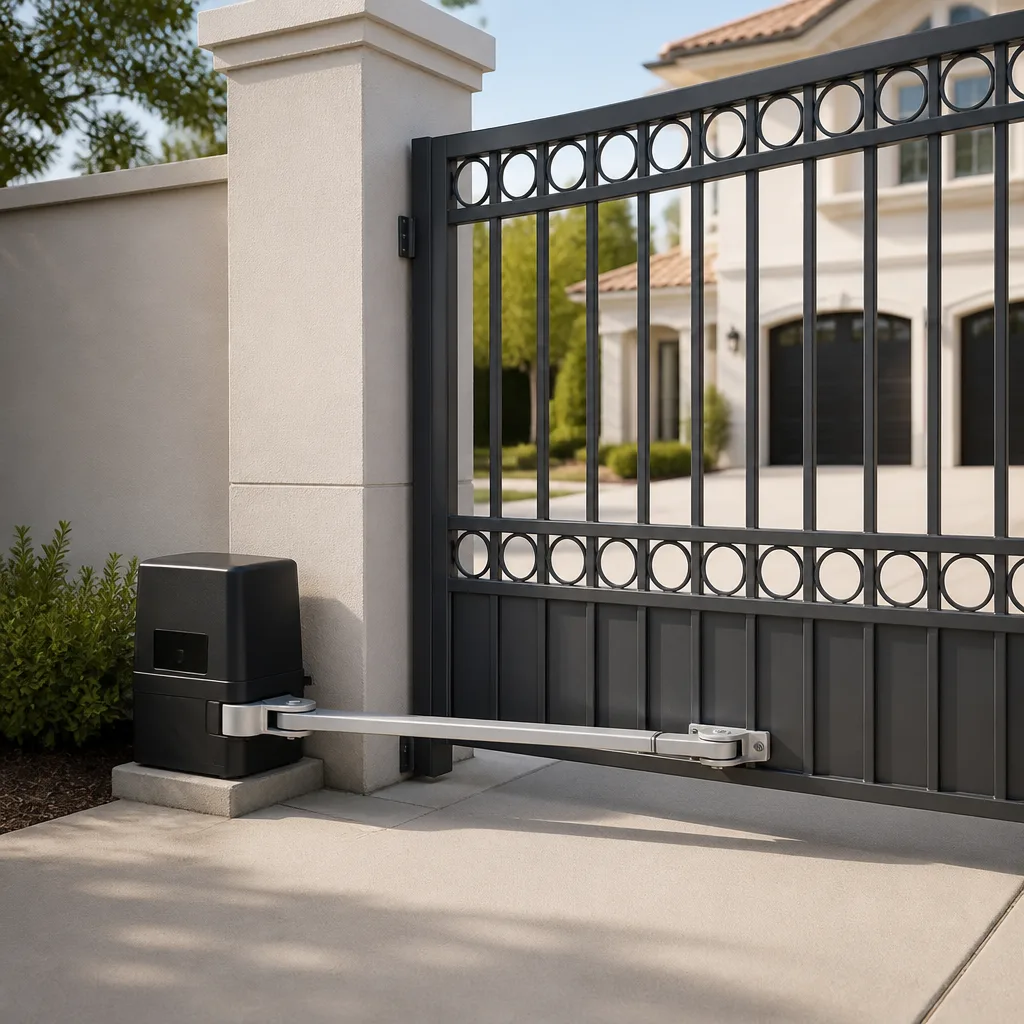 LiftMaster operators
Free on-site gate assessment - hinges, posts, and your LiftMaster or Nice gate operator checked before anything is quoted
The assessment is free and the quote is the invoice.
Get your free estimateGate Repair Cost Breakdown: The Vista Homeowner’s Reference for 2026
Most Vista homeowners who collect three quotes for a gate repair aren’t comparing three prices for the same job. They’re comparing two different scopes of work and one accurate bid, and the numbers rarely make that clear. One contractor quotes a hinge replacement and nothing else. Another quotes the hinge, the post reset, new hardware, and concrete work, because they know the corroded bolts will snap the moment a wrench touches them. This guide breaks down what gate repair actually costs in San Diego County in 2026, what each line item means, and how to read a quote so you know which bid is the honest one before you sign it.
Quick Answer
Gate repair in Vista typically runs from $180 to $2,400 depending on the failure. Small mechanical fixes like hinge replacement or sensor realignment usually cost $180 to $450, while a full operator replacement on an electric gate often lands between $900 and $2,400. The final price depends on what the quote includes: hardware, concrete work, wiring, and whether the gate is manual or automated.
Styles & brands we work with
- Wrought iron
- Wood & steel frame
- Farm & ranch
- Sliding driveway gates
- LiftMaster operators
Table of Contents
- What Drives Gate Repair Costs in Vista
- 2026 Price Ranges for Common Gate Repairs
- How to Read a Gate Repair Quote Line by Line
- The Hidden Cost Drivers Behind a $200 Quote
- Repair vs. Replacement: The Five-Year Math
- Gate Specialist vs. General Contractor Pricing
- What a Homeowner Can Check Before Calling
- Common Mistakes to Avoid
- When to Call a Professional
- Frequently Asked Questions
What Drives Gate Repair Costs in Vista
Gate repair pricing across Vista comes down to four variables: the type of gate, the part that failed, the condition of the surrounding structure, and whether the system is electric. A simple manual swing gate with a loose hinge is a small job. An automated slide gate with a dead operator and a post that shifted in the soil is a larger one. Vista’s climate plays a role too. Mild winters and dry summers mean gates here don’t suffer freeze damage, but the extended dry season leaves soil compacted and hard, which can make digging out a post for a reset slower work than it would be in softer ground.
Labor rates in San Diego County for gate work currently sit in a range that reflects the cost of running a licensed, insured crew. Expect to pay $85 to $150 per hour for a gate specialist, depending on the complexity of the work and whether it requires two technicians. Parts add another layer: a residential-grade operator from Mighty Mule or Ghost Controls costs less than a commercial-grade unit from FAAC or LiftMaster, and that difference shows up immediately in a replacement quote.
Access also matters. A gate at the end of a long Vista driveway with clear working space is easier to service than one tucked against a retaining wall or buried in overgrown landscaping. The more the technician has to clear, move, or work around, the more time the job takes. None of this is arbitrary. It’s mechanical, electrical, and structural work priced by real conditions on the ground.
2026 Price Ranges for Common Gate Repairs
These numbers reflect what we’re seeing across the gate repair market in Vista and the surrounding area this year. They assume a licensed specialist, current hardware, and normal site conditions. Estimates are per job and set in writing before work begins.
| Repair Type | Typical Range | What’s Included |
|---|---|---|
| Hinge replacement (manual swing gate) | $180 – $450 | New hinges, hardware, realignment, lubrication |
| Hinge replacement (heavy or ornamental gate) | $350 – $800 | Reinforced hinges, possible post reinforcement, realignment |
| Post resetting (single post) | $300 – $700 | Concrete removal, post re-set, new footings, curing time on site |
| Frame realignment | $200 – $600 | Adjustment of gate frame, hinges, and latch points |
| Operator replacement (residential arm or slide) | $900 – $1,800 | New operator, wiring check, limit adjustments, safety sensor re-tie |
| Operator replacement (commercial-grade) | $1,500 – $2,400 | Heavy-duty operator, control board, safety edge integration |
| Sensor or safety edge replacement | $150 – $400 | New sensor or edge, wiring, alignment, testing |
| Control board replacement | $300 – $800 | New board, programming, remote re-pairing |
These are line-item figures, not bundled guesses. A hinge replacement that includes a post reset will fall into the higher end of both ranges combined, because the technician is now doing two distinct jobs: mechanical repair and structural anchoring. The written estimate should separate these so you can see exactly what you’re paying for.
How to Read a Gate Repair Quote Line by Line
Most confusion around gate repair pricing in Vista comes from quotes that don’t itemize the same way. One bid looks cheaper because it leaves out work the other bid includes. Here’s how to read a quote line by line so you’re comparing the same job.
- Labor hours. This tells you how long the technician expects to spend. For a single hinge replacement, one to two hours is normal. For an operator replacement with wiring and programming, three to five hours is realistic. If a quote shows labor for a simple repair at eight hours, ask what’s driving it.
- Parts and materials. Look for specific part names or at least a clear description: “replacement hinge set, steel, powder-coated” rather than “hardware.” Specificity means the contractor knows what they’re buying. Vague wording means you might not know what you’re getting until it’s installed.
- Hardware allowance. Some quotes include a line for “hardware allowance” that covers bolts, brackets, and fasteners. This is normal on larger jobs. Ask whether it’s an allowance for what’s used or a flat fee that doesn’t change. If the latter, it should be small, typically under $100.
- Trip charge or diagnostic fee. Here’s the detail most homeowners miss. Some companies charge a separate fee to come out and diagnose, then bill the repair separately. Others roll the diagnosis into the repair estimate. We don’t charge a trip or diagnostic fee: the estimate is free, and the price you agree to before work starts is the price you pay. If a competitor’s quote has a trip charge listed, ask whether it gets credited toward the repair. If it doesn’t, that’s part of the real cost.
- Concrete and site work. On any job that involves a post, a footing, or removing embedded hardware, concrete work should appear as its own line. If the quote for a post reset doesn’t mention concrete removal or new footings, it’s likely incomplete.
- Permits. Some gate work in Vista may require a city permit depending on the scope, especially if the gate is on a new footing or involves significant electrical changes. Ask the contractor whether the job requires one and whether the quote includes it. If they wave it off, call the city’s building department yourself and confirm.
- Warranty. The quote should say what’s covered after the repair and for how long. A one-year parts warranty on a new operator is standard. A 90-day labor warranty is common. If it’s not written down, ask for it to be added before you agree.
The goal isn’t to find the cheapest line item. It’s to find the quote that names the real work. When every quote itemizes the same things, the comparison finally means something.
The Hidden Cost Drivers Behind a $200 Quote
A $200 hinge repair quote can become a $700 job for legitimate reasons, and the fault isn’t always the contractor’s. It’s the condition of the gate. Here are the three cost drivers that show up most often on Vista properties.
Corroded hardware that breaks during removal
Vista doesn’t get snow or coastal salt, which means the top threat to gate hardware isn’t weather exposure but time and neglect. Bolts that have been in place for a decade or longer often seize. A technician quotes the hinge replacement assuming the old bolts come out cleanly. They don’t. One breaks off in the post, and now the post has to be drilled and re-tapped, or the post has to come out entirely. That’s an extra hour or two of labor and a new footing. The initial quote wasn’t wrong; the scope changed when the metal told the truth.
Concrete removal
When a gate post shifts or leans, the fix usually means excavating the old footing and pouring a new one. A quote that only covers “post straightening” without mentioning concrete removal is not a complete quote. Demo work on a footing is slow, dusty, and physically demanding. It requires a jackhammer or a breaker bar, disposal of the old concrete, and fresh concrete poured to the proper depth for the gate’s weight. That’s a line item that adds $200 to $400 to the job, and it’s unavoidable when the footing has failed.
Wiring and safety system re-integration
On an electric gate, any structural repair can disturb wiring. If the post moves, the conduit that runs inside it moves too. If the wiring is old or brittle, the technician may need to splice in new runs or re-pull the low-voltage line to the operator. The repair itself was mechanical, but the gate won’t operate again until the electrical side is restored. That’s why electric gate repair on a leaning post should only be quoted after the technician has seen how the wiring is routed. It’s also why a quote that seems high for a “simple” post reset may be the only one that accounts for the full job.
Repair vs. Replacement: The Five-Year Math
Every gate has a point where repairing it costs more than replacing it. The threshold isn’t the gate’s age alone. It’s a combination of the gate’s structural integrity, the age of the operator, and how much you’ve already spent keeping it running.
Here’s a simple five-year framework to use when you’re deciding whether to repair or replace in Vista:
- Add up what you’ve spent on repairs in the last 24 months. If you’ve already put $800 into hinge replacements, sensor fixes, and a control board, and now a post needs resetting for another $600, you’re at $1,400 for a gate that may still have another failure waiting next year.
- Compare that against the cost of a new gate installation. A new manual gate with solid posts typically starts around $1,500 to $3,000 installed. A new automated gate with a LiftMaster or FAAC operator may run $3,500 to $7,000 depending on size, material, and access. Those are wide ranges because gates vary enormously, but they give you a reference point.
- Ask whether the current gate’s structure is sound. A powder-coated steel gate from a solid fabricator can last decades with periodic hinge and hardware repair. A gate that’s rusting through at the welds or sagging under its own weight is a replacement candidate regardless of the operator’s condition.
- Consider what you’re not paying to replace. Sometimes a $700 post reset beats a $4,000 gate replacement, even if the old gate is ten years old, because the gate itself is still straight and the welds are sound. The post was the failure, not the gate.
- If you’ve crossed $2,000 in cumulative repairs over five years on a gate that’s also rusting or sagging, replacement is usually the better use of money. At that point you’re paying to maintain a structure that’s actively degrading.
There’s no hard rule that a gate of a certain age should always be replaced. In our experience, the better question is whether the last repair fixed the root problem or just bought another year. If the root problem was the post, the hinge, or the operator, and that part is now new, the gate may have years left. If the root problem is the gate frame itself, no hinge replacement will fix it.
Gate Specialist vs. General Contractor Pricing
Vista homeowners sometimes see a quote from a general contractor that undercuts a gate specialist and wonder what they’re paying for. The honest answer is that the specialist’s rate reflects what they don’t have to figure out on site. A general contractor who does fences, gates, decks, and a dozen other things may take longer to diagnose an automated gate’s control board, may not stock the right parts, and may need a second trip to finish the job. The labor rate looks lower, but the total cost after a second visit or a misdiagnosed part often closes the gap.
Here’s what a gate-only specialist brings to a repair in Vista:
- Familiarity with the operator you actually have. We work on LiftMaster, FAAC, BFT, Linear, Viking, Ghost Controls, DoorKing, Elite, and Mighty Mule. When a technician has seen hundreds of a particular model, diagnosis is faster and the repair is done once.
- Parts that fit the job. A specialist carries or can source the right gear, sensors, hinges, and brackets for gate workloads, not fence workloads. Gate hinges bear weight in a way fence hinges never do.
- No hand-off between trades. If the gate needs a new operator and the post also needs resetting, a specialist handles both. A generalist may finish the post and tell you to call an electrician for the operator.
- Lifecycle thinking. The same company that installs a gate is the one that repairs it later. That continuity means the technician knows how the system was built and what’s been done to it.
The price difference between a specialist and a generalist on paper is often $50 to $100. The difference in repeat service calls, downtime, and parts sold twice is where the real cost lives.
What a Homeowner Can Check Before Calling
You don’t need to be a technician to gather useful information before you call for gate repair. Here’s what to look at, and what to leave alone.
- Check the hinges for visible wear. If the gate sags on the latch side and you can see daylight between the hinge pin and the leaf, that’s a hinge or post problem. Let the technician know so they bring the right hardware.
- Listen to the operator. A grinding or clicking sound when the gate opens points to a gear or limit switch issue. A humming sound with no movement often means the operator is getting power but isn’t engaging. Tell the dispatcher what you hear. It saves time.
- Look at the track (for slide gates). Debris in the track or a bent section are common and visible. Don’t try to bend it back yourself. A track under tension can snap back.
- Check the safety sensors. If the gate reverses for no reason or won’t close, check whether the photoelectric sensors are aligned and clean. Small branches and cobwebs can block the beam. Gently wipe the lenses and clear the path.
- Leave the wiring and motor internals alone. Electric gate operators contain capacitors that hold a charge even when the power is off. The same goes for the control board. A homeowner can safely check sensors and visible hardware; the wiring inside the operator is a professional’s job.
What you’re doing here isn’t DIY repair. It’s triage. The information you gather helps the technician show up with the right parts instead of spending the first hour diagnosing what you could have described over the phone.
Common Mistakes to Avoid
- Comparing quotes by total price alone. A $300 quote that doesn’t include hardware and a $500 quote that does are not the same job. Read the line items before you decide.
- Ignoring the post when the hinge fails. If the hinge replacement doesn’t address why the hinge failed, you’ll be replacing it again next year. Sometimes the hinge is fine and the post is the problem.
- Buying a new operator for a failing gate frame. A new operator won’t compensate for a gate that’s rusting or sagging. The operator will work harder and fail faster, and you’ll have paid twice for the same outcome.
- Skipping the permit conversation. Some gate work in Vista needs a permit. Ask before you sign. If the contractor says it never does, verify with the city.
- Waiting until the gate won’t open at all. Strange noises, slow operation, and intermittent reversing are early warnings. Fixing the problem early almost always costs less than waiting for the failure to strand your car behind a dead gate.
- Choosing the cheapest bid and hoping. A gate is a load-bearing structure and an electrical system. The cheapest bid usually leaves out the part of the job that the other two bids included. You’re not saving $200; you’re deferring it.
When to Call a Professional
Call a professional when the gate won’t move, when it moves in a way it shouldn’t, or when structural parts like posts and hinges are visibly failing. Electric gate symptoms such as humming without movement, reversing mid-cycle, or a dead control board are not homeowner fixes. The same is true for any post that has shifted out of plumb, any slide gate that’s jumped its track, and any gate with wiring that has been damaged or exposed. These are systems where weight, tension, and current are all in play. Sterling Gate Repair offers free estimates in Vista. Call (855) 773-5055 and we’ll come look at the gate, explain what’s wrong, and put the price in writing before any work begins.
Frequently Asked Questions
Most gate repairs in Vista fall between $180 and $2,400 depending on the failure. Hinge replacements and sensor fixes usually run $180 to $450, while full operator replacements range from $900 to $2,400. Call (855) 773-5055 for an exact quote; estimates are free.
Same-day repair is available for many common failures. We answer 24/7. Fast dispatch from 7am to 7pm, Sunday through Friday. Call (855) 773-5055 and we’ll tell you when a technician can be there.
A full installation includes posts set to proper footing depth, gate fabrication or assembly, hardware, operator and control board if automated, safety sensors, and final testing. The price is set per job by written estimate after we measure the site and understand the access requirements. Estimates are free.
Yes. Electric gate work includes the low-voltage power run to the operator, control board programming, photoelectric sensors or safety edges, and integration with any existing access control. This applies whether the system is a residential Mighty Mule unit or a commercial-grade FAAC or LiftMaster installation.
Sagging usually means the hinge has worn, the post has shifted, or the gate frame has begun to fail. Hinge replacement typically ranges from $180 to $450, while a post reset runs $300 to $700. If the frame itself is rusting or cracked, the repair may not be worth doing. Call (855) 773-5055 for a free site visit and a written quote.
We work on LiftMaster, FAAC, BFT, Linear, Viking, Ghost Controls, DoorKing, Elite, and Mighty Mule. If your gate uses one of these systems, we can diagnose and repair it without telling you it’s unsupported. If you’re not sure what you have, call (855) 773-5055 and describe the operator; we’ll identify it.
The Bottom Line
Gate repair pricing in Vista only makes sense when you compare line items, not headline numbers. The same visible symptom, a sagging gate or a dead operator, can hide different jobs with different costs. The quote that itemizes hardware, concrete, wiring, and warranty is the one you can trust. The quote that only mentions the part that failed is the one that surprises you later. Work with a gate specialist who names the real scope up front, puts it in writing, and charges what the written estimate says. That’s the standard to hold any contractor to.
Written by the team at Sterling Gate Repair, serving Vista since 2015.
See the difference
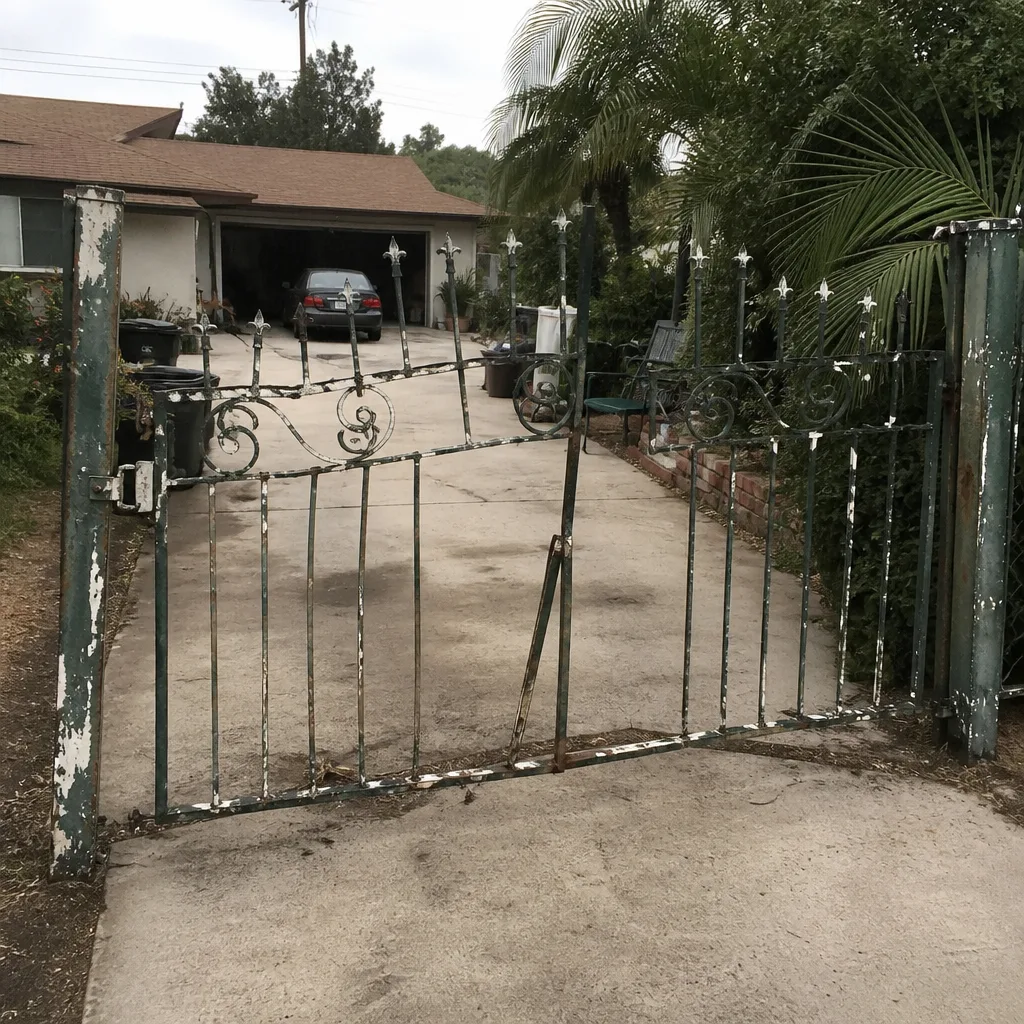 Before
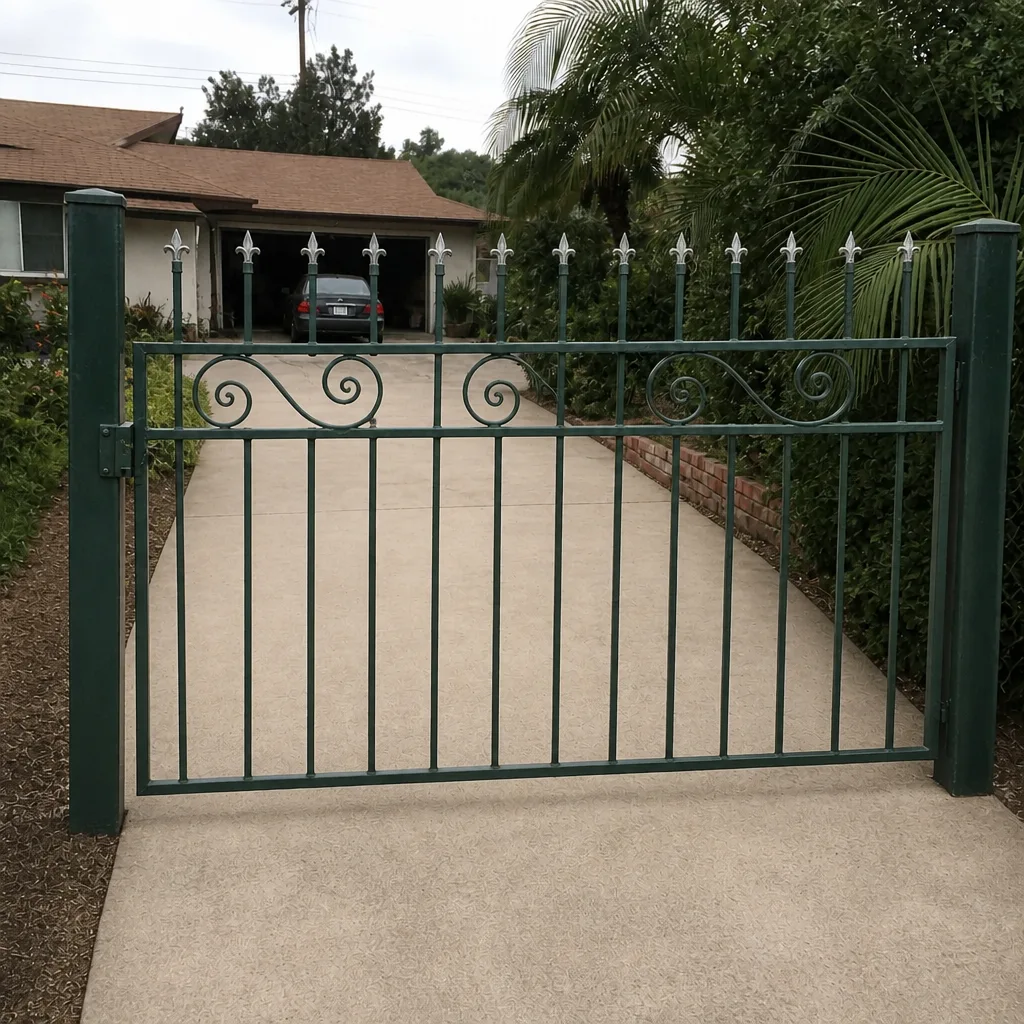 After
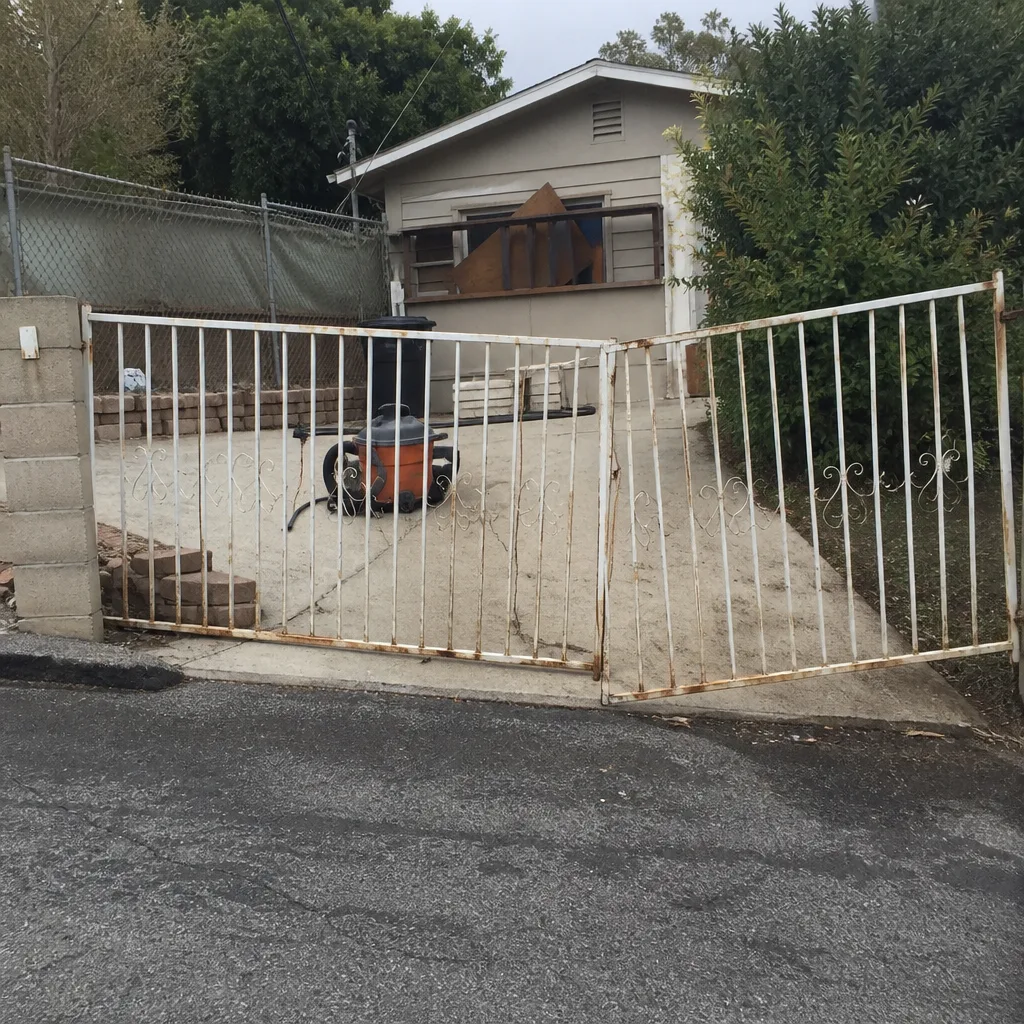 Before
 After
 Before
 After