
Last updated November 4, 2026
 Wrought iron
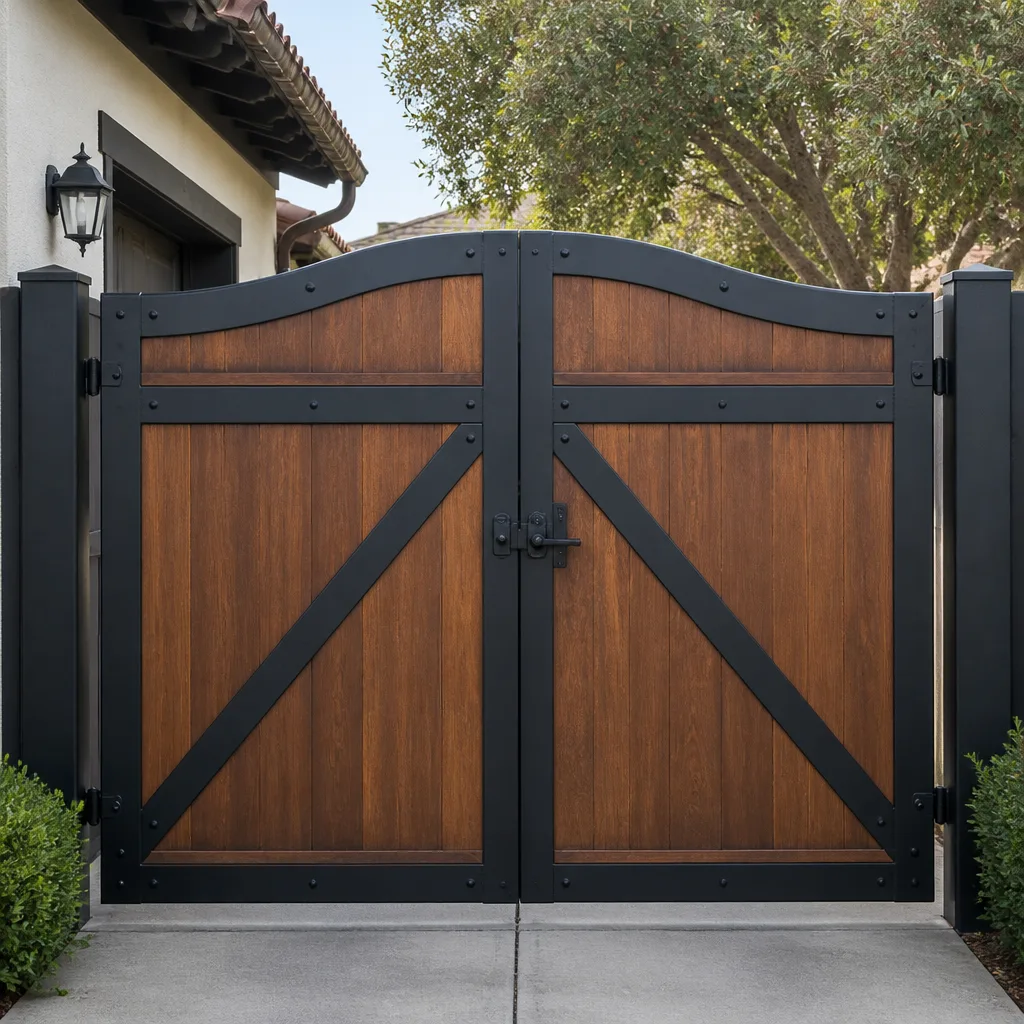 Wood & steel frame
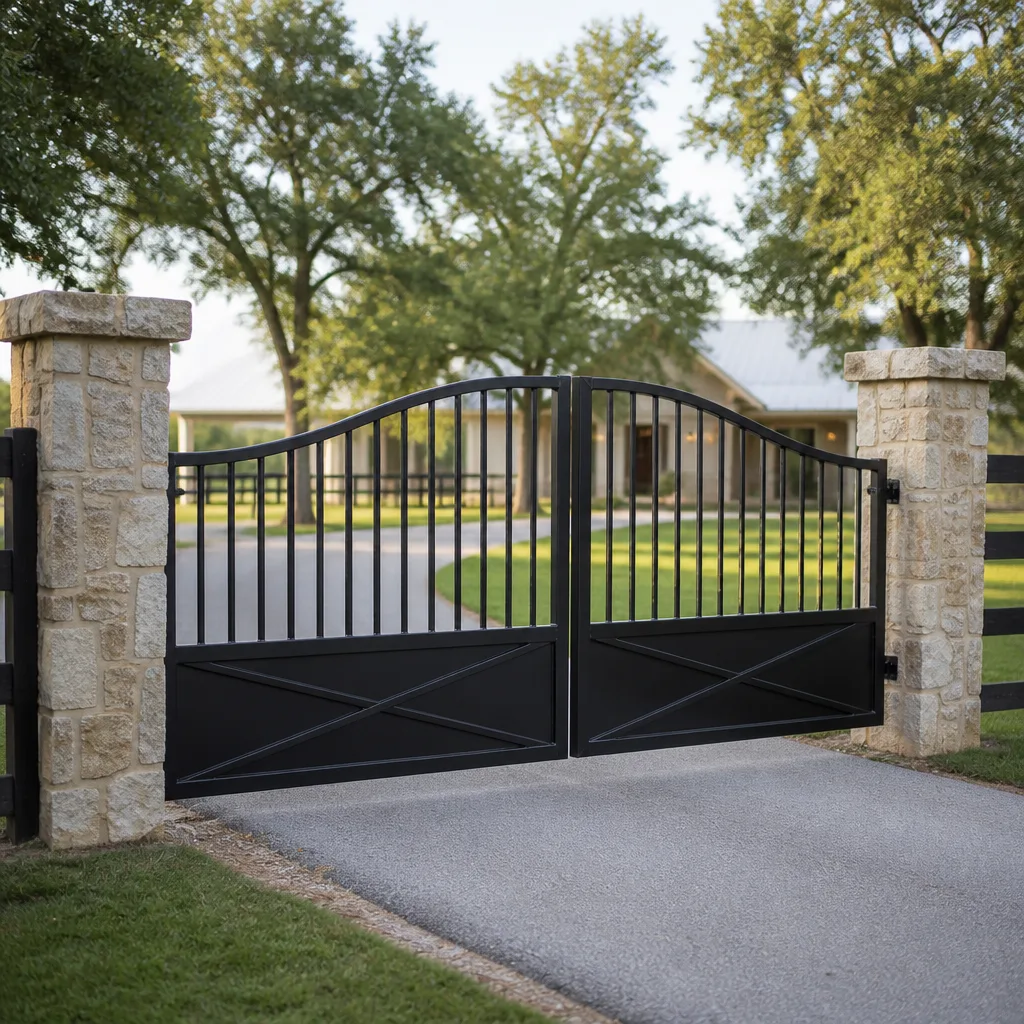 Farm & ranch
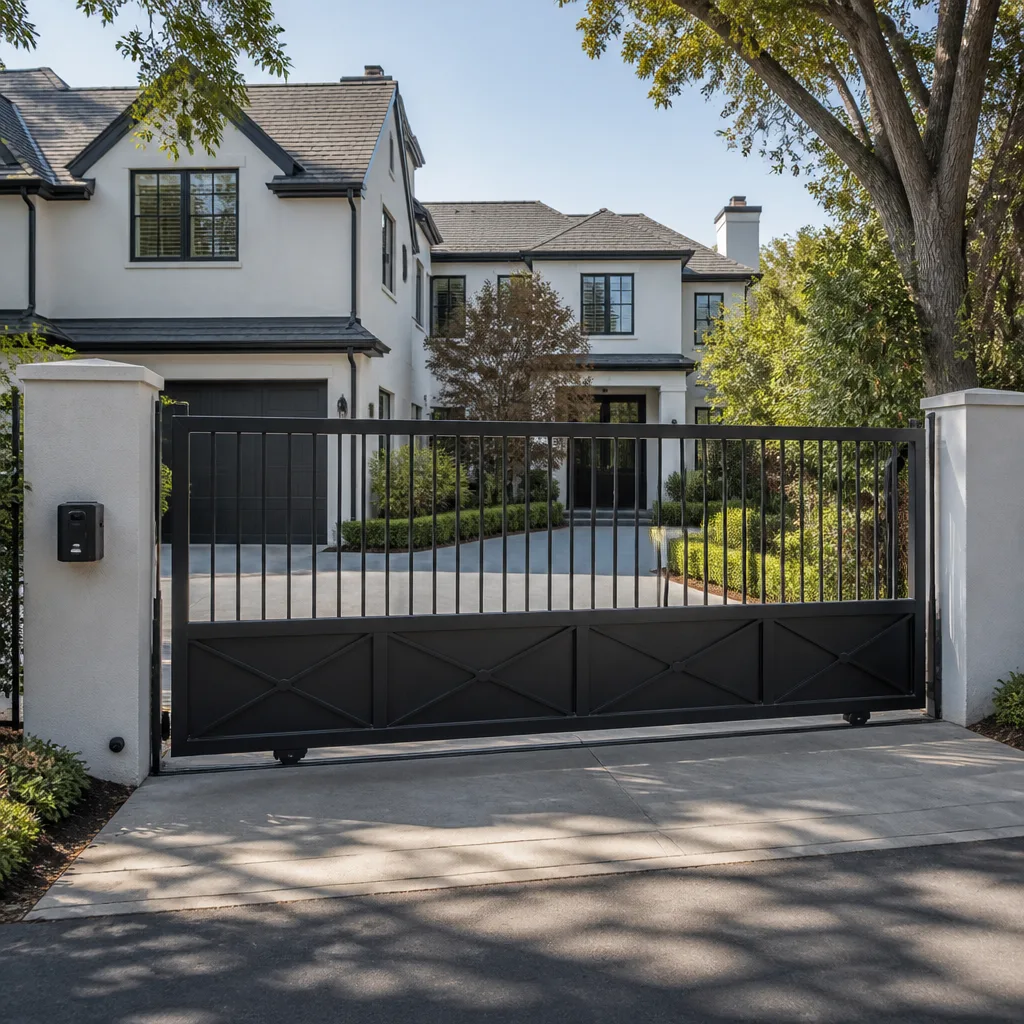 Sliding driveway gates
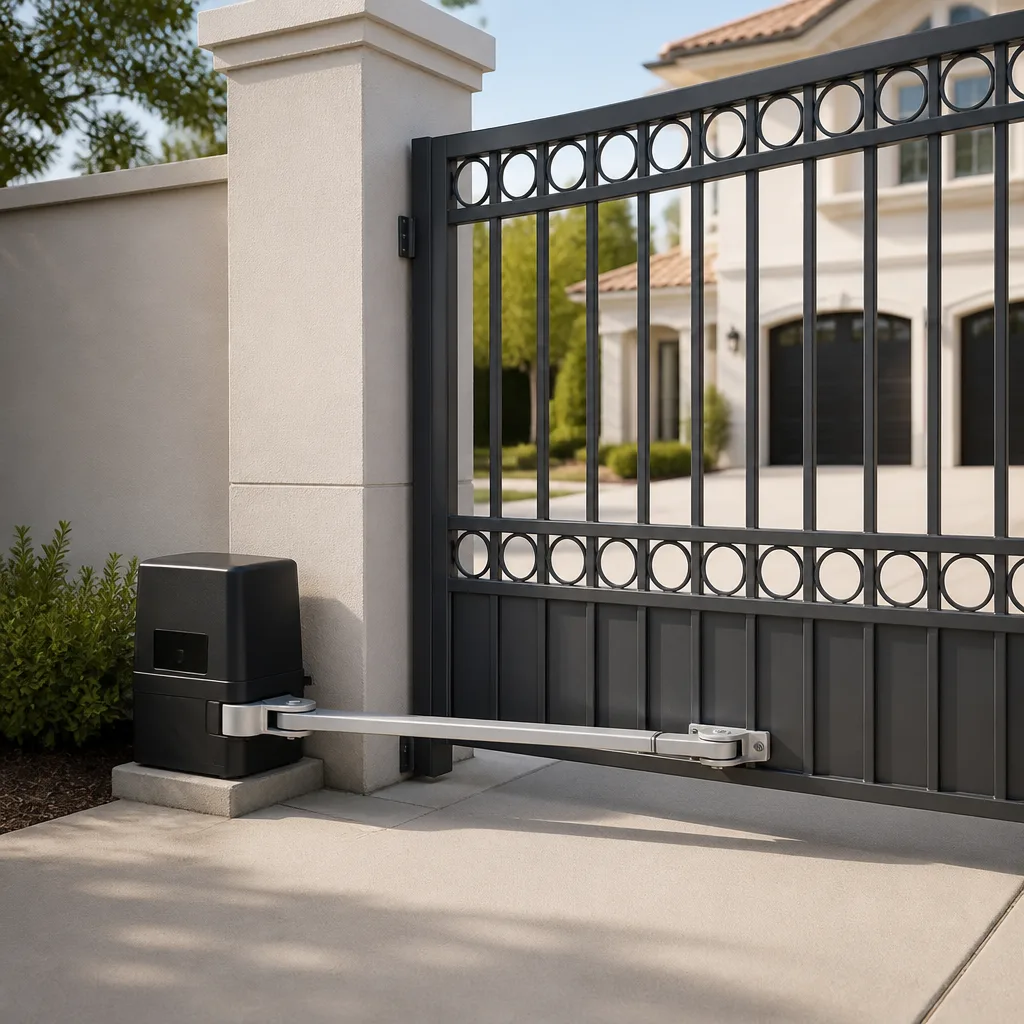 LiftMaster operators
Free on-site gate assessment - hinges, posts, and your LiftMaster or Nice gate operator checked before anything is quoted
The assessment is free and the quote is the invoice.
Get your free estimateDIY vs Professional Gate Repair: The Vista Homeowner’s Decision Guide
Replacing a gate latch yourself is genuinely low-risk. Adjusting an automatic gate’s limit switches yourself, without understanding the entrapment protection logic built into modern operators, is not, and the distinction isn’t obvious from the outside. A gate that opens when it should stop, or closes on a car because a sensor was nudged six degrees out of alignment, turns a Saturday project into a liability. This guide draws the line precisely for Vista homeowners: which repairs you can confidently handle with basic tools, and which ones need a gate repair specialist who works on your exact brand every week. By the end, you’ll know the five questions that separate a sensible DIY job from an expensive mistake, and you’ll know what Vista’s mild climate and hillside lots mean for gate longevity that most national guides never mention.
Styles & brands we work with
- Wrought iron
- Wood & steel frame
- Farm & ranch
- Sliding driveway gates
- LiftMaster operators
Quick Answer
Most cosmetic and hardware-level gate repairs in Vista are genuinely DIY-friendly: latch replacement, hinge lubrication, roller cleaning, and minor alignment adjustments need basic tools and under two hours. Automatic operator work, post resetting, welded frame repairs, and any job involving UL 325 safety devices (photo eyes, edge sensors, force settings) should go to a professional, because the consequence of error is a crushed vehicle, an injured person, or an out-of-compliance gate that creates real liability. The honest middle ground is that about 40% of what homeowners initially call us for in Vista is something they could have done themselves, and about 30% of what they attempt first is something that ended up costing more to fix afterward than if they’d called first.
Table of Contents
- DIY-Safe Gate Repairs in Vista
- Repairs That Appear Simple But Create Liability
- What California Law Says About Automated Gate Safety
- The Real Cost Comparison: DIY vs Professional
- The Vista Homeowner’s Five-Question Decision Tree
- Common Mistakes to Avoid
- When to Call a Professional
- Frequently Asked Questions
- The Bottom Line
DIY-Safe Gate Repairs in Vista
Let’s start with the repairs that are genuinely reasonable for a Vista homeowner with a basic tool kit and a free afternoon. These are jobs where the worst-case outcome is that the gate still doesn’t work and you call a professional anyway. You haven’t made anything worse, you haven’t spent more than $40 on parts, and you haven’t touched anything that could hurt someone or damage a vehicle.
- Latch and handle replacement. A gate latch that sticks or a handle that’s gone loose is a hardware swap. You need a screwdriver, possibly a drill with a metal bit, and a replacement latch that matches the gate’s swing direction. Gate latches are sold by orientation (left-hand or right-hand), so check yours before buying a replacement. This is a one-hour job, including the trip to the hardware store.
- Hinge lubrication and tightening. A gate that’s started to squeak or sag slightly usually has dry hinges or bolts that have worked loose over months of use. A spray lubricant, a socket wrench, and fifteen minutes will resolve most of these. Tighten bolts in a star pattern (alternating opposite corners) so the gate doesn’t shift as you go.
- Track and roller cleaning on slide gates. Vista’s dry summer months put dust and fine grit into slide-gate tracks faster than most homeowners expect. If your gate is moving but laboring, clean the track with a brush and check the rollers for debris before assuming the operator is failing. This is preventative work, not a repair, but it resolves a surprising number of “the gate is dying” calls.
- Photo eye alignment check. Modern operators use photo eyes (small sensors on either side of the gate opening) to prevent the gate from closing on anything in its path. If your gate starts closing and then immediately reverses, or refuses to close at all, the most common cause is misalignment or dirt on the lens. Wipe the lens, make sure both sensors are pointed at each other, and test again. This is a five-minute adjustment, not a repair, and it’s the single most common “fix” we walk Vista homeowners through over the phone.
- Battery replacement in keypads and remotes. If your keypad is unresponsive but the gate still opens from the wall button or another remote, the keypad’s battery is dead. This is a simple swap, and keypads from Mighty Mule, Ghost Controls, and most other brands use standard 9-volt or AA batteries accessible from a small compartment on the back.
None of these jobs require specialized tools, none of them touch the operator’s internal settings, and none of them create a safety hazard if done imperfectly. The gate either works better or it doesn’t. That’s the whole point of the DIY category: low consequence of error.
Repairs That Appear Simple But Create Liability
This is where the DIY-versus-professional question actually matters in Vista. These repairs look straightforward on the surface. A YouTube search suggests you need a drill, a wrench, and an afternoon. But each one has a hidden consequence of error that changes the calculus entirely.
- Post resetting and re-anchoring. A leaning gate post is one of the most common issues on Vista’s hillside properties, where soil shifts over time and gates settle. The fix looks simple: dig out the old post, set a new one, reattach the gate. But a post set even two degrees off plumb changes the entire geometry of the gate’s swing arc. The latch misses, the operator strains, and the gate hinges bind. Within six months, the gate has torn the post out of alignment again. Worse, if the post is the anchor point for an automatic operator, a loose post puts constant strain on the motor and gearbox, shortening the operator’s life significantly. Getting the post set correctly requires understanding the gate’s full travel path, the footing depth needed for the soil type on your lot, and the relationship between the post and the operator’s mounting point. This is structural work, not hardware work, and an incorrect post reset in Vista’s varied hillside soil creates a gate that works poorly for years.
- Automatic operator adjustments: limit switches, force settings, and travel. This is the repair that separates safe from dangerous. An operator’s limit switches tell the gate where to stop. The force settings tell it how hard to push before reversing. The entrapment protection logic, which is built into every modern operator from brands like LiftMaster and FAAC, ties these settings together so the gate reverses if it encounters resistance while closing. Adjusting these without understanding how they interact is how people get hurt. A gate that’s set to close too forcefully can pin a child, a pet, or an adult against a post or a vehicle. The settings aren’t independent; changing one affects the others. We’ve taken calls from Vista homeowners who “just adjusted the force a little” and created a gate that now refuses to open or that slams shut with enough force to dent a car bumper. Entrapment protection is also a legal requirement under California law, which we’ll get to in a moment. This work needs a technician who understands the specific operator’s logic, not just where the adjustment screws are.
- Welded frame repairs. Steel and wrought-iron gates in Vista eventually develop stress cracks, especially at welded joints where hinges attach or where the gate’s weight concentrates. The repair looks like a ten-minute weld. But welding a gate frame correctly requires knowing what metal you’re working with, whether the gate is under load while you weld, and how to prevent warping as the weld cools. A weld done wrong creates a brittle joint that fails more catastrophically than the original crack did. It can also void the manufacturer’s warranty on a gate that’s still covered, and more importantly, it can alter the gate’s structural integrity in a way that a visual inspection won’t catch. A gate that’s welded improperly can fail suddenly at the hinge point, turning a gate panel that weighs hundreds of pounds into a falling object. This is physical safety, not just repair quality.
- Any adjustment involving the operator’s internal components. Once you open the operator housing and start touching capacitors, drive belts, or control boards, you’re not repairing anything. You’re creating a diagnostic puzzle for someone else. Operator internals contain stored electrical energy even when the unit is unplugged, and control boards are sensitive to static discharge. A homeowner who opens an operator to “see what’s wrong” often creates a second, invisible problem that makes the eventual professional repair more expensive.
The pattern here is consistent: the repairs that look simple but aren’t are the ones where the consequence of an error is a safety hazard, a code violation, or a warranty void. That’s the line, and it’s not the same as the line between “handy” and “not handy.” Plenty of competent Vista homeowners should still call a professional for these, not because they lack skill, but because the risk-reward ratio is wrong.
What California Law Says About Automated Gate Safety
This is the section most DIY guides skip entirely, and it’s the one Vista homeowners most often ask us about after they’ve already made a change to their gate. Here’s what you need to know before you touch anything on an automated system.
California has adopted UL 325 as the governing safety standard for automatic gate operators, which means every automated gate in Vista is legally required to have functioning entrapment protection. Entrapment protection is the system of sensors and safety devices that detect when something, or someone, is in the gate’s path and either stop the gate or reverse it. The standard was developed after a series of tragic accidents involving automatic gates, and enforcement has been consistent in California municipalities.
What this means for the DIY question in Vista specifically is this: when you modify an automated gate’s settings, you’re not just making a repair. You’re changing the safety configuration of a piece of equipment that’s governed by a recognized safety standard, and if that gate is involved in an accident, the question isn’t whether you feel confident in your work. It’s whether the gate’s entrapment protection was functioning to the standard when the accident occurred. If you’ve adjusted the force settings, repositioned the photo eyes, or altered the travel limits, you own the answer to that question, and “I followed a YouTube tutorial” is not a legal defense.
The practical application is simple: anything that touches the operator’s safety devices or its force and travel configuration is work that should be done by someone who understands UL 325 compliance, not just someone who understands how to turn a screwdriver. This isn’t about gatekeeping. It’s about the fact that a compliant gate and a functional gate are two different things, and in Vista, the difference matters legally. When a Sterling Gate Repair technician adjusts your operator, the goal isn’t just a gate that opens and closes. It’s a gate that opens and closes while remaining within the entrapment protection parameters the standard requires. That’s the difference between a repair and a liability transfer.
For manual gates and non-automated hardware, the code considerations are simpler. Permits for gate work in most California jurisdictions apply to the post setting and any concrete work, not to the hardware itself. Ask your local building department before a major post reset or new gate installation. The structural side of gate work, especially on a slope, has to be done to code, and that’s a city-level question that changes by zone and property type in Vista.
The Real Cost Comparison: DIY vs Professional
Here’s where the DIY-versus-professional decision gets less abstract. Let’s look at actual numbers, recognizing that prices are estimates and your final written estimate from any contractor sets the final price.
What a DIY repair actually costs in Vista
- Basic latch or handle replacement: $15 – $45 in parts, zero additional tools for most homeowners. The professional alternative runs $120 – $200. DIY is genuinely cheaper here, and the risk is near zero.
- Hinge lubrication and tightening: $8 – $15 for lubricant, fifteen minutes of labor. A professional call for the same work costs $75 – $150. DIY wins.
- Photo eye cleaning and realignment: $0 in parts, fifteen minutes of labor. A professional call for this specific adjustment runs $85 – $150 in most Vista pricing, though most honest companies will walk you through it over the phone. DIY wins, and a good gate company should tell you to try this first.
- Post resetting: This is where the numbers shift. A DIY post reset, including concrete, lumber for bracing, and a weekend of labor, costs $80 – $200 in materials. But the failure rate is high. A post set incorrectly in loose hillside soil fails within a year, and the second attempt costs you the same materials again plus the cost of a professional repair. A professional post reset in Vista typically runs $450 – $1,200 depending on the gate’s size, the post’s depth, and the soil conditions. If the DIY attempt fails, you’ve paid the DIY price plus the professional price, and you’ve lost your weekend twice. The professional route, done once, is cheaper than the DIY route done twice.
- Operator adjustment or repair: The average DIY attempt on an operator costs $0 in parts if you’re just adjusting settings, but the failure mode is expensive. A misadjusted LiftMaster or FAAC operator that’s been forced to run against a bound mechanism eventually burns out the gearbox or the motor, and at that point you’re not paying for an adjustment. You’re paying $400 – $900 for an operator replacement that could have been a $150 – $300 adjustment if the problem had been caught early. The hidden cost of DIY on operators isn’t the attempt. It’s the delayed professional repair after the problem has gotten worse.
The honest summary is this: DIY wins on jobs with low consequence of error and low part complexity. Professional wins on structural and automated work, not because the labor is inherently expensive, but because the cost of an incorrect repair is always higher than the cost of a correct repair done once. If you’re a Vista homeowner deciding which route to take, ask yourself one question before anything else: if this goes wrong, what’s the worst thing that happens? If the answer is “the gate still doesn’t work,” DIY is reasonable. If the answer is “the gate falls on someone” or “the gate damages a car,” the professional estimate is the cheaper option.
The Vista Homeowner’s Five-Question Decision Tree
Here’s the decision framework we use when Vista homeowners ask us whether a repair is DIY-appropriate. It’s not about gatekeeping. It’s about matching the repair’s risk profile to the right toolset, and it works for everything from a sticky latch to a failed operator.
- Does the repair involve the operator’s internal components, force settings, or travel adjustments? If yes, professional. This is the UL 325 line we discussed, and it doesn’t move based on your confidence level or how many videos you’ve watched. Operators from Mighty Mule, LiftMaster, FAAC, and BFT all have entrapment protection logic that should not be adjusted by someone who isn’t accountable for the safety compliance of the finished gate.
- Does the repair involve the gate’s structural connection to the ground or the frame’s welded joints? If yes, professional. Post resetting and weld repair are structural work with a high consequence of error. A gate that falls or a post that fails can cause serious injury, and neither repair forgives a guess. This is also the kind of work where Vista’s hillside soil and varied property grades make a site visit essential; what works on flat lots fails on slopes, and vice versa.
- Is the repair a hardware swap (latch, handle, rollers, hinges) that doesn’t require touching the operator? If yes, DIY is usually appropriate. You need basic tools, the right replacement part, and a little patience. The consequence of error is a gate that still sticks or sags, and you can always call a professional afterward without having made the problem worse.
- Is the gate electric or automated, and is the symptom intermittent? Intermittent problems in automated gates, the ones that occur sometimes but not every time, are the hardest to diagnose for a reason. They’re often caused by a failing capacitor, a partial short, a sensor that’s drifting out of alignment with temperature changes, or a control board that’s beginning to fail. These are not problems you can see, and they’re not problems that a visual inspection will catch. Professional diagnostic work is called for, not because the technician is smarter, but because the technician has seen the failure mode before and knows what the symptoms point to. We work on your brand, which means we’ve seen how a BFT operator fails differently than a Linear or a Viking and what that means for the repair.
- What’s the gate’s purpose, and what does downtime cost you? For a Vista homeowner whose gate is the primary access to a hillside lot or the only thing keeping a dog in the yard, downtime is a security problem, not an inconvenience. If a failed DIY attempt means the gate is out of commission for another week while you wait for a professional, the professional visit from the start is the faster path to back in operation. This is especially true for properties where the gate is the only vehicle access and a non-functioning gate means parking on the street or leaving a vehicle outside the property line. The outcome-focused decision is the professional repair, done once, same day, rather than a DIY attempt that might work and might not, with the professional as the fallback either way.
Five questions, five yes-or-no answers, and you’ll have a decision that matches the actual risk of the repair to the right person to do it. No gatekeeping, no “leave it to the pros” hand-waving. Just the line, drawn where it belongs.
Common Mistakes to Avoid
- Adjusting the force settings “just a little” to fix a gate that’s reversing. A gate that reverses when it shouldn’t is telling you something: the sensors are blocked, the tracks are obstructed, or the gate’s been damaged and is binding somewhere. Raising the force setting to push through the resistance doesn’t fix the underlying problem. It just makes the gate push harder through whatever’s wrong, which is how gates end up denting cars or worse. If your gate is reversing, clean the sensors first, then call a professional if it continues. Don’t touch the force setting.
- Replacing one component without checking what caused it to fail. A burned-out operator motor isn’t random. Something caused the motor to work harder than it should have: a misaligned track, a hinge that’s binding, a gate that’s out of level and putting constant load on the drive mechanism. Replacing the motor without fixing the cause means you’ll replace the motor again in eighteen months. Professional electric gate repair isn’t just replacing parts; it’s diagnosing the system, which means finding the source of the failure, not just the symptom.
- Assuming all gates are the same because they look the same from the outside. A Mighty Mule operator designed for residential use has different duty cycles, different entrapment protection logic, and different failure modes than a FAAC or BFT commercial-grade system. Using a part or an adjustment spec from one brand on another brand’s gate is how you create a repair that works for a month and then fails in a way that’s harder to diagnose than the original problem. Brand matters, and “universal” parts are often universal in the sense that they fit poorly on every gate.
- Ignoring the gate’s geometry when changing hardware. A gate that’s been sagging for six months has already bent its hinges or worn its hinge bearings. Slapping a new latch on a sagging gate without correcting the sag means the new latch will fail the same way the old one did. The hardware swap is the easy part; knowing that the hardware isn’t the root problem is what separates a repair from a bandage.
- Underestimating the weight when working on a sliding gate. Slide gates, especially steel ones on Vista’s larger hillside lots, weigh hundreds of pounds. If the gate’s off its track or the rollers have failed, a homeowner who tries to lift or lever the gate back into position is dealing with a load that can crush a hand or worse. We say this not to scare anyone but to be clear about what’s actually involved. Slide gate track and roller work looks like a mechanical adjustment from a distance, but getting a heavy gate safely back onto its track without a proper lifting setup is professional work, full stop.
- Working on a gate while it’s under power. This is the mistake that’s most avoidable and most potentially serious. Before any work near an operator, the power to the operator should be disconnected at the breaker or the dedicated disconnect switch. The operator’s housing should not be opened, by a homeowner, while power is connected to the unit. Electric gate systems carry line voltage, not just the low-voltage signal from the keypad or remote, and the line voltage is enough to cause serious injury. If you’re not comfortable identifying the power disconnect for your gate’s operator, call a professional. This is not the repair to figure out as you go.
When to Call a Professional
The criteria are consistent with everything we’ve laid out. Call a professional when the repair touches the operator’s safety devices, force settings, or travel logic. Call when the problem is structural: a leaning post, a cracked weld, a gate that’s come off its track. Call when the gate is electric and the symptom is intermittent, because intermittent failures are never as simple as they look and diagnostic guessing gets expensive. Call when you’ve already attempted a repair and the gate works worse than it did before, which happens more often than any of us would like to admit. And call when downtime is costing you something: security, convenience, or just the daily frustration of a gate that doesn’t work the way it should. Sterling Gate Repair offers free estimates in Vista, and we’d rather talk you through a simple fix over the phone than book a call you don’t need. Call (855) 773-5055. We answer 24/7. Fast dispatch from 7am to 7pm, Sunday through Friday. If the repair turns out to be a one-hour fix or a full Vista gate installation, you’ll know the price before we start and you’ll know the gate is done right.
Frequently Asked Questions
Yes, for specific repairs like latch replacement, hinge lubrication, roller cleaning, and photo eye alignment, which all carry a low consequence of error and need basic tools. It is not safe for operator adjustments, post resetting, welded frame repairs, or any work involving the gate’s electrical system, where mistakes create real safety hazards and possible code violations.
Typical gate repair estimates in Vista run $150 – $300 for hardware-level repairs like latches and hinge corrections, $450 – $1,200 for post resetting depending on soil and gate size, and $400 – $900 for operator replacement if the unit has failed. These are estimates; your written estimate sets the final price, and it’s always quoted and agreed before any work starts. Call (855) 773-5055 for a free estimate.
Yes, that’s the most common automated gate failure we see in Vista, and it’s usually caused by photo eye misalignment, track obstruction, or a failed sensor. Before calling, clean the photo eye lenses and make sure both sensors are pointed at each other; if the gate still won’t close, the issue is likely in the operator’s safety circuit or control board, which needs professional diagnosis and repair.
A working gate opens and closes when you tell it to, which is all any homeowner can see from the outside. A UL 325 compliant gate opens and closes while also detecting obstructions, reversing when something’s in the path, and containing entrapment protection that meets California’s safety standard. The difference matters in an accident, and it’s why operator adjustments should be done by someone who understands the safety logic, not just the mechanical adjustments.
Most hardware-level repairs, latch replacement, operator adjustments, and cleaning don’t require a permit in Vista. Structural work that involves resetting posts or pouring concrete may require a permit, depending on your property’s zoning and the scope of the work, and that’s a question for the city’s building department. Ask before you start major structural work; the city will tell you what’s needed.
We answer 24/7. Fast dispatch from 7am to 7pm, Sunday through Friday. Same-day service is available for urgent repairs like a gate that’s stuck open and leaving a property unsecured, though some repairs need parts that aren’t carried on the truck to be ordered. You’ll know the timeline during your free estimate call. Call (855) 773-5055 and we’ll get a technician scheduled.
The Bottom Line
The DIY-versus-professional decision for gate repair in Vista comes down to one practical question: what happens if you get it wrong? If the answer is “the gate still doesn’t work,” you’re in DIY territory, and the repairs on that list are genuinely simple with the right parts and a free afternoon. If the answer is “the gate falls, the gate hurts someone, the gate damages a car, or the gate violates the safety standard that California law requires,” then professional repair isn’t a luxury or an upsell. It’s just the only sensible option, and it’s cheaper in the long run than the cost of a failed attempt followed by the market rate for correcting it. Draw the line where the consequence of error goes from annoying to dangerous, and you’ll make the right call every time.
Written by the team at Sterling Gate Repair, serving Vista since 2015.
See the difference
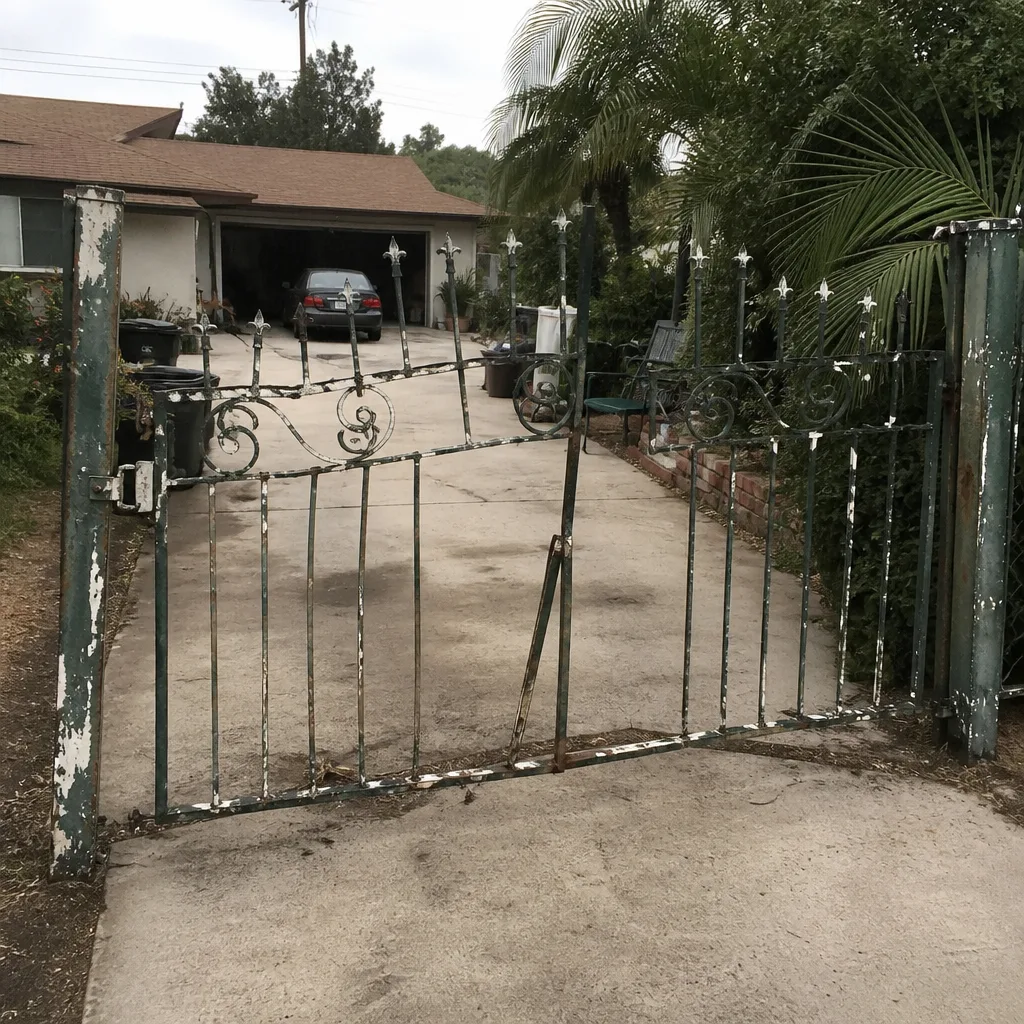 Before
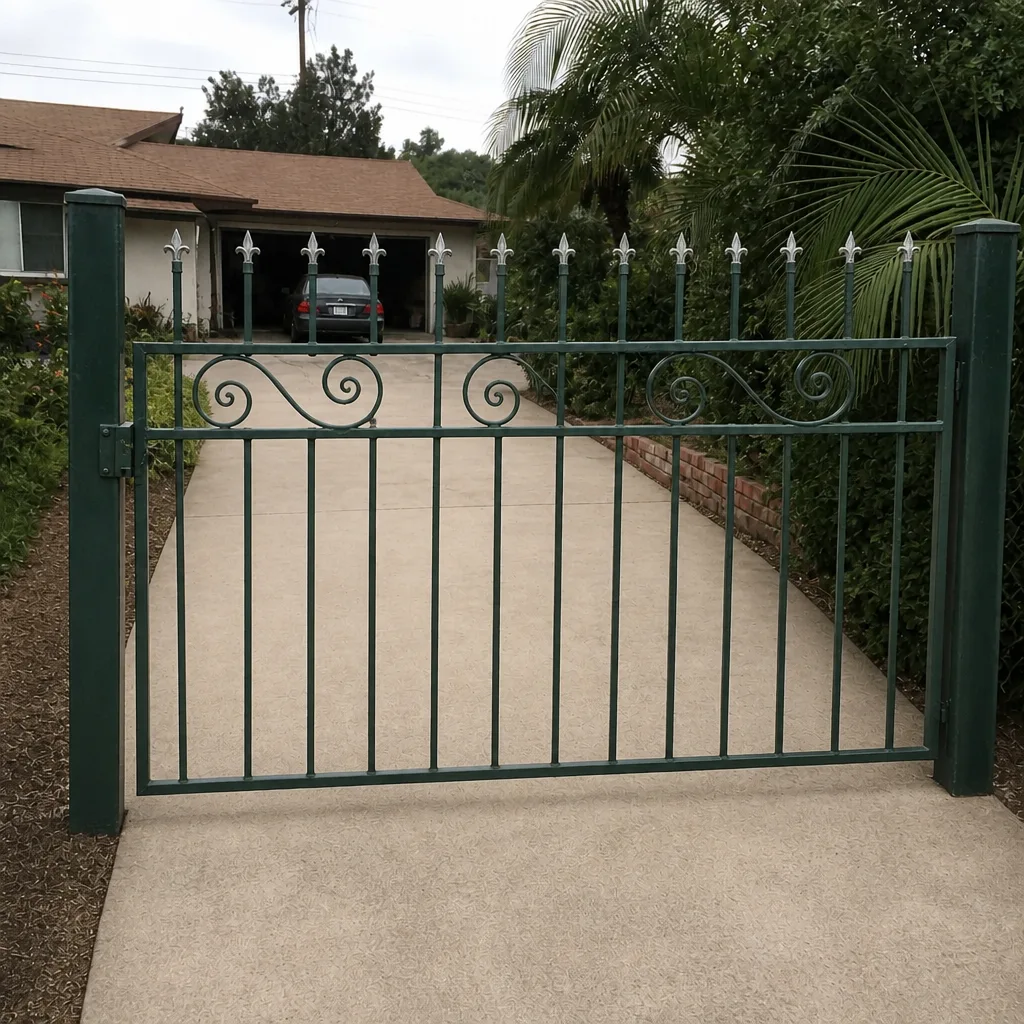 After
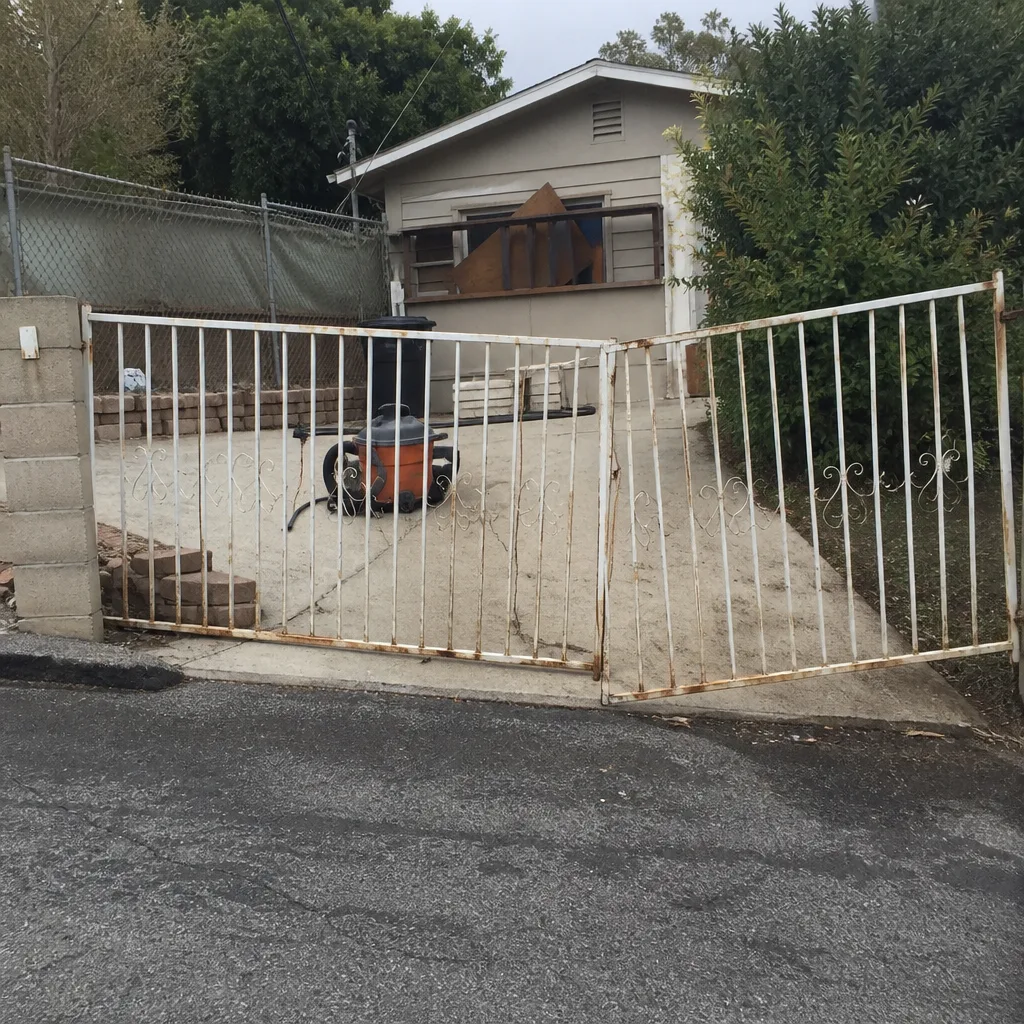 Before
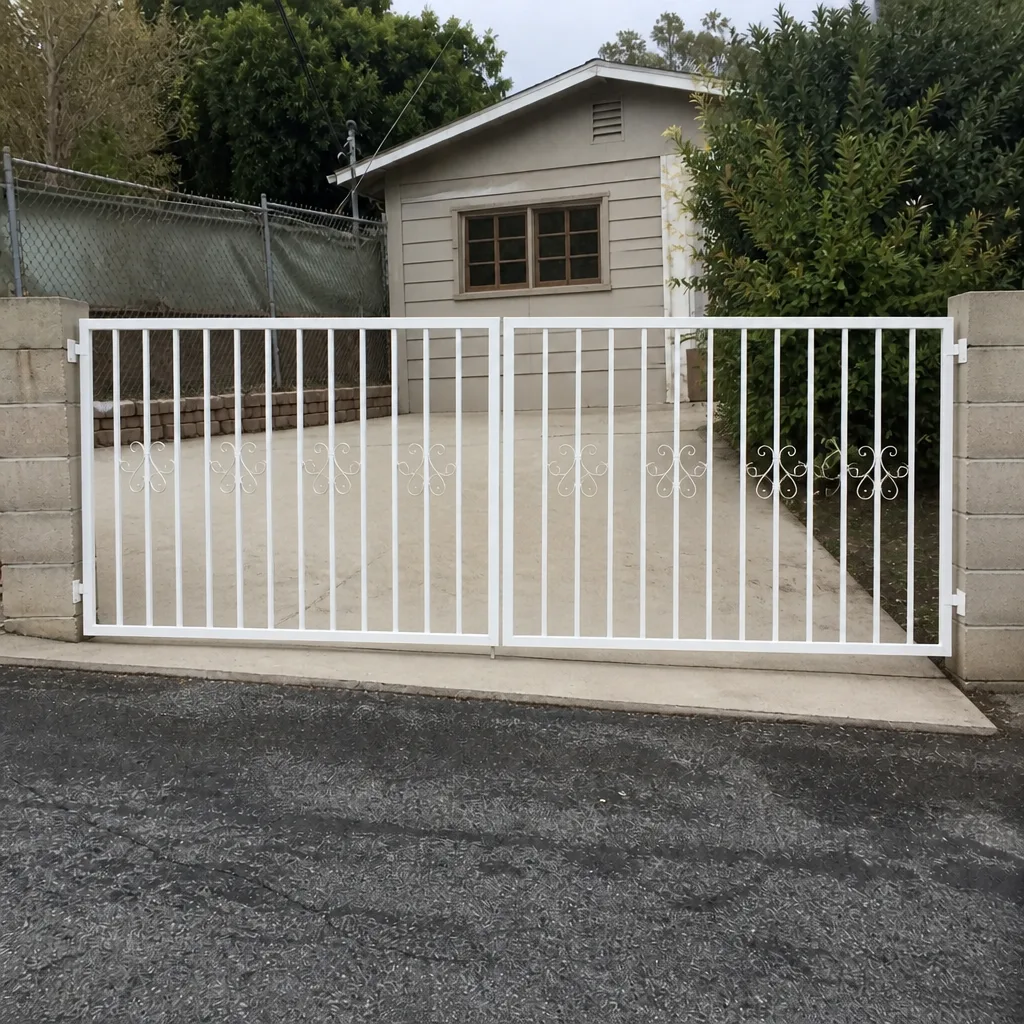 After
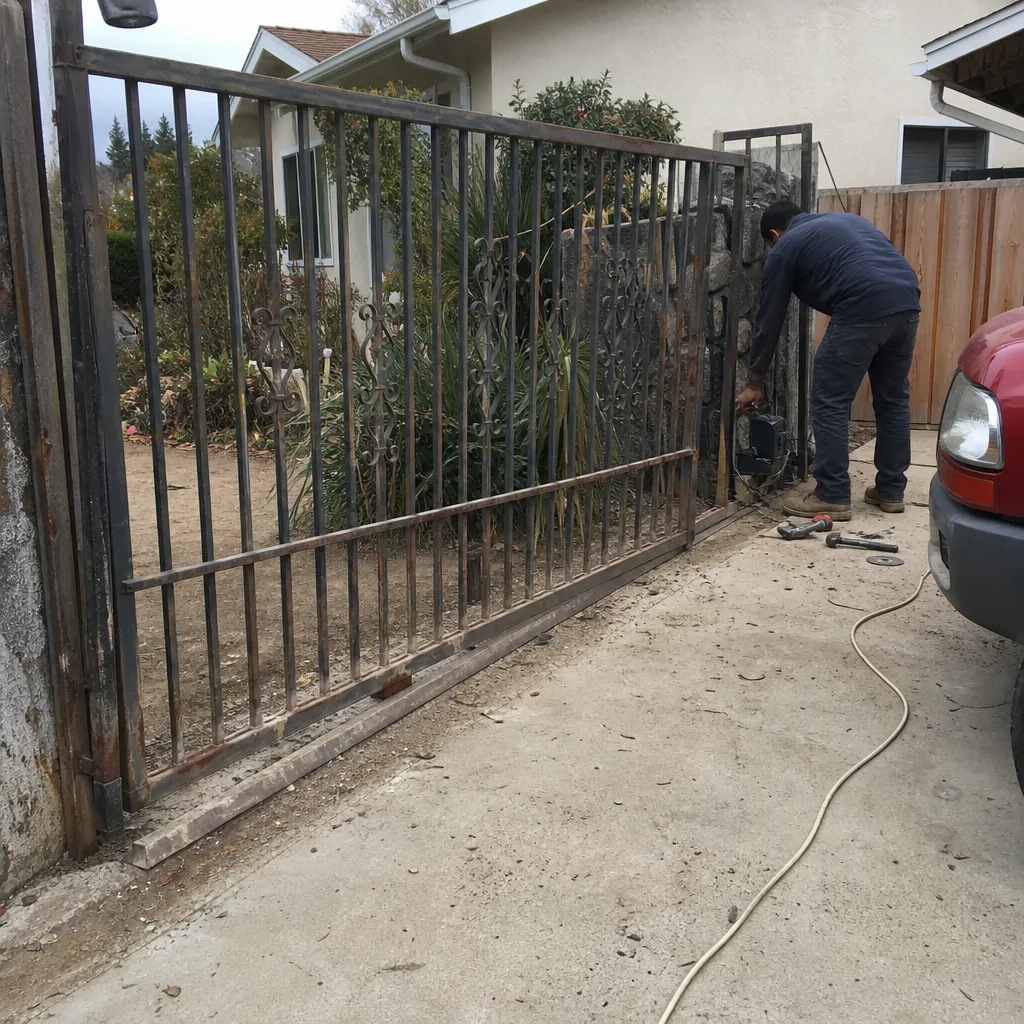 Before
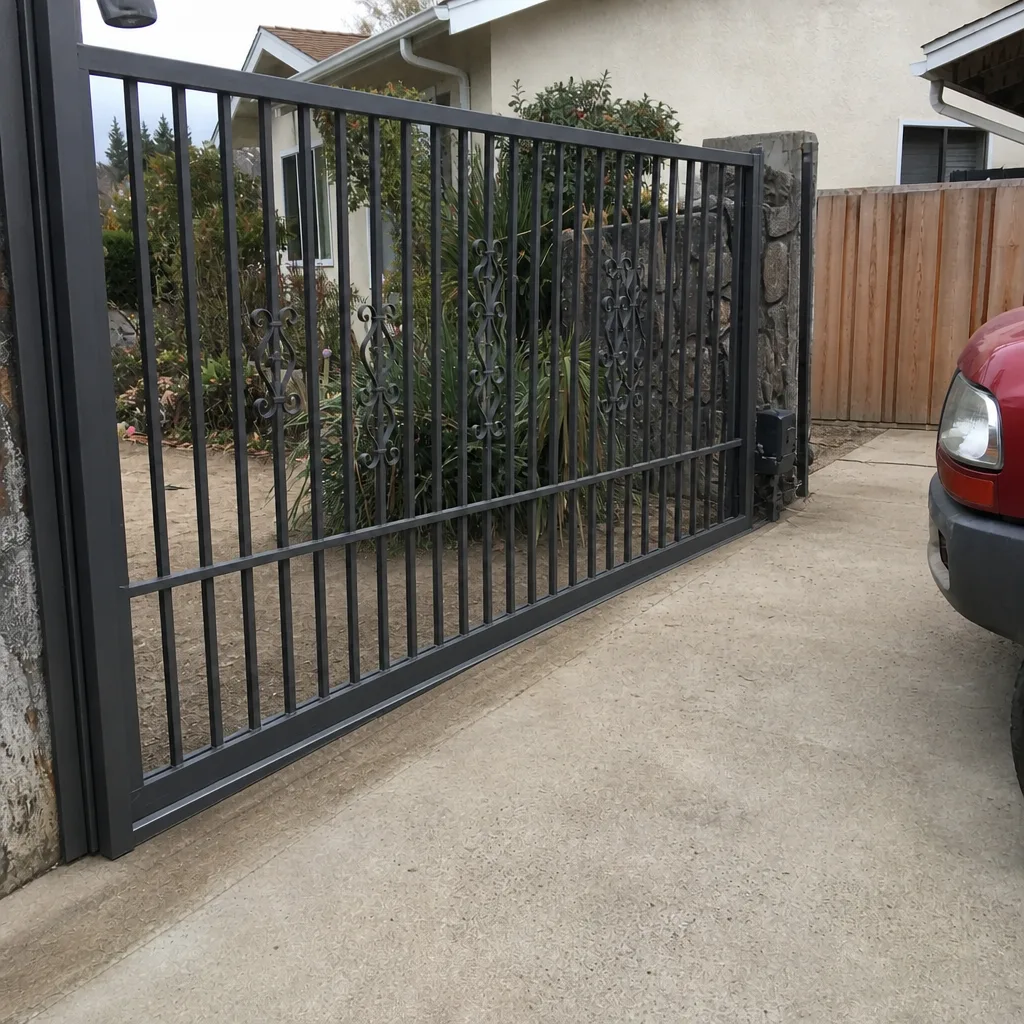 After