
Last updated November 4, 2026
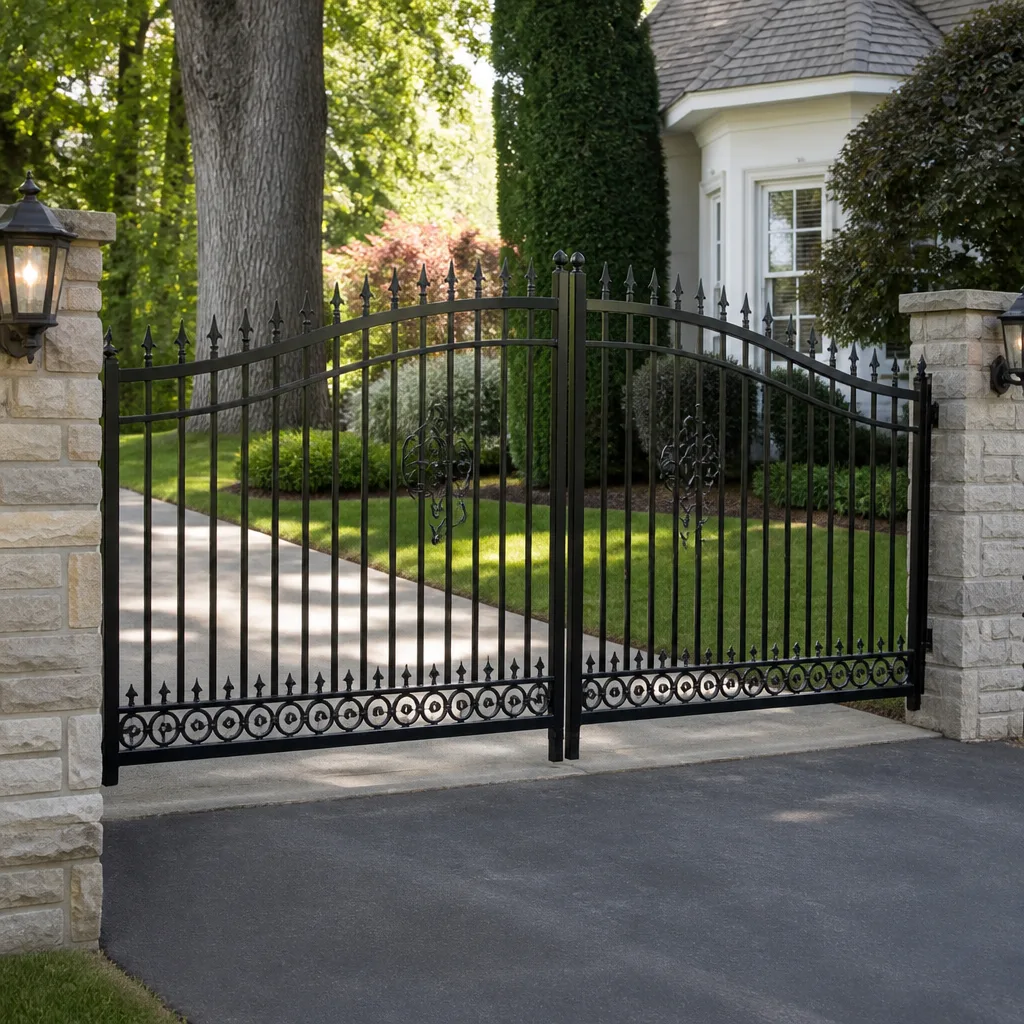 Wrought iron
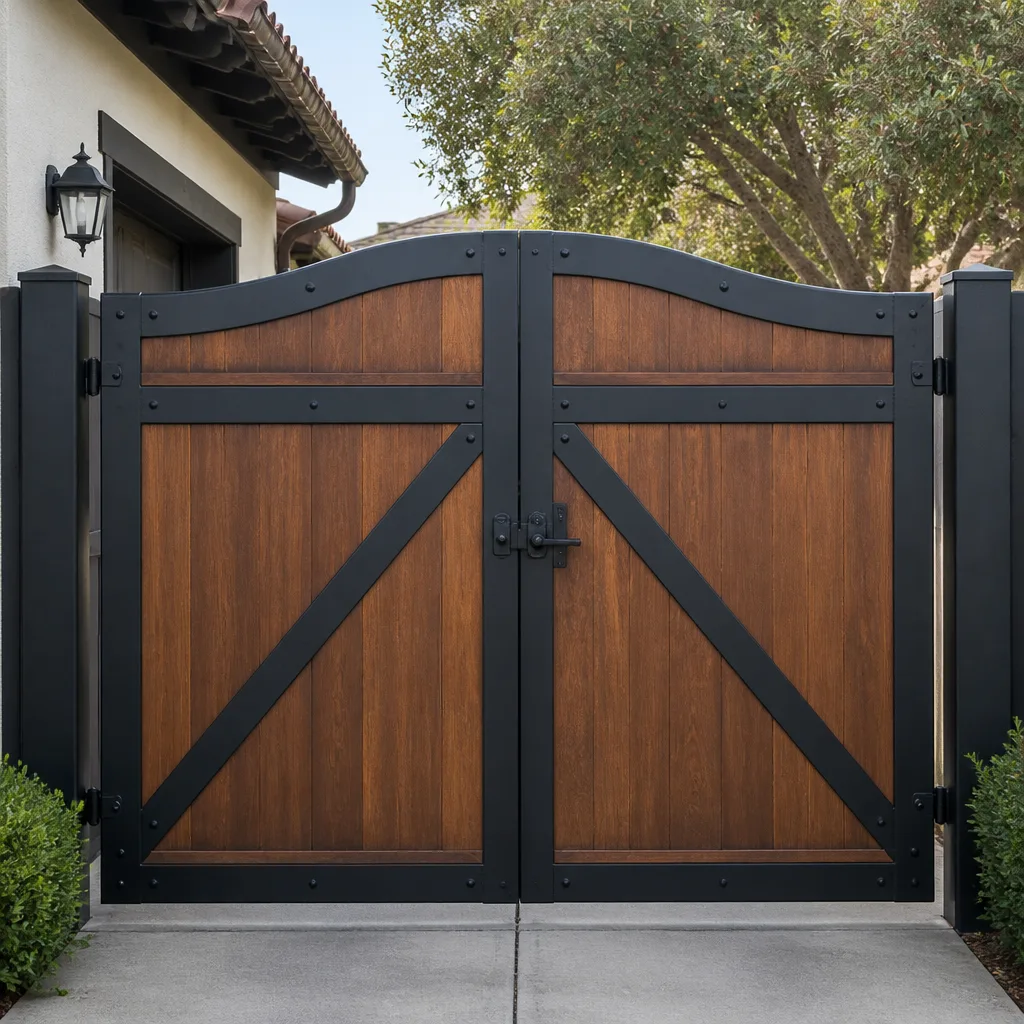 Wood & steel frame
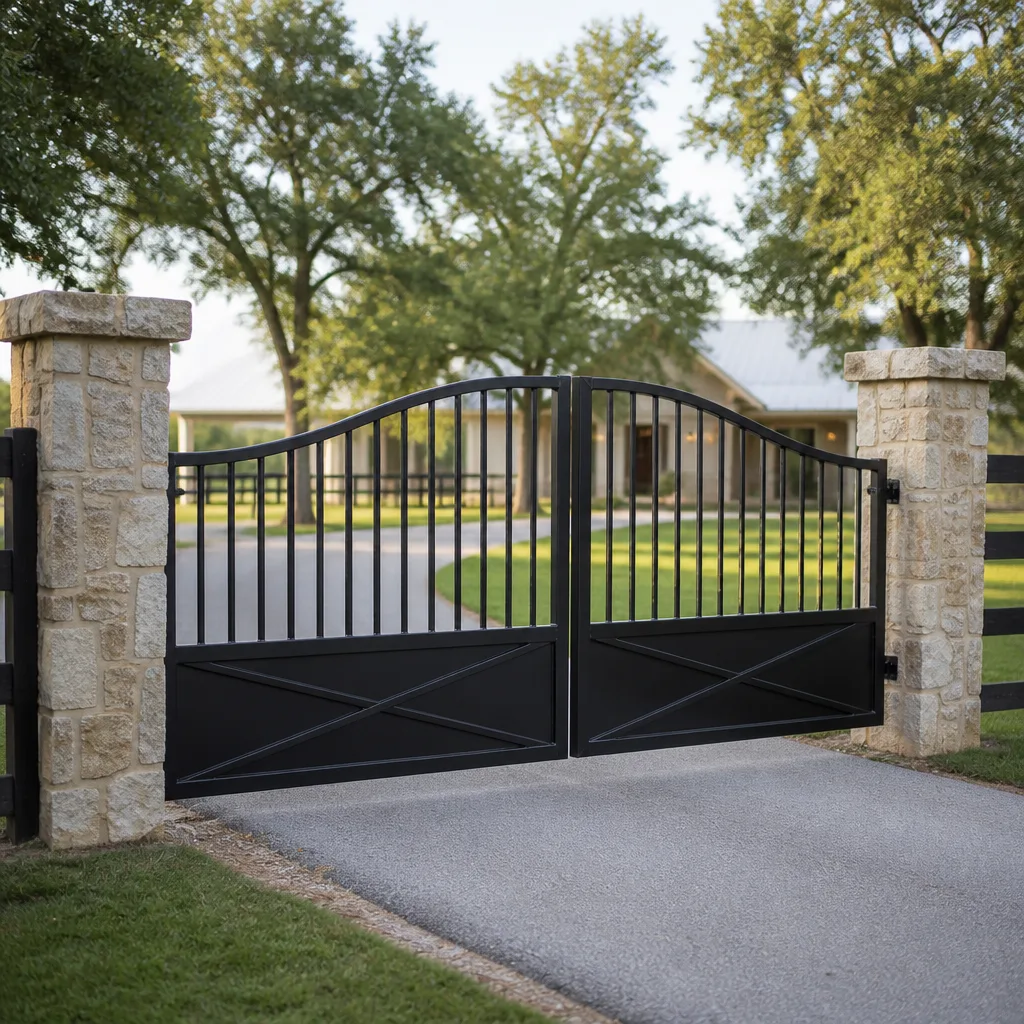 Farm & ranch
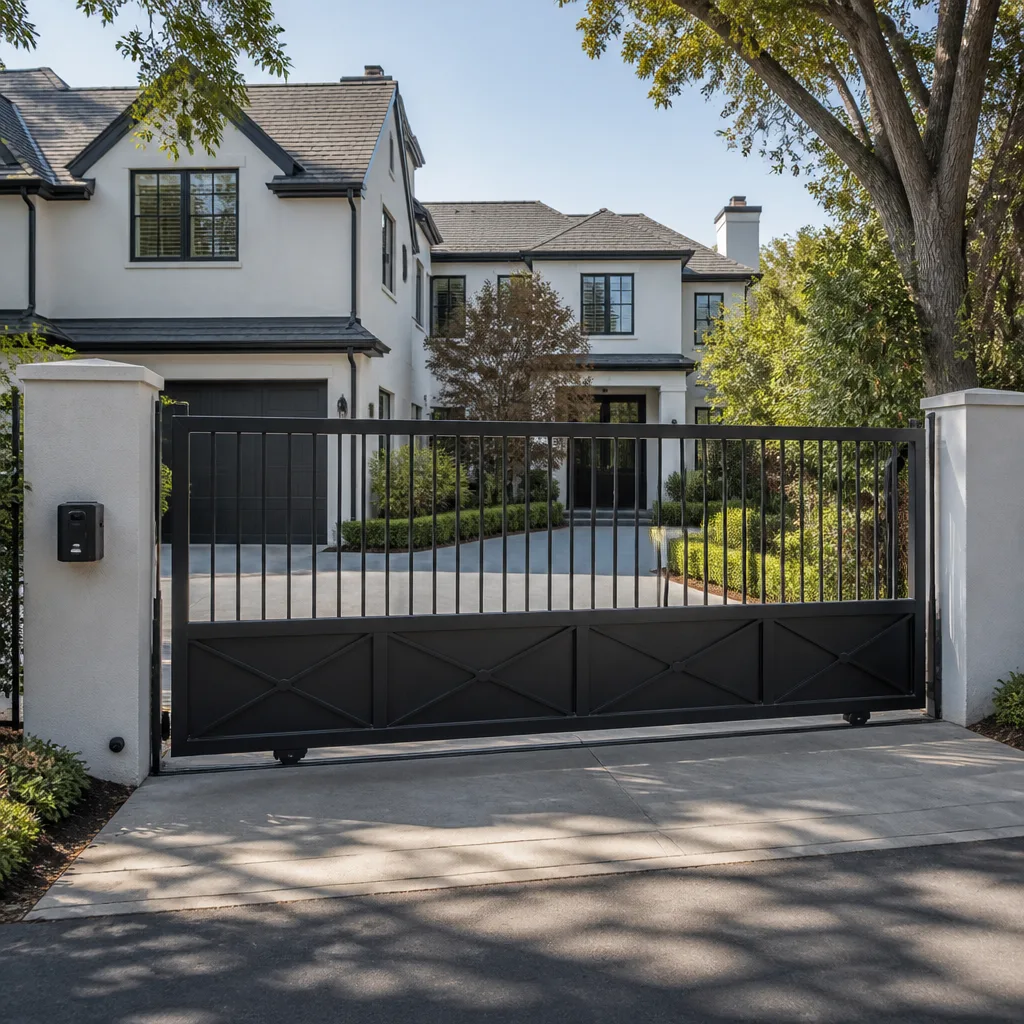 Sliding driveway gates
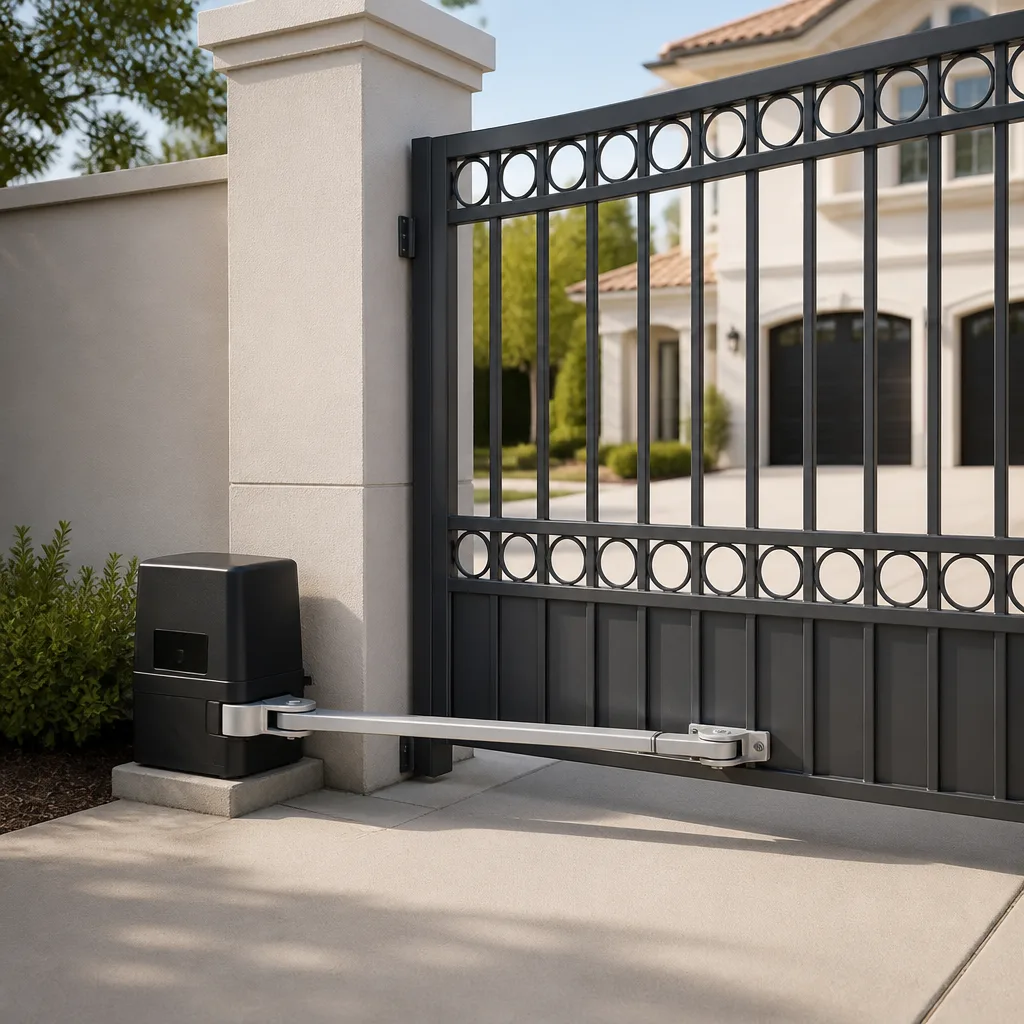 LiftMaster operators
Free on-site gate assessment - hinges, posts, and your LiftMaster or Nice gate operator checked before anything is quoted
The assessment is free and the quote is the invoice.
Get your free estimateThe Complete Guide to Gate Repair in Vista
Most homeowners think a sagging gate means worn hinges, and a gate that won’t open means a dead motor. Sometimes that’s true. But in Vista, the first thing we look at is the ground under the posts. The city’s hillside neighborhoods sit on expansive clay that swells with winter rain and shrinks through dry summers, and that movement is the quiet culprit behind a surprising share of the gate failures we see. Add the marine layer’s nightly humidity cycle, and you get a repair environment that doesn’t match the generic advice in most online guides. This page is written specifically for Vista: what actually breaks here, why it breaks, what to fix first, and what can wait.
Quick Answer
Gate repair in Vista usually starts with diagnosing one of three root causes: soil movement under the posts, corrosion from marine-layer humidity, or shortcuts taken during the original installation. The right fix depends on which one you’re dealing with. A gate that’s still powered and only slightly out of alignment may need an adjustment, while a leaning post almost always needs structural re-anchoring before anything else gets touched.
Styles & brands we work with
- Wrought iron
- Wood & steel frame
- Farm & ranch
- Sliding driveway gates
- LiftMaster operators
Table of Contents
- Why Vista Soil Is Harder on Gate Posts Than You Think
- Adjustment vs. Structural Re-Anchoring: The Repair Decision Most People Get Wrong
- How Vista’s Marine Layer Ages Gate Hardware and Finishes
- Electric Gate Repair: Diagnosing the Operator, Not Just the Symptom
- Why a Gate-Only Specialist Diagnoses Differently
- A Repair Priority Framework: Safety First, Cosmetics Last
- What Vista Installation Choices Mean for Future Repairs
- Common Mistakes to Avoid
Why Vista Soil Is Harder on Gate Posts Than You Think
Vista’s geology creates real challenges for any structure that depends on buried posts. Much of the city’s residential land, especially the hillside areas east of the 78 and through Shadowridge and the older streets near downtown, sits on clay-rich soil. Clay absorbs water and expands when wet, then contracts as it dries. A steel or wood gate post set in concrete doesn’t move much on its own, but the soil around the concrete footing shifts enough to create slow, persistent pressure. Over two or three seasons, that pressure can tilt a post just a few degrees, which translates to a gate that drags, latches poorly, or binds against the frame.
The problem compounds with weight. A wrought-iron or steel gate panel that weighs hundreds of pounds concentrates all of that force on the post furthest from the hinge. When that post leans even an inch, the gate’s entire geometry changes. Hinges bind. The latch no longer lines up. The operator, if there is one, strains harder and runs hotter. These symptoms look mechanical, but the root cause is in the ground.
This is also why simply replacing hinges or the latch often doesn’t last in Vista. If the post is still moving, the new hardware gets pulled out of alignment within months. We look at the post first because that’s what the soil acts on. A technician who doesn’t work in this climate might not think to check it until after the second or third repair call. For more on how we approach these repairs, see our gate repair service page.
Adjustment vs. Structural Re-Anchoring: The Repair Decision Most People Get Wrong
There are two distinct categories of gate problems, and treating one as the other is the most expensive mistake a homeowner can make. An adjustment is a mechanical fix: resetting hinge tension, aligning the latch, adjusting the operator’s force settings, or shimming a slightly settled post. A structural re-anchoring means the post’s footing has failed or the post itself has rotated far enough that no adjustment will hold. This requires either resetting the post with a deeper or wider footing, or in some cases adding a structural compression sleeve or a secondary anchor.
Here’s how to tell the difference before you call anyone:
- Check the post, not the gate panel. Push against the post at gate height. If it flexes at all, the footing is compromised and this is structural. A solid post should feel immovable.
- Look at the gap between the gate and the latch post. If the gap is wider at the top than the bottom, the gate has racked. This usually means the hinge post is leaning, not that the hinges wore out.
- Watch the gate’s swing path. If the gate scrapes the ground only in one spot, the post has moved. If it scrapes everywhere, the panel itself may have sagged on its hinges.
- Listen for the operator. An electric gate motor that hums loudly, struggles, or reverses mid-cycle is often compensating for a gate that’s physically harder to move. The motor may be fine.
Misreading a structural issue as a simple adjustment costs homeowners twice: once for the adjustment that doesn’t hold, and again for the full fix. That’s why we spend time at the posts before we touch a single hinge or circuit board. It also matters to mention that in Vista, many homes on hillside lots have posts set into slopes, which changes how water drains around the footing and can accelerate movement. If you live near Buena Creek or in the Rancho Vista area, the drainage patterns around your posts are worth a closer look.
How Vista’s Marine Layer Ages Gate Hardware and Finishes
Vista sits inland enough to avoid direct ocean spray, but not far enough to escape the marine layer that rolls in most nights. That humidity cycle, condensed and consistent, works on metal surfaces in ways the summer heat does not. Surface rust appears first at weld points, hinge barrels, and anywhere the factory finish has been scratched or worn. What looks cosmetic early on becomes structural if ignored, because rust expands and weakens the metal underneath the paint.
Different gate materials respond differently:
- Wrought iron and steel: Strong and repairable, but finish failure invites rust fast in Vista’s humidity cycle. Touch-ups and regular repainting matter more than with other materials.
- Aluminum: Resists corrosion much better, which is why it’s common in newer Vista installations. The tradeoff is that aluminum welds can be more fragile, and panel flex can loosen fasteners over time.
- Wood gates: Less common for automatic driveway gates, but they still exist here. Wood absorbs moisture from the air and swells, then dries and cracks. Hardware attached to a wood gate works loose seasonally.
- Powder-coated finishes: Most residential gates in Vista ship with a powder coat. That finish is durable, but once it chips, moisture gets underneath and the coating starts to peel back from the edges.
We see early-stage finish failure most often around hinge bolts and along the bottom rail, where moisture collects. A homeowner who spots flaking paint or rust staining in those areas should address it before the rust eats into the metal itself. For automated gates, the finish matters less than the condition of the track, wheels, and operator mounting points, which we cover in the electric gate section below.
Electric Gate Repair: Diagnosing the Operator, Not Just the Symptom
When an automatic gate stops opening, the temptation is to assume the motor burned out. In many cases, especially after a Vista hillside winter, the motor is working harder than it should because the gate is out of alignment. Replacing the operator without fixing the underlying mechanical drag means the new motor fails sooner than it should. That’s the difference between fixing the symptom and fixing the system.
We diagnose an electric gate in this order:
- Confirm power and breaker status. Sounds obvious, but a surprising number of calls are resolved here. Check the outlet and any GFCI or outdoor breaker before assuming the worst.
- Inspect the gate’s manual movement. Disengage the operator and push the gate by hand. If it’s heavy, binding, or dragging, the mechanical issue came first. We fix that before connecting the operator again.
- Check the safety sensors and photo eyes. A gate that starts and reverses, or refuses to move at all, often has a misaligned or dirty sensor. The operator is doing what it’s supposed to do.
- Inspect the control board and receiver. Only after mechanical and sensor issues are ruled out do we move to the electronics. Control board failures do happen, but they’re rarely the first thing to fail.
We work regularly with operators from Viking, Ghost Controls, and DoorKing, along with several others. Brand familiarity matters here because each system has its own wiring logic, sensor behavior, and failure patterns. A Ghost Controls residential swing opener and a DoorKing commercial slide operator are completely different animals, and diagnosing by system rather than by guessing saves time and avoids replacing parts that were never bad. You can read more about our approach on the electric gate repair page.
Why a Gate-Only Specialist Diagnoses Differently
When a fencing company looks at a broken gate, they see a fence section with a hinge. When a general contractor looks at one, they see a door that needs to work. When a gate specialist looks at one, they see a system: the posts and footings, the panel weight and geometry, the hinges and latch, the operator and its control logic, the sensors, and the power supply. All of those pieces affect each other.
Sterling Gate Repair is a gate-only operation. Every tool, every stocked part, and every technician’s training is built around gates. We don’t split focus across fencing, garage doors, or general handyman work. That matters in specific, practical ways. We carry gate-specific components in our vehicles, from hinge sets and latch hardware to operator control boards and sensor replacements, so a diagnosis can usually become a fix on the same visit. We’re familiar with residential-grade systems like Mighty Mule and Ghost Controls, and commercial-grade systems from FAAC, BFT, and DoorKing. We’re equally comfortable with a manual swing gate that’s been on a home since the 1980s and a modern automated slide gate at a small commercial property.
For electric gates, the specialist difference is even more visible. Wiring, sensors, and power supplies require a diagnostic approach that assumes the problem may be mechanical, electrical, or both. We trace the actual system rather than replacing parts on a hunch. That’s what we mean when we say we diagnose the system.
A Repair Priority Framework: Safety First, Cosmetics Last
Not every gate problem needs immediate attention. Some do. Here’s the framework we recommend to Vista homeowners when they’re deciding what to schedule first.
- Immediate safety issues: A gate that falls off its track, a post that’s visibly leaning and supporting a heavy panel, exposed electrical wiring at the operator, or a slide gate that can come off its rail. These are call-now situations. A heavy gate panel can cause serious injury if it falls or swings unpredictably.
- Security issues: A gate that won’t close, or that closes but won’t latch. An open gate is an invitation, and a gate that appears closed but isn’t latched gives false security. This is especially important for Vista properties that use the gate as a primary access barrier.
- Functional issues: An operator that works intermittently, a gate that’s slow, sensors that occasionally need a nudge, or a latch that requires lifting to engage. These are urgent but not emergencies. Schedule them within a week or two.
- 90-day items: Minor hinge wear that hasn’t yet affected alignment, a control board that resets occasionally, or a remote that works only at close range. Plan for these before they worsen, but they’re not immediate.
- Cosmetic items: Surface rust, fading finish, or a slightly sticky latch. These can be addressed when convenient or bundled with other work. The exception is rust at structural points, which should be checked sooner.
Vista’s soil and humidity patterns mean that a “minor” post lean or a small rust spot can accelerate faster than homeowners expect. If you’re unsure which category your gate falls into, this is where an on-site estimate helps. We’ll tell you honestly what’s urgent and what can wait.
What Vista Installation Choices Mean for Future Repairs
The best way to reduce long-term gate repair costs is to make good decisions at installation. In Vista, that means two things above all: post depth and material selection.
Post footing depth matters more in clay soil than in sandy soil because the expansion forces are stronger. A post set to a proper depth with an adequate concrete footing is the single biggest factor in avoiding future lean and racking. We’ve seen posts set in too little concrete or at insufficient depth, and the result is predictable within a few seasons. This is one reason we handle installation ourselves rather than leaving it to whoever built the fence. The same team that knows how Vista soil behaves is the team setting the post, which means the post is set correctly the first time.
Material choices also matter. Aluminum holds up better against the marine layer’s humidity, while steel offers more rigidity for large panels. The right choice depends on panel size, weight, whether the gate is automated, and the level of daily traffic. For automated gates, we also account for the operator’s duty cycle and the power run placement, which affects future serviceability.
From installation to long-term repair, the continuity matters. When we install a gate in Vista, we know exactly how it was built, which post depths were used, and which operator controls everything. If a problem appears years later, that history shortens the diagnosis considerably. And when we repair a gate we didn’t install, we figure out the system the same way: from the ground up.
Common Mistakes to Avoid
- Replacing the operator before checking the mechanical gate. A gate that’s hard to move will kill a new motor just as fast as the old one. This is the most common and most expensive mistake we see in Vista, especially after a wet winter softens hillside soil.
- Ignoring a slight post lean. That “minor” lean is the first sign of footing failure. In Vista’s expansive clay, it will not self-correct, and it will get worse. Early intervention is far less expensive than a full post reset.
- Touching a gate’s electrical components without disconnecting power. Gate operators carry line voltage. A homeowner who opens the control box without shutting off the breaker risks serious injury. If you’re not certain of the wiring, call a professional.
- Lubricating everything with the wrong product. Heavy grease attracts dirt and grit on a gate track, turning a smooth slide into a grinding mess. The right lubricant depends on the specific part, and in Vista’s dry, dusty summers, the wrong product causes more problems than it solves.
- Assuming a gate that won’t open needs a new control board. Control board failures happen, but misaligned sensors, tripped breakers, and mechanical binding are far more common. Starting with the expensive part is a bad diagnostic order.
- Painting over rust without treating it first. The marine layer’s humidity means rust continues to spread under fresh paint. The metal must be cleaned and treated before it’s recoated, or the new finish will bubble within months.
- Choosing a contractor who treats gates as a fence add-on. Gate work involves mechanical, electrical, and structural knowledge. A generalist who frames it as “fencing with hinges” misses the system-level thinking that prevents repeat failures.
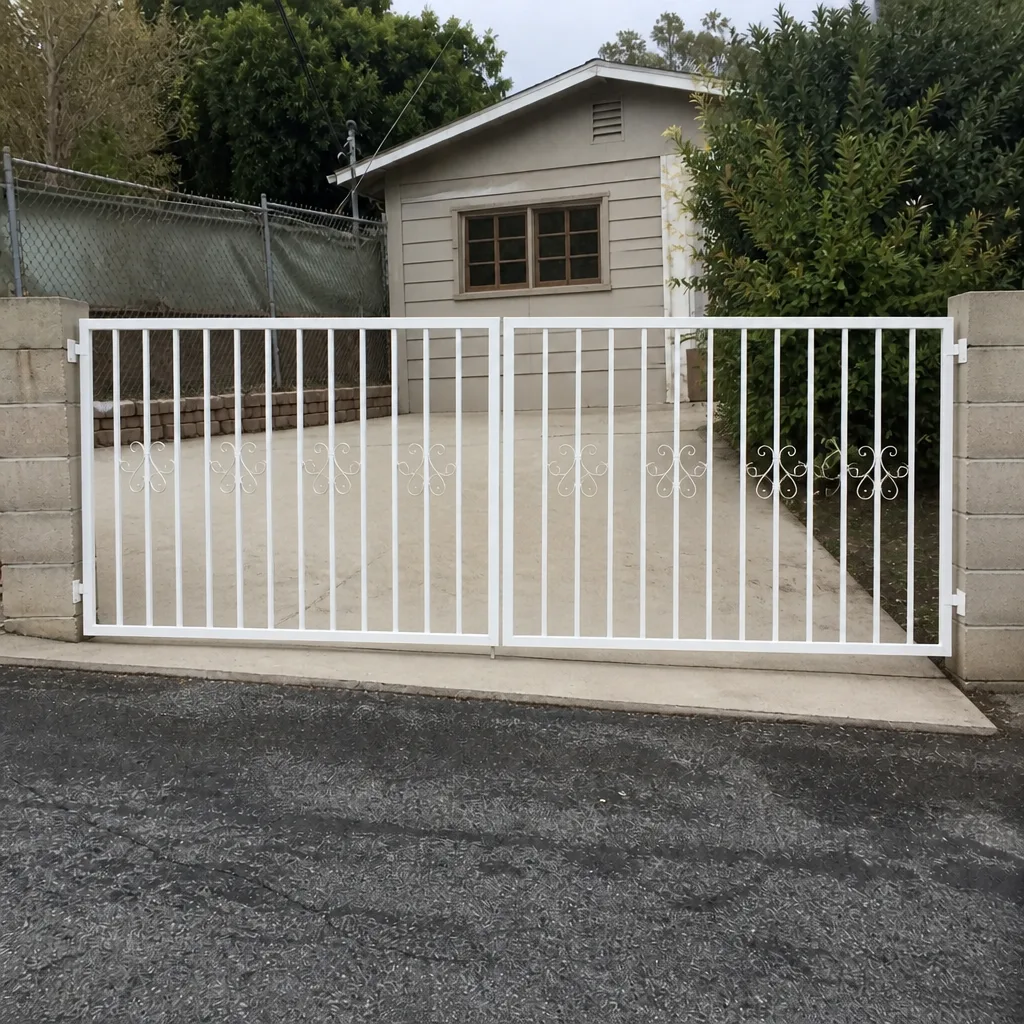
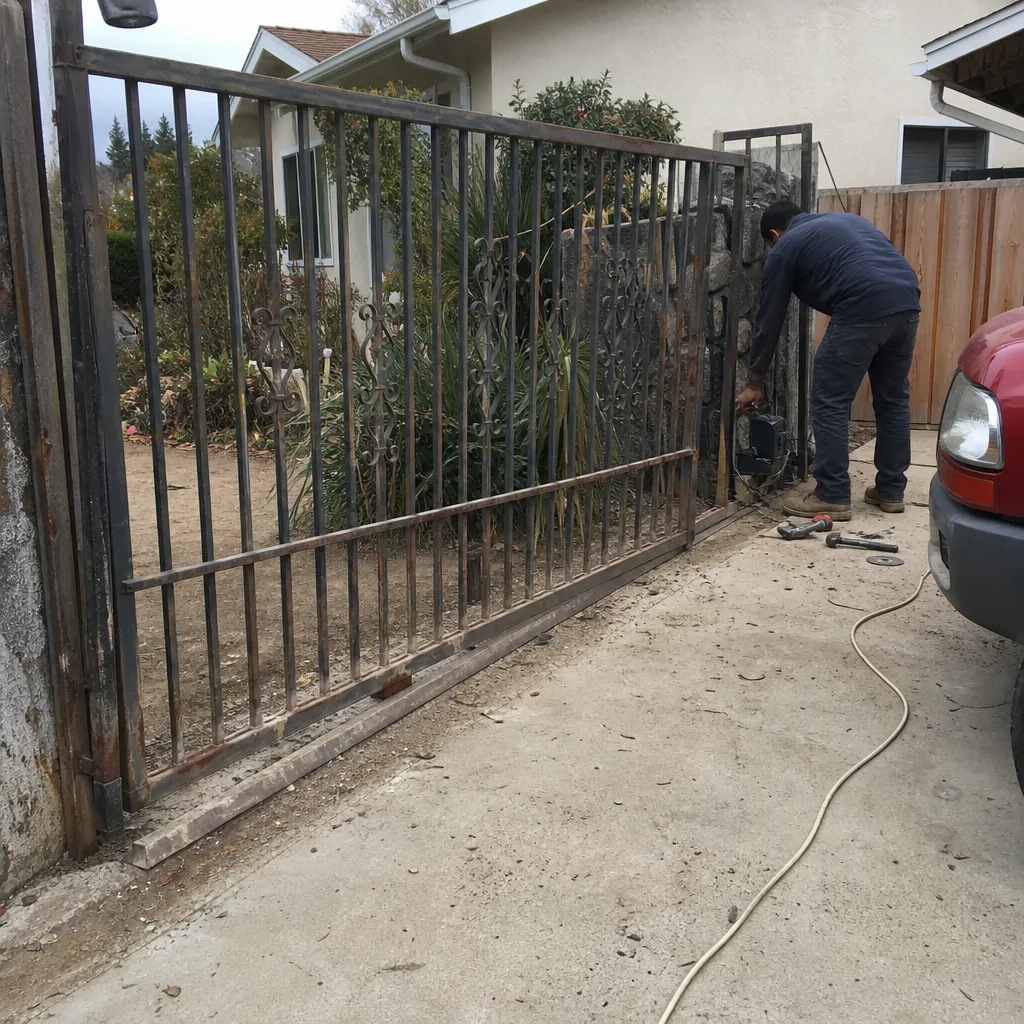
See the difference
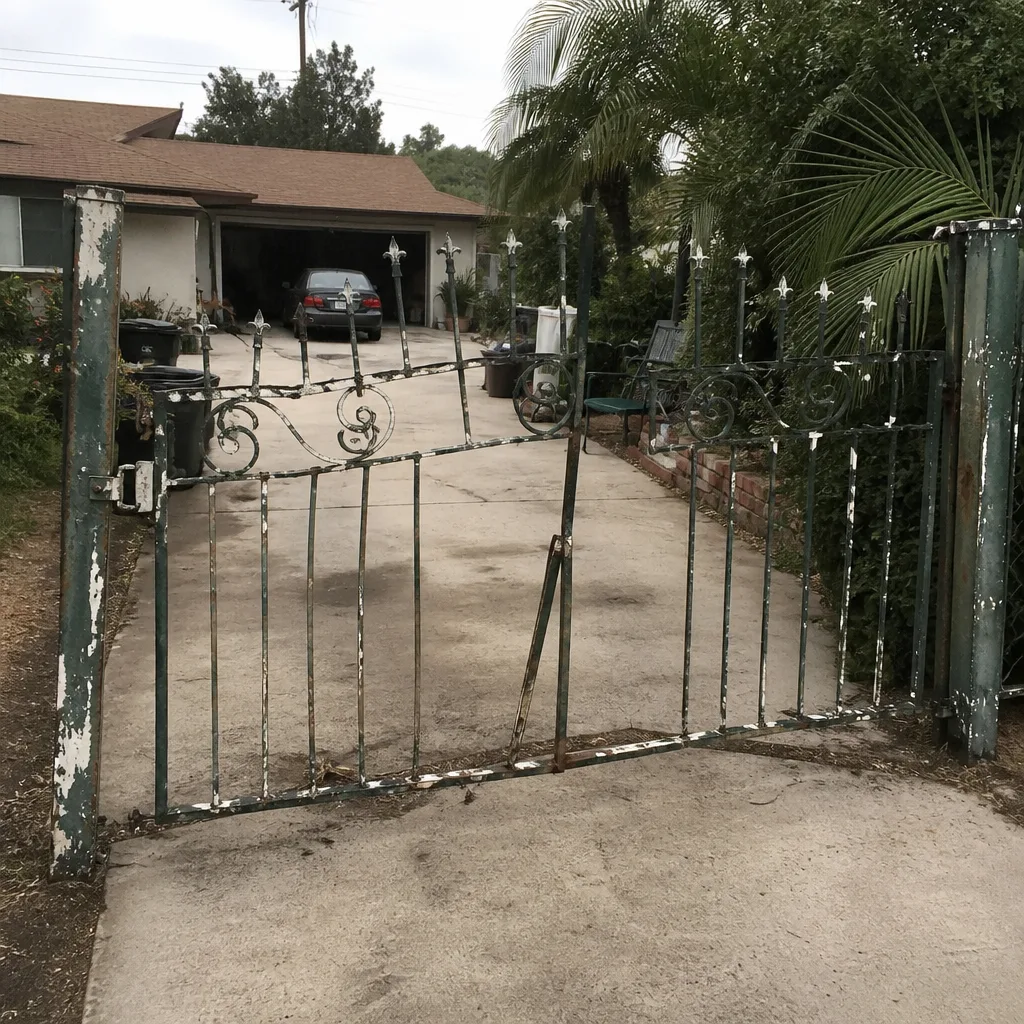 Before
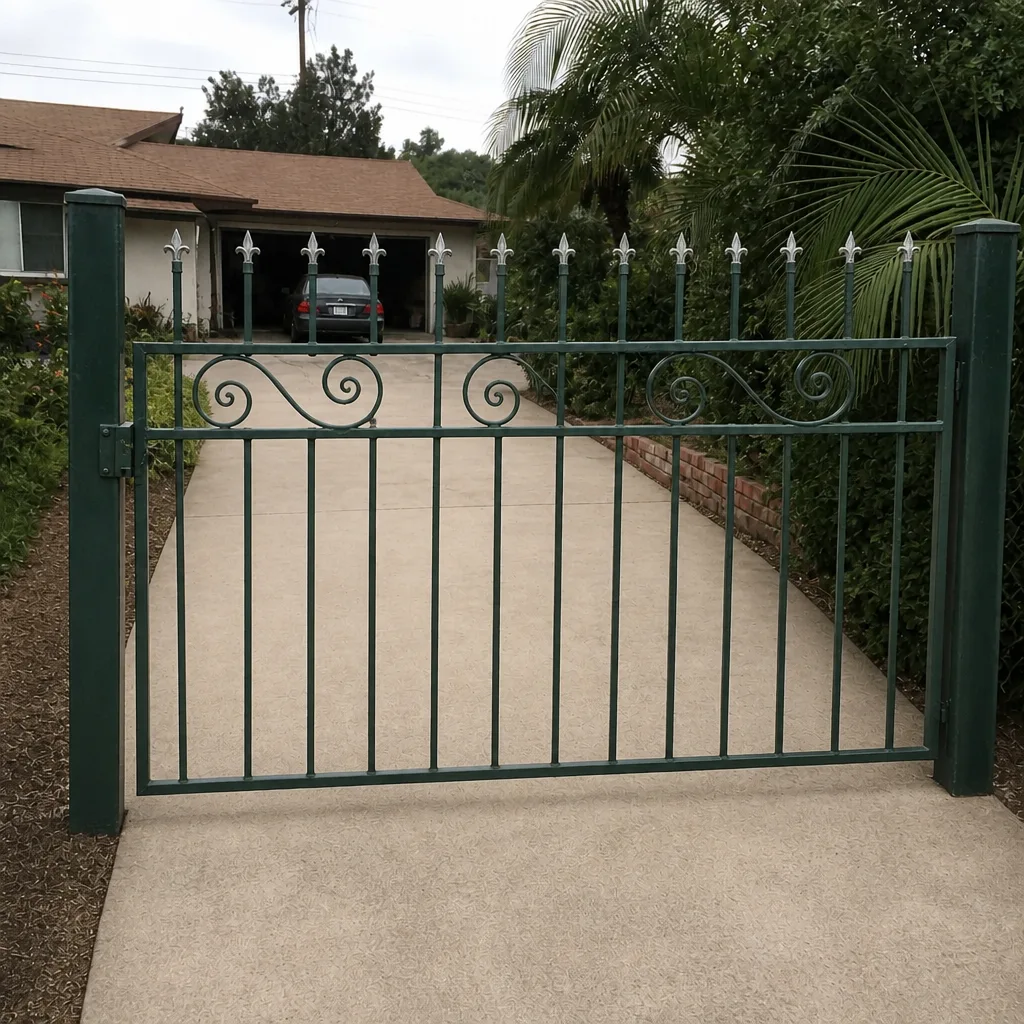 After
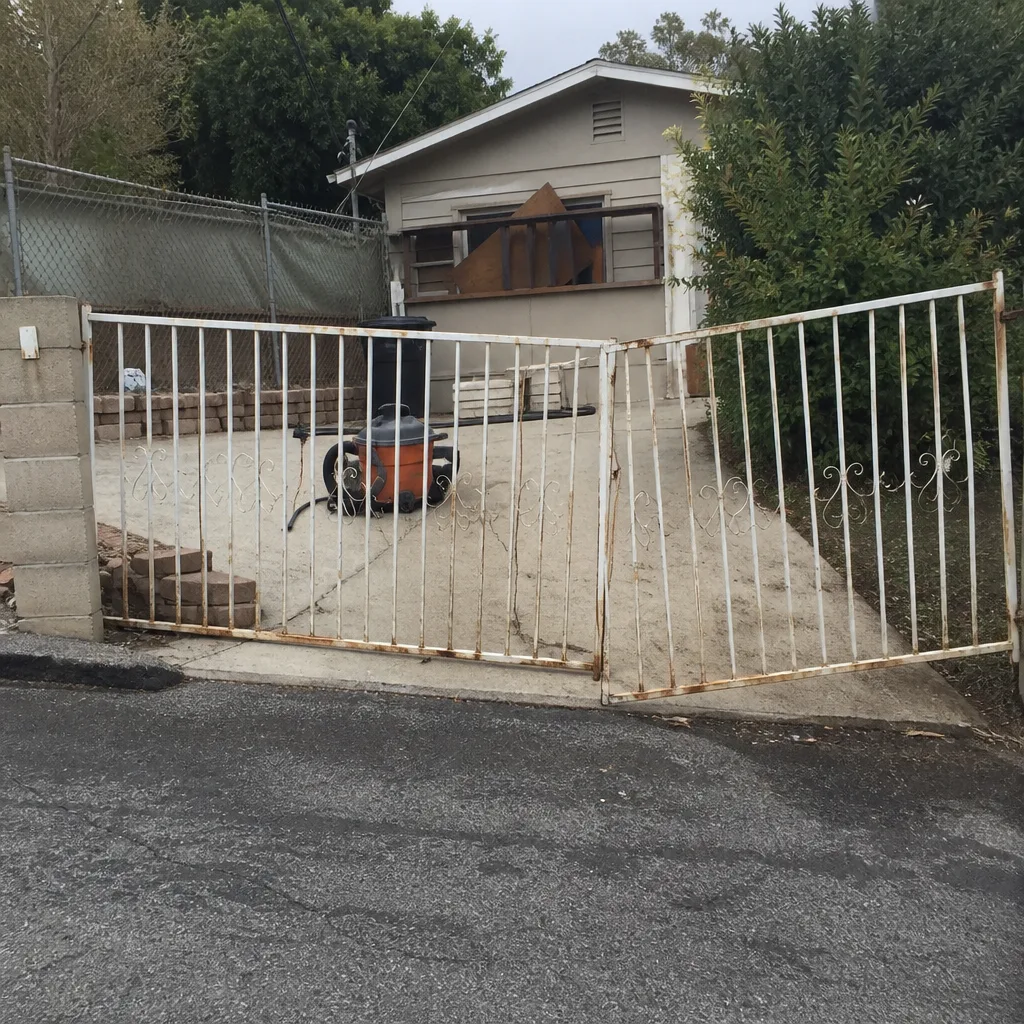 Before
 After
 Before
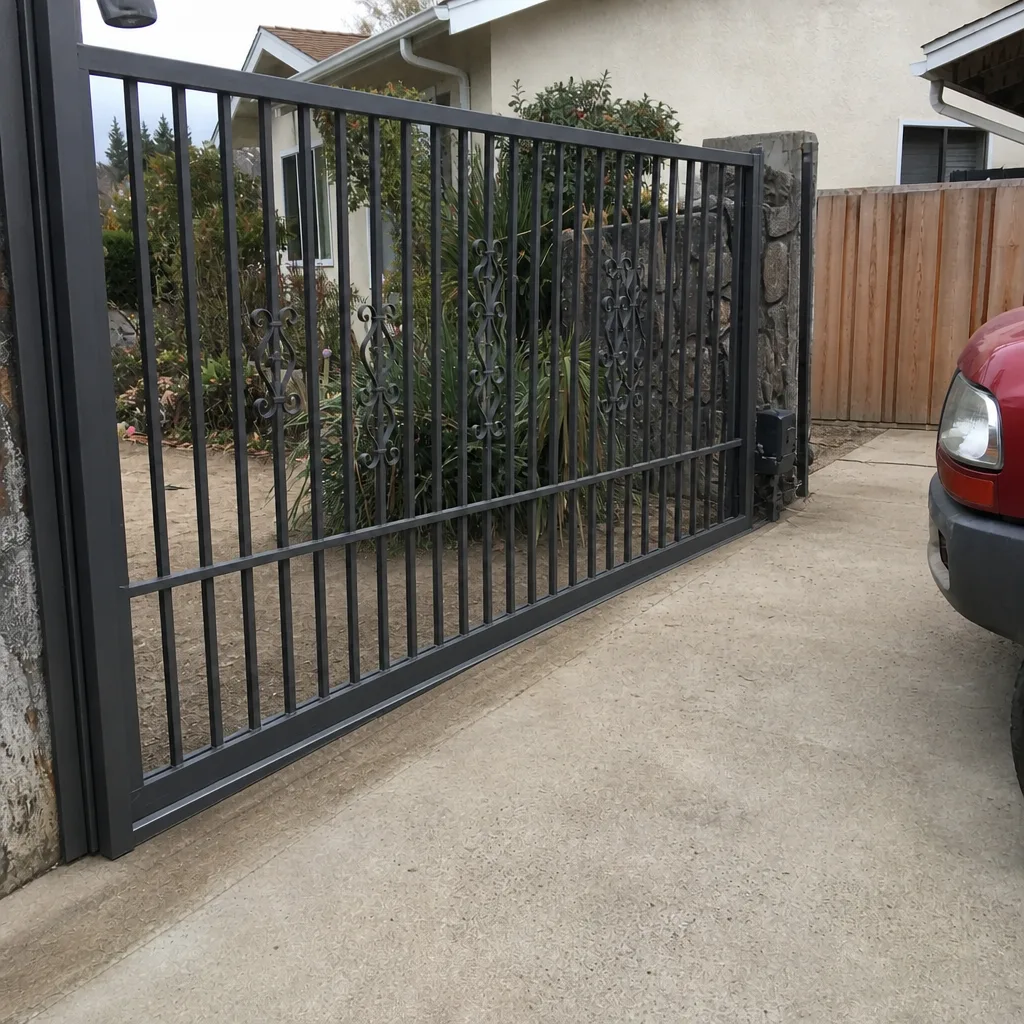 After
When to Call a Professional
Call a professional when the gate is leaning, when the operator strains or makes new sounds, when the gate has come off its track, or when you see exposed wiring anywhere near the operator or control box. Also call if the gate no longer latches securely, because a gate that doesn’t latch isn’t doing its job. And if an electric gate starts behaving erratically, reversing unexpectedly, or ignoring the remote, don’t keep resetting it and hoping. Those are symptoms of a system issue, not a one-time glitch. Sterling Gate Repair offers free estimates in Vista and the surrounding area. Call (855) 773-5055 and we’ll walk through what you’re seeing. We answer 24/7. Fast dispatch from 7am to 7pm, Sunday through Friday.
Frequently Asked Questions
Gate repair costs in Vista depend on whether the issue is mechanical, electrical, or structural. A simple hinge adjustment or sensor realignment falls on the lower end, while a post reset or operator replacement involves more time and materials. The only way to know your exact price is a written estimate after we inspect the gate. Call (855) 773-5055 for a free estimate and we’ll give you a firm price before any work starts.
Many mechanical adjustments and common electrical fixes can be completed the same day. We dispatch teams from 7am to 7pm, Sunday through Friday. Structural re-anchoring and some operator replacements may require additional parts or concrete curing time. Call (855) 773-5055 and we’ll tell you what’s realistic for your situation. We answer 24/7.
Gate posts lean in Vista most often because the expansive clay soil around the footing expands and contracts with seasonal moisture changes. This movement slowly tilts the post over multiple seasons, especially on hillside lots with sloped drainage. A leaning post usually requires re-anchoring, not just hinge adjustment.
We service operators from Viking, Ghost Controls, DoorKing, Elite, LiftMaster, FAAC, BFT, Linear, and Mighty Mule. We’re brand-agnostic, which means we diagnose the system as it’s built rather than trying to sell a replacement from one manufacturer. If you don’t see your brand listed, call (855) 773-5055 and ask; we work on your brand, not just the ones we stock.
Yes. A gate that won’t close leaves your property unsecured, and a gate that appears closed but doesn’t latch offers false protection. For automatic gates, a failing operator can also create a safety hazard if the gate reverses unpredictably or a sensor is out of alignment. Schedule a repair as soon as you notice the issue.
Repair makes sense when the posts are sound, the panel is structurally intact, and the operator is compatible with the gate’s weight and usage. Replacement makes sense when rust has compromised the structure, the post footings have failed more than once, or the operator is obsolete and no longer supported. We’ll give you an honest assessment either way, and since we install gates as well as repair them, you get one recommendation rather than an upsell.
The Bottom Line
Gate repair in Vista is a different job than gate repair in most inland communities. The soil moves, the marine layer coats everything in nightly moisture, and hillside slopes complicate drainage around post footings. Understanding whether your gate problem is mechanical, electrical, or structural is the difference between a lasting repair and a recurring headache. Start with the posts, then the panel, then the operator. And when in doubt, get a specialist who works on gates every day, not someone who treats it as a side job. Sterling Gate Repair serves Vista with gate repair, electric gate repair, and full gate installation. Call (855) 773-5055 for a free, no-pressure estimate. We answer 24/7. Fast dispatch from 7am to 7pm, Sunday through Friday.
Written by the team at Sterling Gate Repair, serving Vista since 2015.