
Last updated November 4, 2026
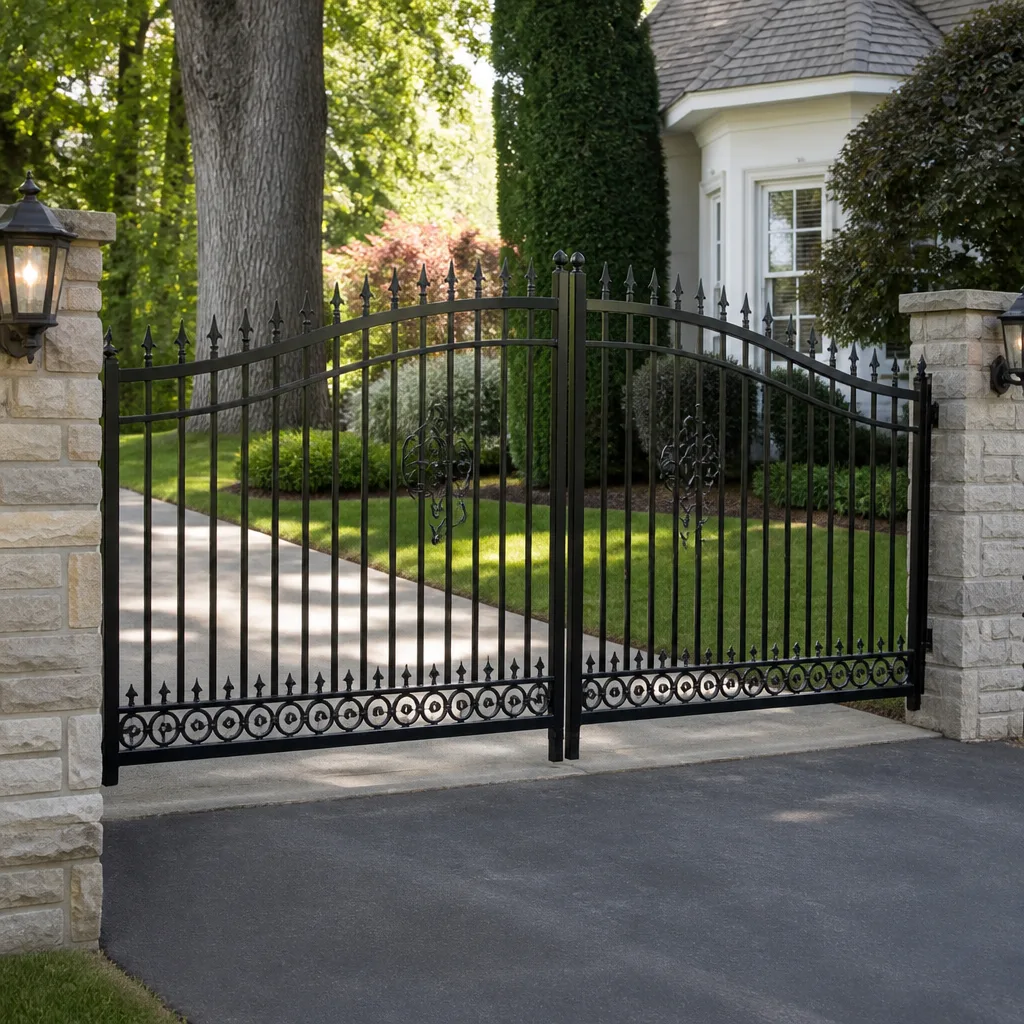 Wrought iron
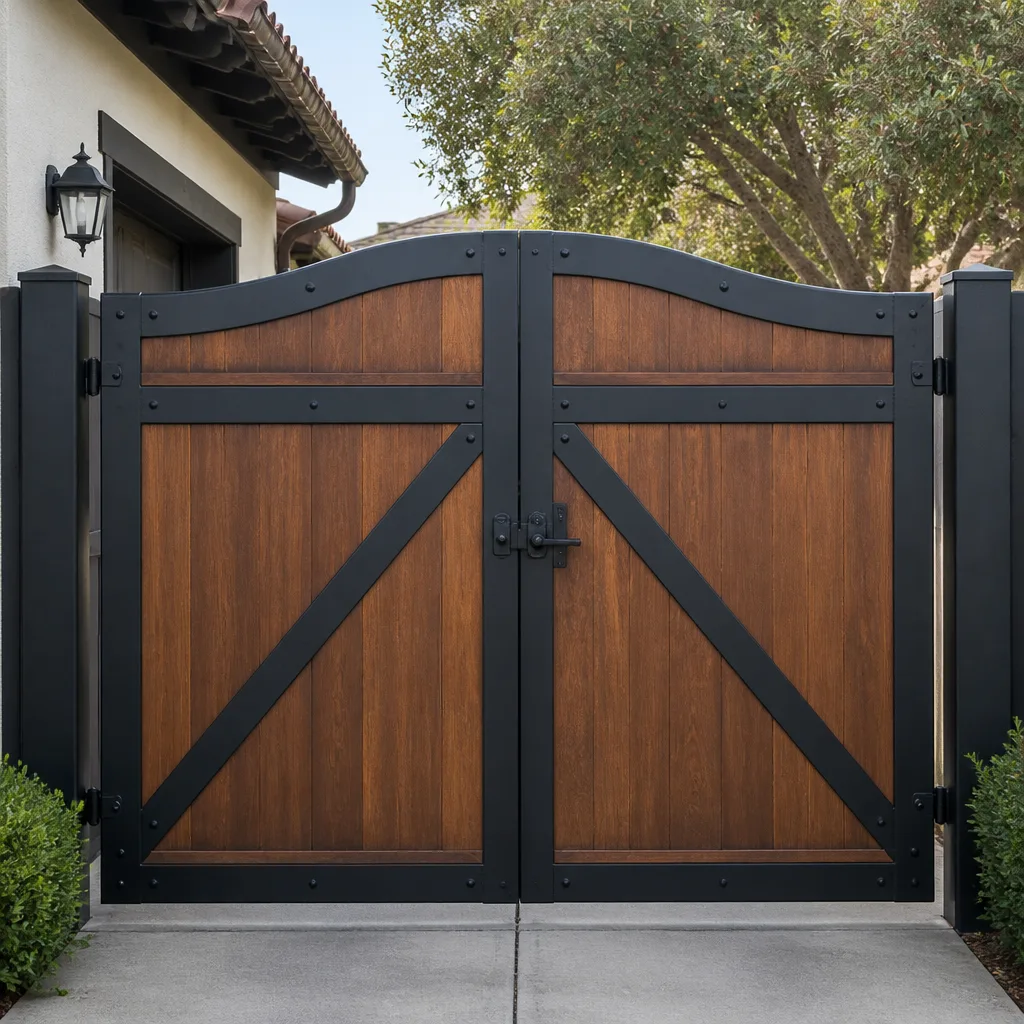 Wood & steel frame
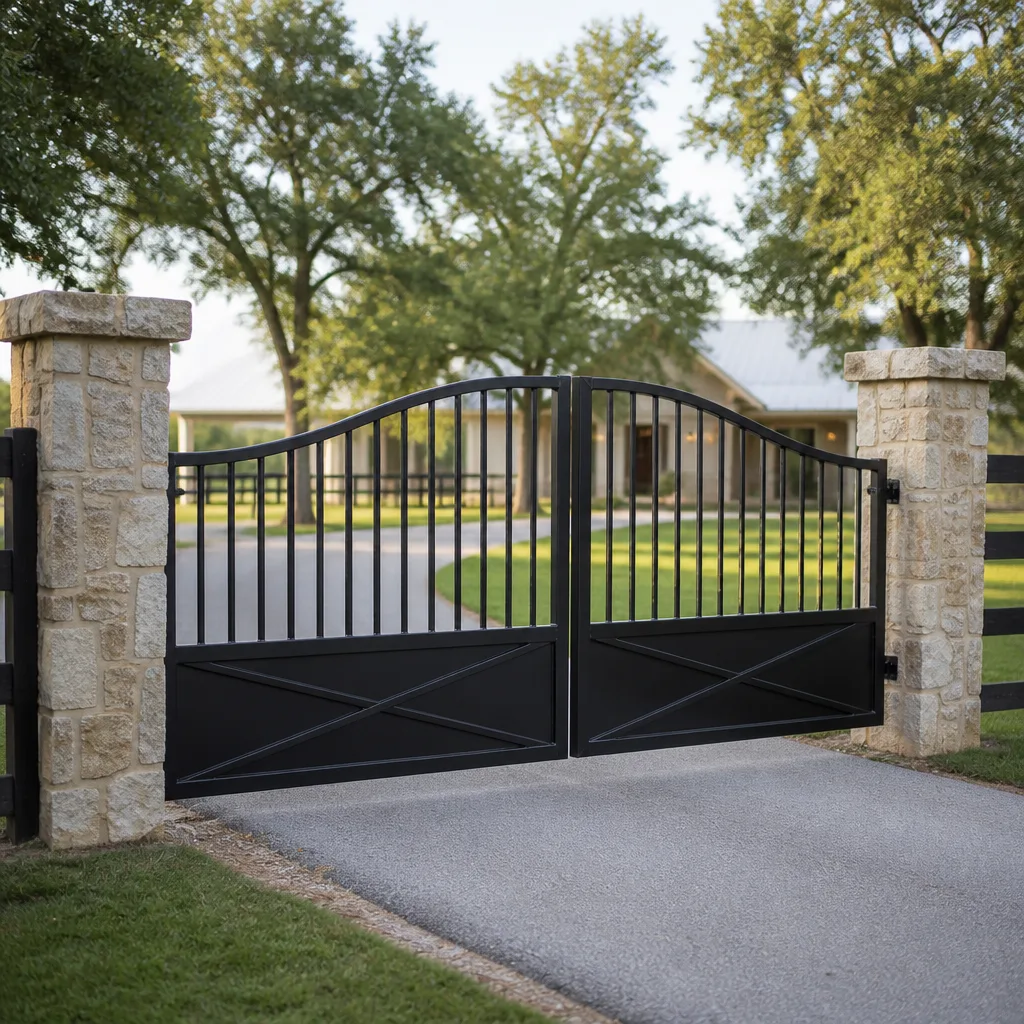 Farm & ranch
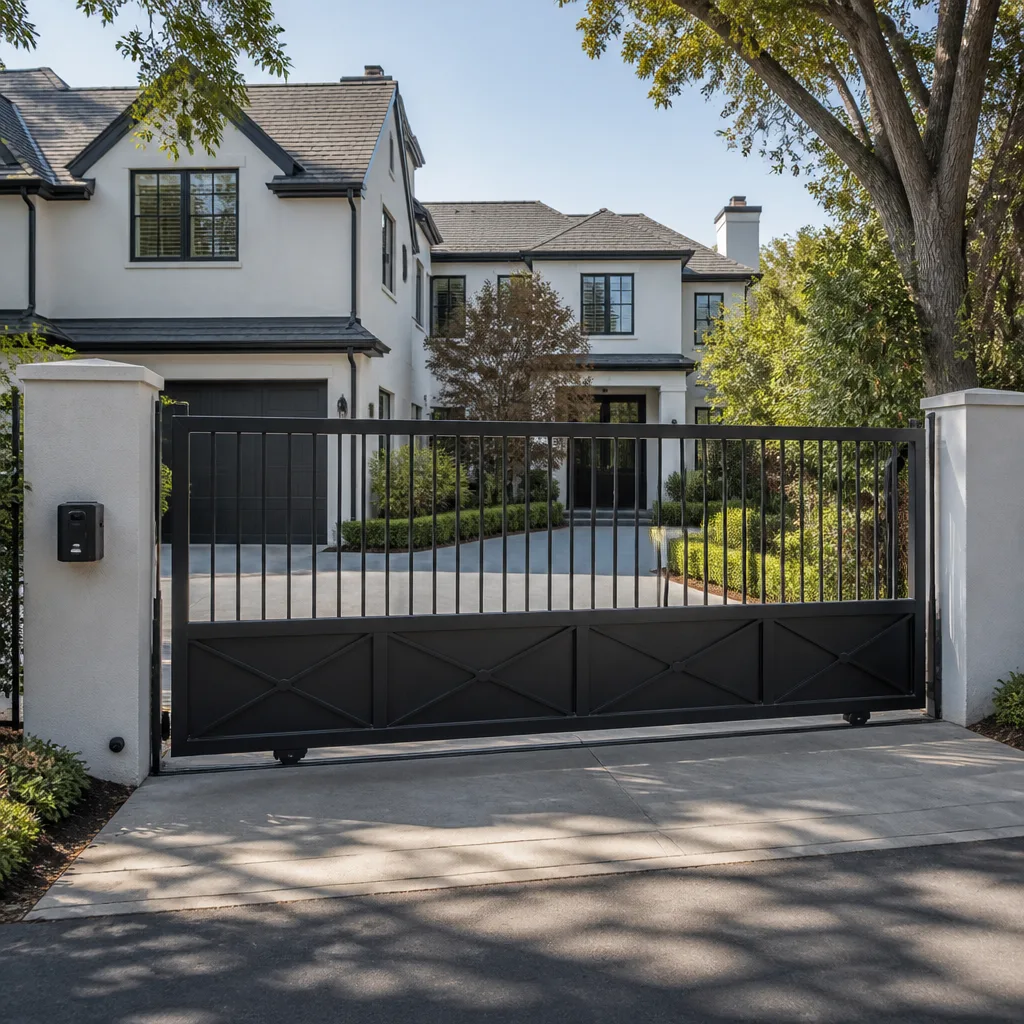 Sliding driveway gates
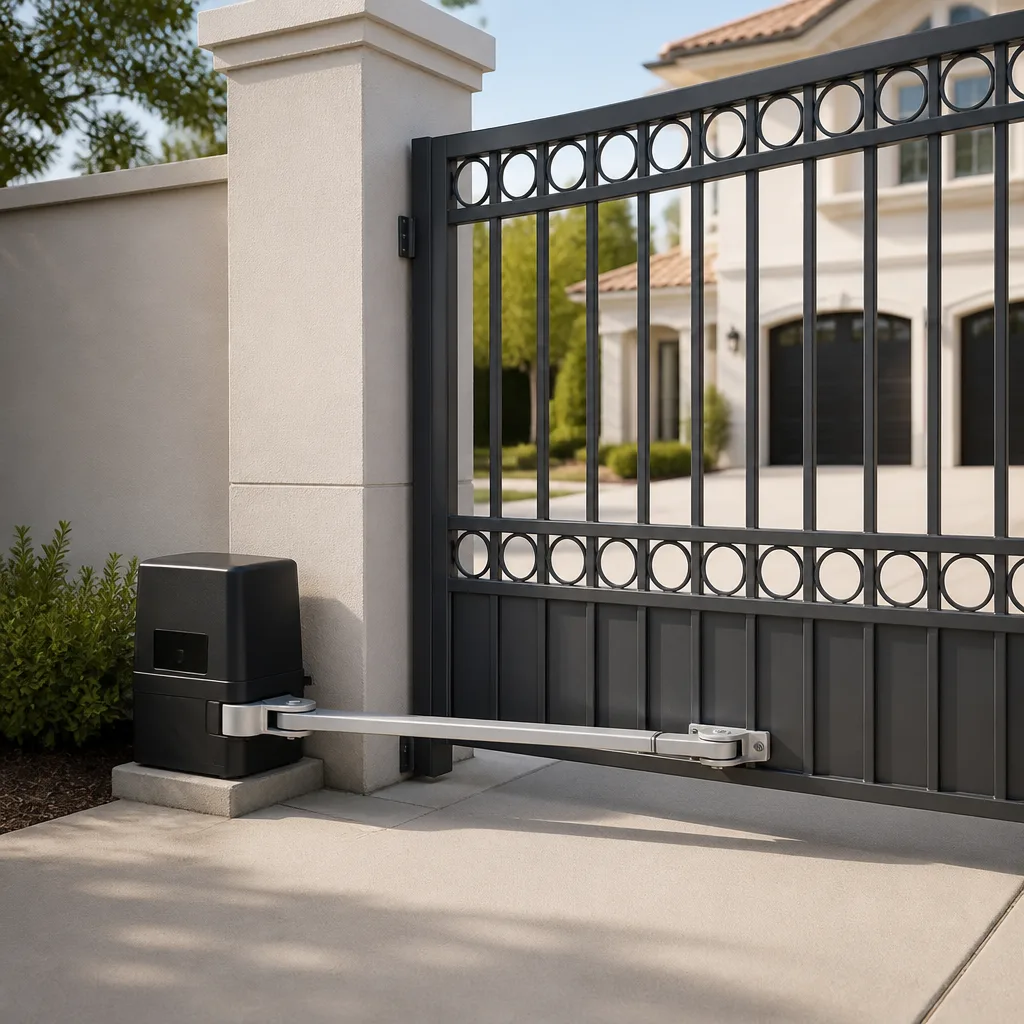 LiftMaster operators
Free on-site gate assessment - hinges, posts, and your LiftMaster or Nice gate operator checked before anything is quoted
The assessment is free and the quote is the invoice.
Get your free estimateChoosing the Right Gate Repair Brand: A Buyer’s Guide for Vista
Most homeowners choose a gate operator brand the same way they choose a dishwasher: they read a few reviews, compare prices, and hope for the best. That works for appliances. It fails for gates. A brand with glowing national reviews can leave a Vista homeowner waiting two weeks for a proprietary control board while the gate sits open, defeating the security it was installed to provide. This guide explains what actually determines long-term satisfaction with a gate brand: parts availability in North San Diego County, who can service it locally, and how it holds up in Vista’s year-round sun and mild, occasionally damp winters. You’ll learn how to evaluate brands by criteria that matter five years after installation, not just on day one.
Quick Answer
The best gate repair brand for a Vista homeowner is rarely a single name. It’s the brand that has local parts availability, a service network that reaches North San Diego County without shipping delays, and a design your chosen repair company can diagnose quickly. For residential operators in this area, brands like Ghost Controls, Viking, and DoorKing consistently balance those factors, while LiftMaster remains a strong contender when paired with a gate specialist who carries common boards and remotes. The right brand also depends on whether you’re replacing an existing operator or choosing components for a new gate, which this guide covers step by step.
Styles & brands we work with
- Wrought iron
- Wood & steel frame
- Farm & ranch
- Sliding driveway gates
- LiftMaster operators
Table of Contents
- Why Parts Availability Matters More Than Review Scores
- How Vista’s Climate Shapes Gate Brand Choices
- Residential Operator Brands: A Practical Comparison
- What UL 325 Means for Your Operator Choice
- How Brand Choice Affects Repair Costs Five Years Out
- New Installation vs. Replacement: Different Brands, Different Answers
- Common Mistakes to Avoid
- When to Call a Professional
- Frequently Asked Questions
Why Parts Availability Matters More Than Review Scores
A gate operator is only as reliable as the supply chain behind it. When a control board fails on a unit that no local distributor stocks, the repair timeline stretches from hours to weeks. That’s the difference between a gate that closes tonight and one that stays open while you wait for a package from the Midwest or, worse, an overseas supplier. In Vista, where many homes use automatic gates for privacy and keeping children or pets contained, an open gate is not a minor inconvenience.
We evaluate brands through the lens of parts lead time before we recommend them to homeowners calling about gate repair. A brand with a dense network of distributors in Southern California gives us options: we can pick up a board locally, swap it the same day, and get the gate operational. A brand with centralized warehousing forces everyone into the same queue. The quality of the operator matters, but a mid-range unit you can fix this week beats a premium unit you can’t fix for a month.
When you’re comparing brands, ask a simple question: if this board fails, where does the replacement come from? If the answer is a warehouse three states away with standard shipping, that brand costs you real time on any future repair. A local electric gate repair specialist who works with a brand regularly will know which parts are stocked regionally and which are special-order. That knowledge is worth more than any five-star review written two days after installation.
How Vista’s Climate Shapes Gate Brand Choices
Vista’s climate is relatively forgiving compared to desert or mountain communities. Winters are mild, with no freeze-thaw cycles to stress metal components or crack housing seals. The bigger challenges here are sun exposure, occasional damp mornings, and dust from unimproved lots or canyon edges. Any operator installed in full afternoon sun faces heat buildup inside its housing. Cheaper units with thin plastic covers warp or yellow faster, and their internal components run hotter, which shortens board life.
For a gate in direct sun, look for brands that use metal or high-grade resin housings and that specify an operating temperature range that includes sustained heat. Ghost Controls, for example, builds residential operators with metal-reinforced chassis components and rates them for temperatures well beyond what a Vista summer afternoon produces. Viking, which serves both residential and commercial markets, designs its enclosures with drainage channels and breather ports that handle condensed moisture from cool, damp evenings without pooling water on electrical connections.
Dust is another factor. Operators that use fully enclosed limit-switch assemblies and sealed bearings tolerate fine dust better than open designs. When we service a gate in neighborhoods like Shadowridge or Buena Creek, we see how the local microclimate, sun exposure and proximity to open land, affects different brands over time. That field experience shapes which brands we suggest for each situation more than any spec-sheet comparison.
Residential Operator Brands: A Practical Comparison
No single brand wins for every home. The right choice depends on gate weight, solar exposure, access to power, and how the gate is used. Here is a practical comparison of four residential brands we work with regularly in the Vista area.
Ghost Controls
Ghost Controls focuses exclusively on residential swing gates. Their operators use a simple, quiet drivetrain with fewer moving parts than some competitors, which means fewer wear points. Parts are widely available through national distributors and ship quickly when they’re not on a local shelf. They’re a strong value for lightweight to mid-weight gates and homeowners who want a straightforward system without proprietary add-ons. The trade-off: they’re not designed for heavy commercial or high-cycle use, so a gate that cycles dozens of times per day will wear them faster.
Viking
Viking builds operators for residential and commercial installations, and that shared DNA matters. Their residential units use stainless steel hardware and heavier-gauge enclosures than many consumer brands, which helps them tolerate the sun and dust common in Vista’s inland neighborhoods. Viking’s control boards include adjustable obstruction sensitivity, which matters on long driveways where wind gusts can push a gate enough to trigger a false reversal on less tunable systems. Parts availability through Southern California distributors is good, and the brand’s commercial presence means many suppliers keep common boards in stock.
DoorKing
DoorKing is another brand that spans residential and commercial markets. Their residential operators are known for longevity, and their build quality is substantial. One practical consideration with DoorKing is their use of proprietary control architecture in some models. That’s not inherently bad; it means tighter integration between the board, remotes, and accessories. But it can mean a replacement board has to come from DoorKing’s authorized channels rather than from multiple independent suppliers. In practice, we can source DoorKing parts reliably in the San Diego area, though lead times on less common boards can stretch.
Elite
Elite operators are less common than the other three but have a dedicated following among property managers who run them on residential estates and small commercial lots. Their swing-gate operators are built with heavy components and offer good adjustability for varied gate weights. Parts availability is thinner than Ghost Controls or Viking, and we often see Elite units that have been in service for many years when a homeowner calls about gate repair. If you’re considering an Elite for a new installation, budget a little extra patience for specialized parts down the road.
What UL 325 Means for Your Operator Choice
UL 325 is the safety standard that governs automatic gate operators in the United States. Any operator sold for residential use should carry a UL 325 listing. That’s the minimum, and most every brand sold through legitimate channels meets it. What varies is how each brand approaches the standard’s requirements beyond the bare minimum.
The standard requires external entrapment protection, which for most residential gates means monitored photo eyes or a contact edge that reverses the gate when it encounters an obstruction. It also sets limits on gate force. A compliant operator stops and reverses before exerting enough pressure to injure a person or pet. Some brands engineer their systems with multiple layers of entrapment protection. Others design to the letter of the standard and nothing more.
Ask a gate specialist which brands exceed the standard rather than just meeting it. Ghost Controls, for instance, builds in adjustable force settings and secondary obstruction detection that improves response to a crumpling item, like a trash can lid, that might not trigger a basic pressure switch. Viking’s commercial-grade heritage shows in their residential units’ adjustable sensitivity curves. These differences are invisible on a spec sheet and only emerge when a gate has to distinguish a wind gust from a real obstruction.
How Brand Choice Affects Repair Costs Five Years Out
The purchase price of an operator is a fraction of its total cost over a decade. The larger expenses arrive later: control boards, gear sets, limit switches, and the labor to diagnose and install them. Brands differ in how they meter out those costs.
Open-architecture systems are designed so many repair components can be substituted without a complete board replacement. A failed limit switch on a swing operator might be replaceable for the cost of the switch plus labor. Proprietary systems integrate more functions onto a single control board. When that board fails, the replacement cost includes the board itself, which can run several hundred dollars, plus labor. In our experience, the brands with more modular control designs cost less to maintain over a five-to-eight-year ownership period, even if their initial purchase price is similar to a more integrated brand.
Here is what to ask before choosing a brand:
- Can the control board be replaced independently of the drivetrain?
- Are limit switches and safety-edge inputs available as separate parts, or only as part of a board assembly?
- Does the brand sell parts to independent repair companies, or only through authorized dealers?
- What is the typical lead time for a control board shipped to San Diego County?
- If the brand changes parent companies or distribution models, will parts remain available for this model generation?
Brand choice also affects labor time. Technicians who work with a brand daily diagnose its failure patterns quickly. A brand that rarely appears in electric gate repair calls in Vista means slower diagnosis, more trial-and-error, and potentially higher labor bills. Choosing a brand with local service familiarity pays off every time something goes wrong.
New Installation vs. Replacement: Different Brands, Different Answers
The best brand for a new gate installation is not always the best brand when you’re replacing an operator on an existing gate. The scenarios have different constraints, and the smart choice changes accordingly.
Choosing for a new installation
With a new gate, you have the freedom to match the operator to the gate’s expected duty cycle, weight, and access to power. This is where a brand’s full product line matters. If you’re building a custom steel gate for a long driveway, choose an operator engineered for that gate’s weight and cycle frequency from day one. Vista homeowners who install a lightweight operator on a heavy gate to save a few hundred dollars end up paying far more in early gear and board failures.
New installations also allow you to plan for future access-control upgrades. A brand with a modular line lets you add a keypad today, a vehicle sensor next year, and a phone-based entry system later without replacing the operator. That forward compatibility is worth considering when the gate is new and the wiring is still open.
Choosing replacement components for an existing gate
Replacement scenarios often call for a different answer. If your existing gate’s operator fails, the cheapest and fastest path is usually a like-for-like replacement that reuses the existing mounting, conduit, and safety devices. Swapping brands mid-life means new brackets, possibly new conduit runs, new remote controls, and a matching amplifier or receiver. It can be done, and sometimes it’s the right call when the old brand has become orphaned or parts are no longer available. But a brand that supports backward-compatible remotes and receivers can save a full rewiring.
This is where a gate specialist’s guidance pays off. We look at the existing installation in Vista, assess what can be reused, and recommend whether a direct replacement or a brand change makes more financial sense. The answer is different for every gate.
Common Mistakes to Avoid
- Choosing by Amazon review score. Consumer reviews measure the first two weeks of ownership. They reveal little about board longevity, parts availability, or serviceability five years in, which is when warranty periods have expired and repair costs begin.
- Undersizing the operator for the gate. A lightweight operator on a heavy gate wears out gears and burns control boards early. In Vista, where many gates are custom steel or iron, matching operator capacity to gate weight is the difference between a decade of service and a two-year failure cycle.
- Ignoring parts lead times. A brand with no Southern California distribution means every future repair starts with a shipping delay. Before you commit, ask where the nearest replacement board physically sits.
- Treating UL 325 as a differentiator. Meeting the standard is table stakes. What matters is whether the brand exceeds the minimum with adjustable force settings, redundant obstruction detection, and modular safety inputs.
- Optimizing for purchase price alone. A unit that costs $200 less but requires a $400 proprietary board and two weeks of lead time costs you more the first time it fails. Price the five-year cost, not the invoice.
- Switching brands on a replacement without checking reuse. Mounting brackets, remotes, photo eyes, and conduit are brand-specific in many cases. A brand change can add significant labor to what looked like a simple swap.
- Not planning for access-control growth. The operator you install today should support the keypad, intercom, or phone-based entry you’ll want in two years. Retrofit costs after the fact are higher than forward-compatible choices made now.
When to Call a Professional
Some gate brand decisions you can make from a spec sheet. Others need a trained eye on the actual gate, its mounting, its power source, and how it operates in real conditions. Call a professional if you’re unsure whether your existing gate can be reused with a new operator, if the gate is heavy enough that an undersized unit is a safety risk, or if you need someone to translate brand specifications into a recommendation for your specific property. A gate specialist can also tell you which brands have local parts support today, not last year. Sterling Gate Repair offers free estimates in Vista. Call (855) 773-5055 and we’ll look at your gate, listen to how you use it, and recommend a brand choice that fits the gate you have and the gate you want. We answer 24/7. Fast dispatch from 7am to 7pm, Sunday through Friday.
Frequently Asked Questions
The best brand for most Vista homes balances local parts availability, service familiarity, and climate durability. Ghost Controls, Viking, and DoorKing consistently meet those criteria for residential gates, though the right choice depends on your gate’s weight, sun exposure, and how heavily it’s used. Call (855) 773-5055 for a recommendation based on your actual gate.
Ask a local gate repair company which brands they can source parts for same-day or next-day rather than special-order. Brands with multiple Southern California distributors, like Viking and DoorKing, usually mean faster repairs than brands with centralized warehousing in other states. The lead time on a replacement control board is the single most telling metric.
UL 325 listing means the operator meets the federal safety standard for automatic gates, including entrapment protection. It is the legal minimum. Brands differ in how far beyond that minimum they engineer, so ask about adjustable force settings and redundant obstruction detection rather than treating the listing itself as a point of distinction.
Yes, a different brand can be installed on an existing gate, but it often requires new mounting brackets, remotes, receivers, and possibly conduit adjustments. A like-for-like replacement is usually faster and cheaper. We assess reuse potential in Vista during a free estimate and recommend the path that costs less over the gate’s remaining life.
We’re factory-familiar with nine major gate and operator brands: LiftMaster, FAAC, BFT, Linear, Viking, Ghost Controls, DoorKing, Elite, and Mighty Mule. That covers residential-grade operators like Mighty Mule and Ghost Controls through commercial-grade systems like FAAC, BFT, and DoorKing.
Sustained afternoon sun heats operator housings and can warp thin plastic covers, yellow finishes, and raise internal temperatures enough to shorten board life. For gates in full exposure, choose brands with metal or high-grade resin housings and operating temperature ranges that comfortably exceed Vista’s hottest days. A gate-mounted shade structure also extends component life.
The Bottom Line
Choosing a gate repair brand for a Vista home means choosing a service future, not just a product. The brand that combines local parts availability, service familiarity among North San Diego County gate specialists, and climate-appropriate construction will cost less and last longer than any brand chosen on review scores alone. For most residential gates in this area, Ghost Controls, Viking, and DoorKing are strong candidates, with LiftMaster worth considering when paired with a specialist who stocks its common boards. The final answer depends on your gate, your usage patterns, and whether you’re installing new or replacing existing equipment. A free estimate gets you a recommendation specific to all three.
Written by the team at Sterling Gate Repair, serving Vista since 2015.
See the difference
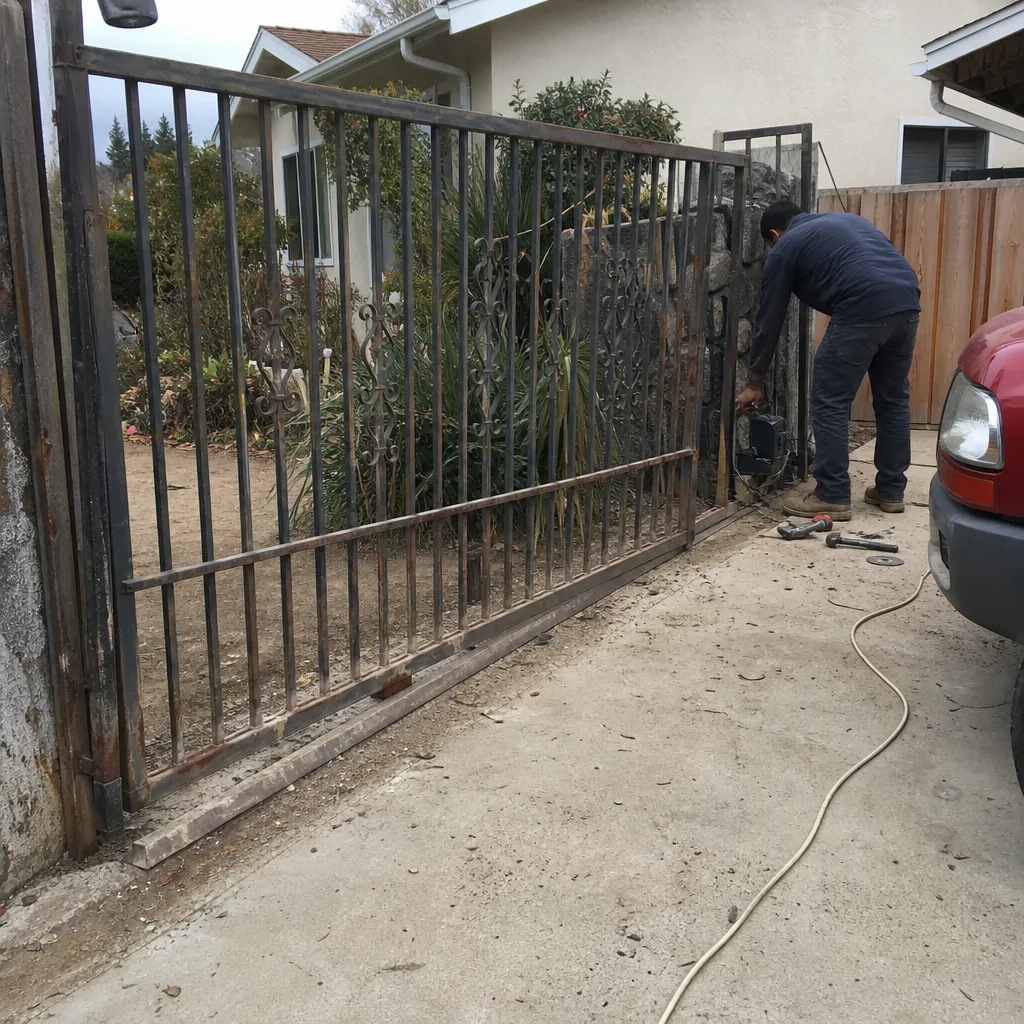
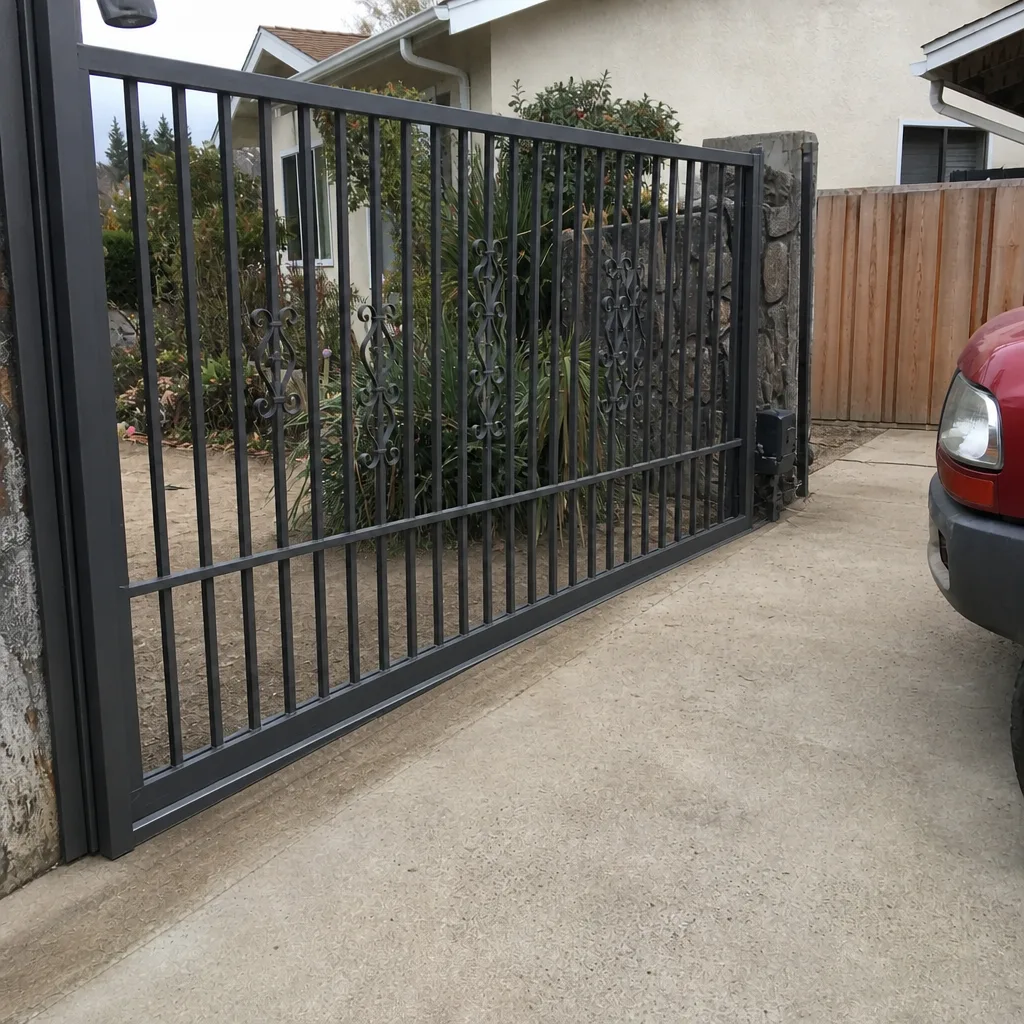
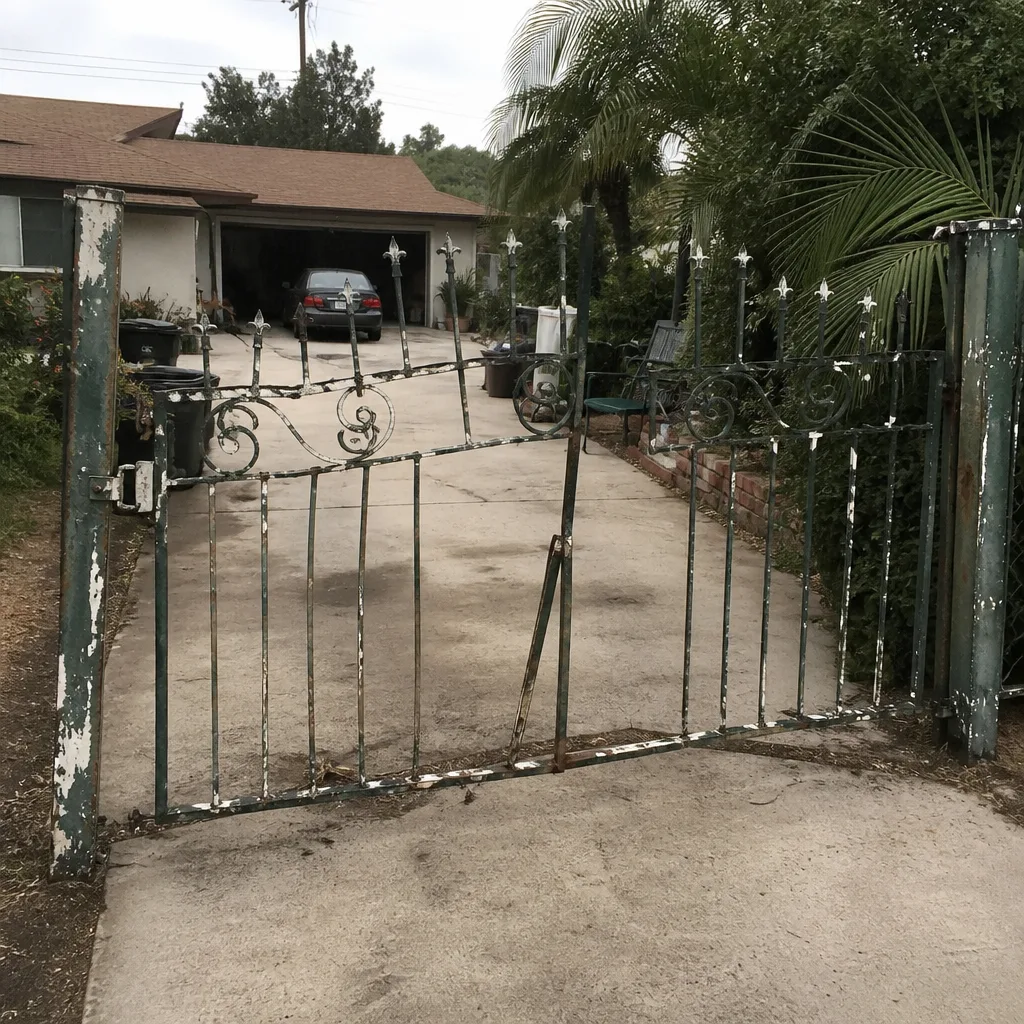 Before
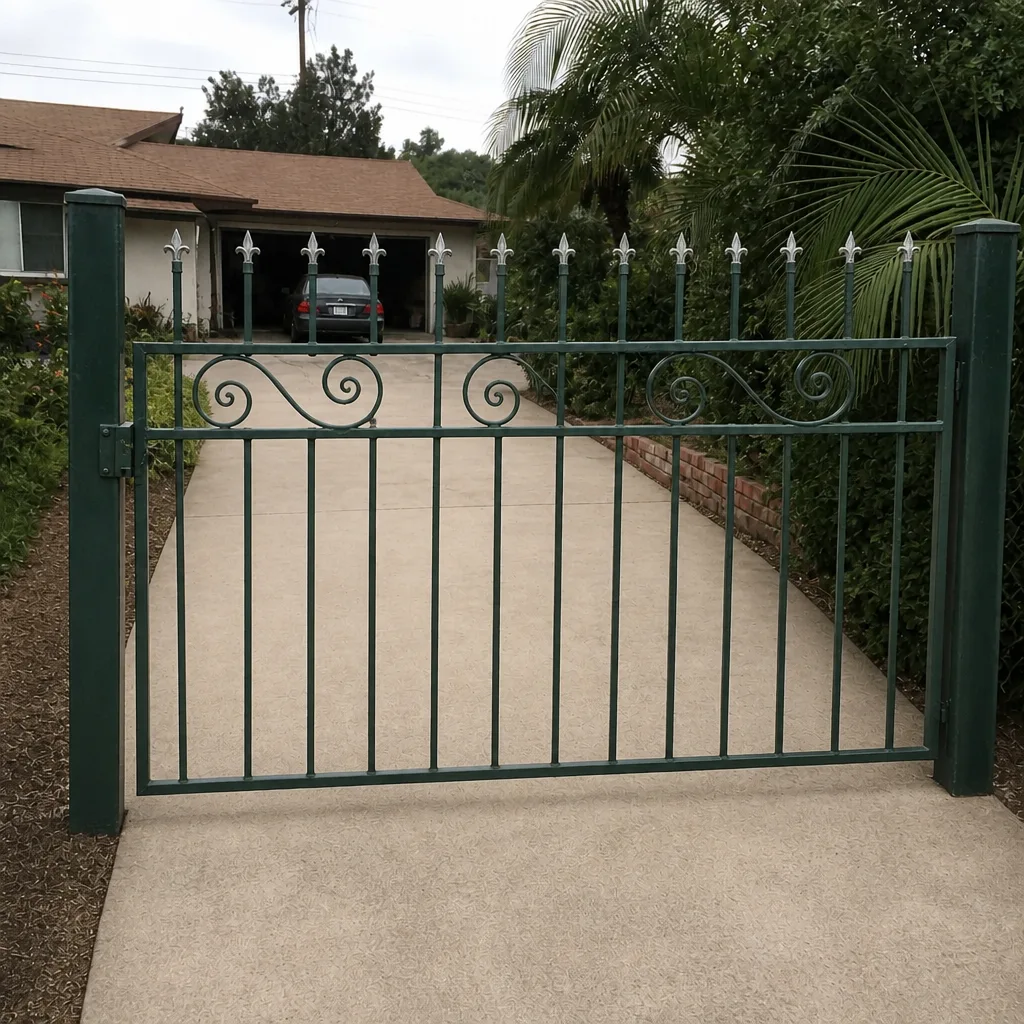 After
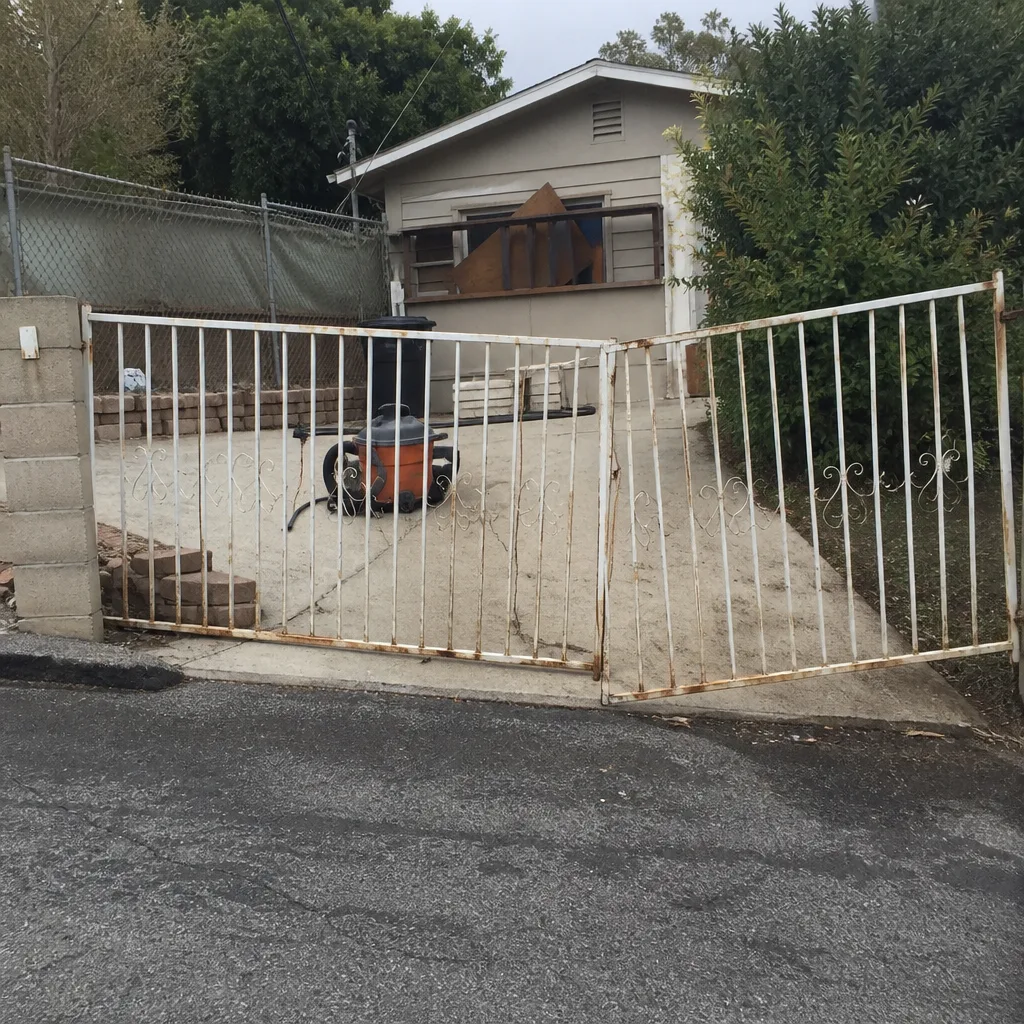 Before
 After
 Before
 After